Arson attacks on alternative housing project in Cottbus – Investigators probe attempted murder
Cottbus, July 2, 2026
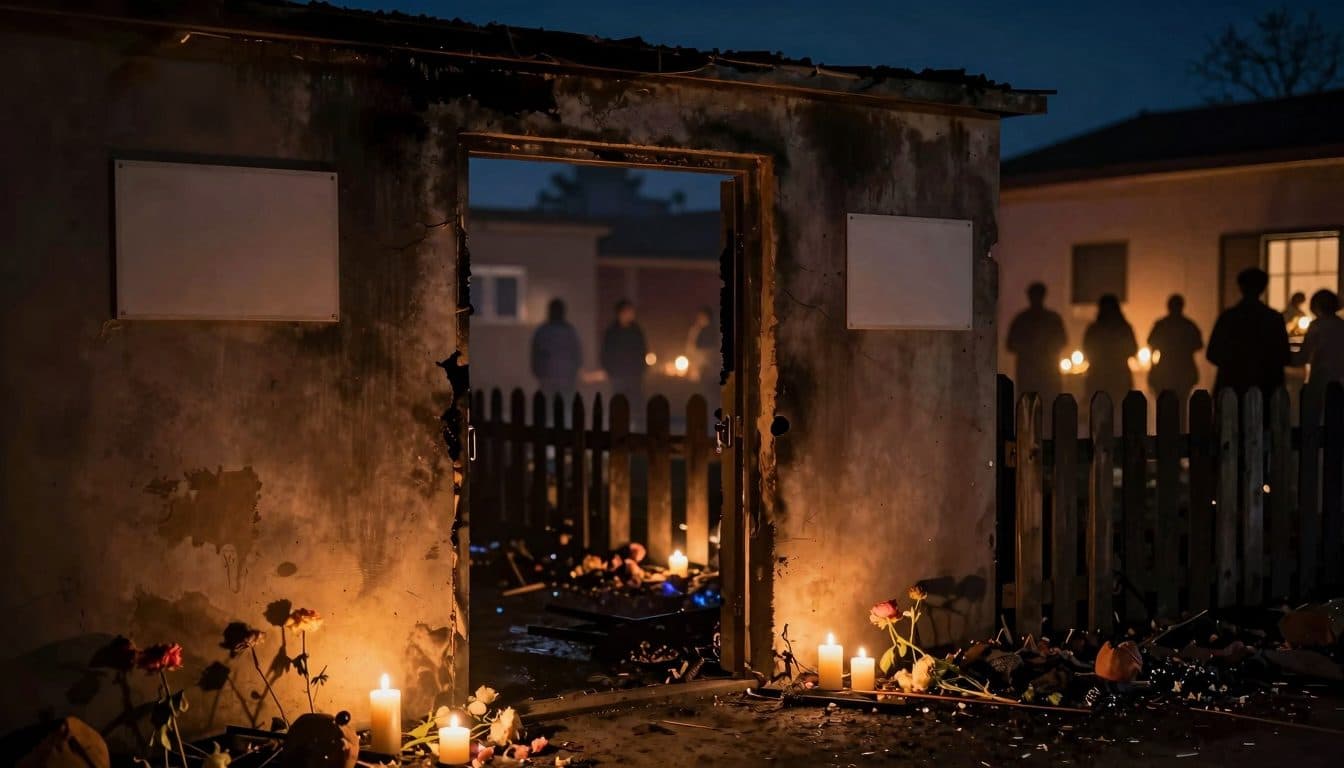
AI-generated image (z-image via Kie.ai)
Summary
In Cottbus, two suspected right-wing extremist arson attacks were carried out overnight on the alternative housing project Zelle 79. State security and a murder commission are investigating on suspicion of attempted murder, while a vigil took place in the city.
Cottbus, July 2, 2026
In Cottbus, unknown perpetrators carried out an arson attack on the alternative housing project Zelle 79 overnight on July 2, 2026, with state security and a murder commission investigating on suspicion of attempted murder.
Background of the crime
According to information from investigative circles, the attack on the alternative housing project Zelle 79 in Cottbus is a suspected politically motivated arson. As the public prosecutor's office announced, state security took over the investigation together with a murder commission, as there is suspicion of attempted murder. At the same time, an attempted further arson attack is being examined, because a fence slat burned near the also-affected Club Chekov.
According to police, investigators assume that the two suspects can be attributed to the right-wing extremist spectrum. A specialized investigative team had been deployed to clarify the structures of the responsible milieu, it was said. No concrete arrests were initially made public. The investigations are ongoing, and backgrounds and possible connections between the two crimes are being examined.
Brandenburg's Interior Minister Jan Redmann expressed disbelief at the crimes and pointed to a tightened security network. "Die beiden Brandanschläge von gestern Nacht machen mich wütend", the CDU politician said. He added: "Rechtsextremisten verätzen das Zusammenleben. Wer Molotov-Cocktails schmeißt, nimmt Opfer in Kauf. Das macht mich fassungslos." At the same time, he emphasized that security measures had been increased and that the police had stepped up their presence in the city area, also in the course of the CSD action weeks.
Reactions from politics
Cottbus' Mayor Tobias Schick (SPD) called for better protection for those affected by such attacks. "Für die Opfer solcher Attacken seien zudem die notwendigen Strukturen und Finanzen nötig", he said. Schick also warned that data protection must not impede the protection of people: "Datenschutz darf den Schutz von Menschen nicht behindern."
The mayor also spoke out in favor of clearer rules for the use of video cameras in public spaces. "Wir brauchen klare Regelungen, um den Einsatz von Kameras auch im öffentlichen Raum gezielt und rechtssicher zu gewährleisten, abzuschrecken und die Aufklärung von Straftaten zu unterstützen", said Schick. This is intended to make it possible to deter crimes and facilitate their investigation.
On the evening of July 2, 2026, residents and supporters gathered for a vigil to set a clear signal against right-wing extremism. According to their own statements, the organizers wanted to show solidarity with those affected and draw attention to the threat of right-wing extremist violence in the city. The police accompanied the gathering with a visible contingent.
Vigil and civil society engagement
The crime comes at a time of heightened tension in Cottbus: just on the weekend, several actions had been planned around Christopher Street Day (CSD), to protect which the police had stepped up their presence. Interior Minister Redmann explained that security measures had been increased and police presence in the city area had already been expanded, particularly with regard to the CSD action weeks. This brings the question of a possible connection between the attacks and the CSD activities more into focus.
According to its own description, the Zelle 79 project sees itself as an alternative residential and cultural project and, according to supporters, had already been the target of right-wing extremist hostility in the past. The Club Chekov, near which a fence slat caught fire, is also part of the left-alternative scene in the city. The exact course of events, possible injuries, and the amount of property damage were not initially quantified in detail by police and the public prosecutor's office.
State of investigation and possible backgrounds
Investigations are proceeding in several directions: in addition to state security, which is examining the political background, a murder commission is involved on suspicion of attempted murder. In addition, the attempted arson attack on the fence slat is being examined, it was said. The police also appealed for information from the public.
Minister President Dietmar Woidke was named as a responding figure in the reporting. Details of his statements were not elaborated in the available sources. The role of the Brandenburg state parliament and possible special sessions were also not specified in the available reports.
Security authorities pointed out that the attacks fit into a nationwide trend of right-wing extremist violence. Brandenburg has long been among the federal states in which the number of politically motivated crimes from the right-wing spectrum is high. Specific comparative figures or situation reports were not cited in the available sources.
The city of Cottbus announced that it would provide psychosocial support to the residents of the housing project in the coming days and review security protection around alternative facilities. Details of specific measures have not yet been published.
Outlook and security measures
Legal consequences are emerging: if the suspicion of attempted murder is confirmed, the suspects face long prison sentences. Classification as a politically motivated crime would also have implications for the later sentencing and possible preventive detention.
The incidents received supra-regional attention, among other things through coverage by the Deutsche Presse-Agentur. The reports were picked up by several regional and national media, underscoring the political dimension of the events.
According to the police, there were no significant incidents on the fringes of the vigil. The mood among participants was predominantly determined and peaceful, it was said. Representatives of civil society called for vigilance against right-wing extremist activities in the region not to wane.
According to their own statements, investigators are relying on tips from the public. A tip line had been set up, through which witnesses could report suspicious observations from the night of the crime. The analysis of traces at the crime scene and digital investigations were running in parallel.
With a view to the ongoing CSD action weeks, the police announced that they would further increase their presence in the city center and at known meeting points of the queer scene. Protection concepts for other alternative facilities in Cottbus were also currently being reviewed, according to security circles.
Questions & Answers
What is known about the attack on Zelle 79 in Cottbus?
On the night of July 2, 2026, unknown perpetrators carried out an arson attack on the alternative housing project Zelle 79 in Cottbus. State security and a murder commission are investigating on suspicion of attempted murder; the police assume a right-wing extremist background.
How are politicians and authorities responding?
Interior Minister Jan Redmann (CDU) spoke of anger and disbelief and pointed to increased security measures during the CSD action weeks. Mayor Tobias Schick (SPD) called for better protection structures, funding, and clearer rules for video surveillance in public spaces.
What role does the CSD action week play in the context of the attacks?
The police had already stepped up their presence in the city area with a view to the CSD action weeks in Cottbus. Interior Minister Redmann expressly stated that security measures had been increased and protective measures for the action weeks had been expanded.