BGH confirms return obligation for rental cars: Uber and Bolt must return to company headquarters after each trip
Karlsruhe, June 03, 2026
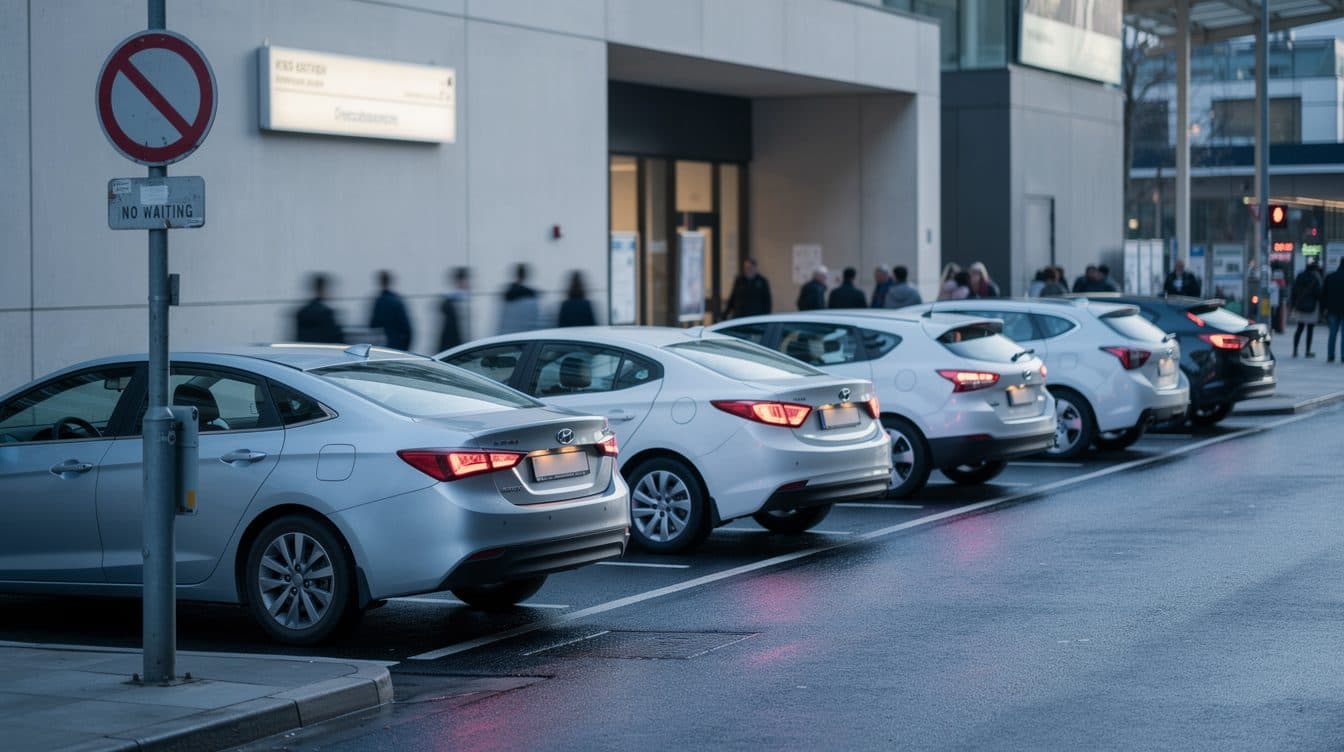
AI-generated image (flux-2/pro-text-to-image via Kie.ai)
Summary
The Federal Court of Justice has confirmed the return obligation for rental cars, which has been in place for decades. According to the ruling, vehicles from intermediaries like Uber and Bolt are not allowed to wait for new customers at train stations or in city centers. However, the conflict with the taxi industry over minimum prices and competitive conditions is likely not over yet.
Karlsruhe, June 03, 2026
The Federal Court of Justice (BGH) in Karlsruhe confirmed the return obligation for rental cars on Wednesday, thereby obliging intermediaries like Uber and Bolt to return to their company headquarters after each trip, instead of waiting for new passengers in city centers or at train stations.
The Karlsruhe judges dismissed the lawsuit filed by a Cologne taxi cooperative association that had taken action against a rental car company that mediated trips via Uber X. The case revolves around a specific incident: According to the BGH, after dropping off a passenger at Cologne Central Station, a driver parked in place from 10:10 AM to 10:22 AM instead of immediately returning to the company headquarters. The court ruled that precisely this behavior violates the so-called return obligation.
What the proceedings were about
The First Civil Senate dealt with the regulation that has been in effect since the early 1980s. Even back then, the legislator had clarified that rental cars are not public transport and are therefore not subject to the obligation to carry passengers or strict fare regulations. As compensation for these economic freedoms, however, they must return to the company headquarters after each assignment and are not allowed to wait in public areas like taxis.
In the specific case, Taxiruf Köln, a taxi cooperative association with around 700 members and approximately 1,000 taxis, had sued the rental car company that offers trips for Uber X through subcontractors. According to the taxi industry, the return obligation undermines a key distinguishing feature between rental cars and taxis.
Differences between taxis and rental cars
The return obligation is only part of a broader conflict over competitive conditions in German local public transport. Taxis are considered part of local public transport in Germany and are subject to a number of strict obligations. These include a municipal permit, fixed tariffs, and the obligation to carry passengers, meaning the duty to transport every passenger regardless of the time of day, route, or destination. In return, they enjoy privileges such as the use of bus lanes, driving in pedestrian zones, waiting at taxi stands, and being hailed.
Rental car companies, on the other hand, may refuse trips and set their own prices, but they do not have these privileges. Furthermore, they are prohibited from waiting for customers in city centers or at airports. The BGH saw precisely this distinction violated by the behavior of the defendant driver.
Constitutional background
The decision follows a dispute that the Federal Constitutional Court had already fundamentally confirmed in 1989. At that time, it stated: "The prohibition of making rental cars available in public streets and squares in a taxi-like manner and accepting transport orders there is compatible with the Basic Law." As early as 1960, the Karlsruhe constitutional judges had ruled that rental cars are not public transport.
Uber and Bolt have long been critical of the regulation. They argue that the return requirement leads to more traffic, harms the environment, and makes trips more expensive for customers. From Uber's perspective, the regulation dating back to the 1980s is "economic and ecological madness." They welcomed the fact that the BGH was once again addressing the provision, according to a statement.
Positions of the intermediaries
Managing Director Michael Oppermann said that the individual circumstances are important. "However, it is not solely decisive," he said, referring to the return obligation. The industry still expects a fundamental clarification from the BGH.
The taxi industry views the ruling as a confirmation of its position. Markus Brohm, who is responsible for transport at the German Association of Districts (Deutscher Landkreistag) as head of department, among other things, says: Taxis should not be exposed to "ruinous competition" from other forms of transport that do not have such obligations. The Federal Association of Taxi and Rental Cars also sees the return obligation as an important piece of the puzzle for organizing the market.
In Cologne, competition between traditional taxis and rental cars has intensified in recent months. The city introduced minimum prices for rental car intermediaries like Uber and Bolt on June 1st. According to these, rental car trips may be offered at a maximum of 20 percent below the regulated taxi fare. At the same time, taxis in Cologne are also allowed to offer their prices up to 20 percent below the fixed tariffs.
Minimum prices in Cologne and NRW
According to the city, these minimum prices are necessary to compensate for the imbalance between rental cars and taxis and to keep taxi operations functioning as part of local public transport. Aleksandar Dragicevic from Taxiruf Köln supported the new rules. At the end of 2025, more than 1,600 rental cars were already registered in Cologne, while the number of taxis was around 1,140.
The development is not limited to Cologne. Other cities in North Rhine-Westphalia, such as Dortmund, are also planning new pricing regulations for Uber and other intermediaries. In Essen, minimum prices for rental car trips were already introduced in January, but the city had to relax the rules again after a successful lawsuit: intermediaries are now allowed to set their prices freely again.
Case numbers and sources
The BGH decision case number is I ZR 123/25. The hearing on Wednesday at 8:45 AM was conducted by the First Civil Senate, which, according to its own statement, intended to announce a decision in the legal dispute at the beginning. Sources for the reporting were the BGH press release, a WDR interview with Dragicevic, a statement from the City of Cologne, and reports from the German Press Agency.
Outlook on further proceedings
The legal dispute is unlikely to end with the Karlsruhe ruling. Observers expect that the fundamental questions regarding the return obligation will be clarified in further proceedings, particularly in view of the growing importance of platforms like Uber and Bolt. Municipal minimum price regulations may also continue to be contested in court.
For passengers, the ruling means that little will change in the practice of rental car mediation in Germany in the short term. Trips will continue to be possible, but vehicles must return to the company headquarters between assignments, which tends to increase waiting times and stabilize prices. In the long term, the BGH decision could increase pressure on the legislature to adapt rental car law to the reality of digital mediation.
Questions & Answers
What did the BGH decide regarding rental cars from Uber and Bolt?
The Federal Court of Justice confirmed the return obligation: rental car companies that offer trips for intermediaries like Uber and Bolt must return to their company headquarters after each trip and are not allowed to wait for new customers at train stations or in city centers in a taxi-like manner.
Who filed the lawsuit in Karlsruhe?
Taxiruf Köln, a large Cologne taxi cooperative with around 700 members and approximately 1,000 taxis, had sued a rental car company that mediates trips for Uber X through subcontractors.
How does Uber react to the ruling?
Uber criticizes the return obligation, which has been in place since the 1980s, as "economic and ecological madness" and sees it as an obstacle to more traffic, the environment, and cheaper prices.
BGH ruling: Return obligation for rental cars confirmed | allfacts360