Eurovision 2027 in Bulgaria: Sofia vs. Burgas as host | allfacts360
Bulgaria to host Eurovision 2027: Sofia and Burgas compete for hosting role
Sofia, 26 July 2026
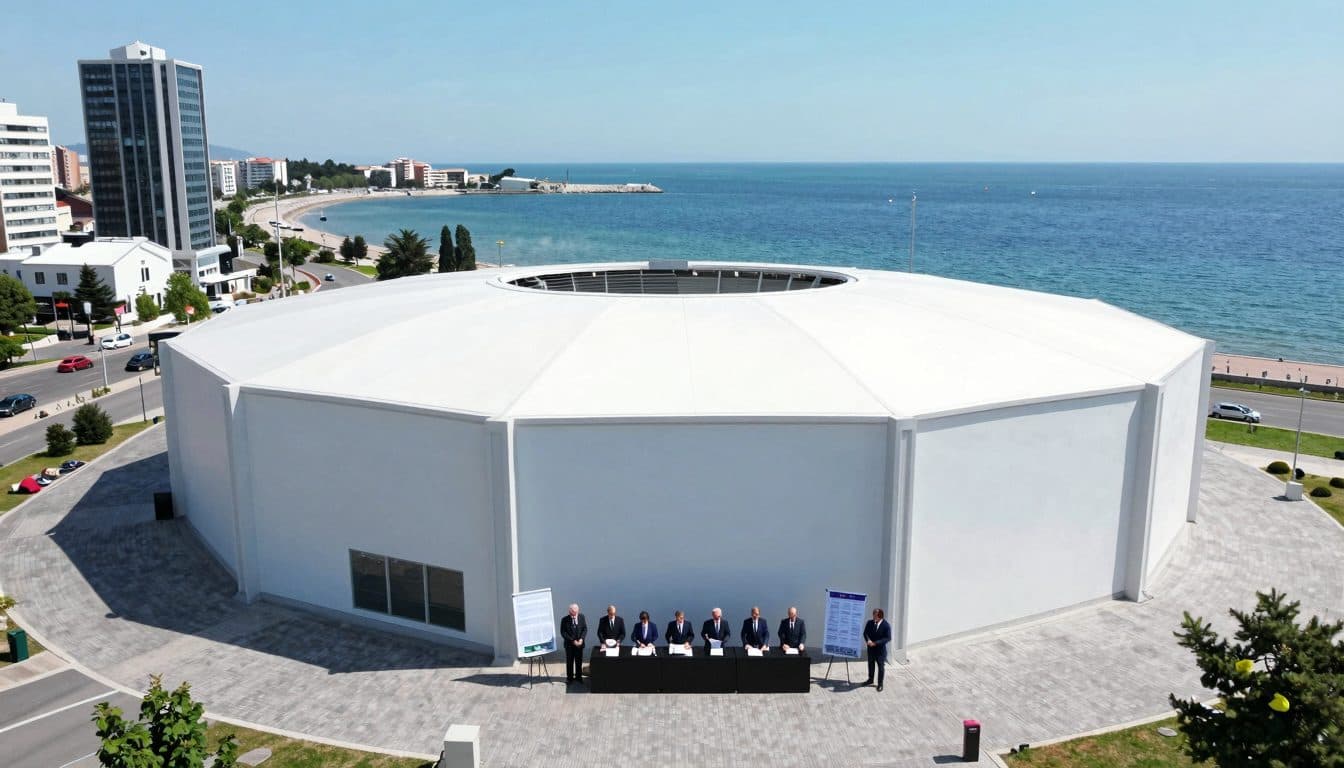
AI-generated image (z-image via Kie.ai)
Summary
Following Dara's Eurovision win in Vienna, two Bulgarian cities are bidding to host the Eurovision Song Contest 2027: the capital Sofia and the Black Sea city of Burgas. BNT chief Milena Milotinova expects the decision from the responsible committee by the end of July.
Sofia, 26 July 2026
Following Bulgarian singer Dara's historic victory at the Eurovision Song Contest 2026 in Vienna, the capital Sofia and the Black Sea city of Burgas are bidding to host the 71st Eurovision Song Contest in 2027.
With Dara's win and her song "Bangaranga" in Vienna in May 2026, Bulgaria won the Eurovision Song Contest for the first time. The 27-year-old Bulgarian singer was celebrated at a welcome ceremony in Sofia about two months after her triumph. The Eurovision success immediately triggered a competition among Bulgarian cities to host the next contest, which under the regulations of the European Broadcasting Union (EBU) takes place in the previous year's winning country.
A total of four Bulgarian cities had originally applied as hosts: the capital Sofia, the port city of Varna on the Black Sea, the country's second-largest city Plovdiv, which was European Capital of Culture in 2019, as well as Burgas on the Black Sea. After the first selection round, only Sofia and Burgas remained in the running.
Four applicants, two finalists
The public broadcaster BNT (Bulgarian National Television) is organising the contest together with the EBU. BNT chief Milena Milotinova stated that the responsible committee must complete its work by the end of July. "By the end of July, the responsible committee must have completed its work," Milotinova said, according to the information available.
As the country's largest city, the capital Sofia brings a number of infrastructural advantages. With around 1.3 million inhabitants, the metropolis lies at the foot of the Vitosha mountain range, which rises to up to 2,290 metres. The Arena 8888 Sofia is Bulgaria's largest multi-purpose hall and offers space for around 12,000 to 15,000 spectators; for concerts it can be expanded to accommodate up to 15,000 guests.
Sofia's mayor Vasil Terziev promoted the cultural qualities of his city. "Sofia is a city with a thousand-year history, modern infrastructure and a unique combination of cultural heritage, dynamic urban life and nature," Terziev enthused. In the historic city centre, Roman-era excavation sites as well as Orthodox and Catholic churches, a synagogue and a mosque can be found in immediate proximity—an area referred to as "Little Jerusalem."
Sofia: Largest hall and cultural diversity
Rival bidder Burgas, with around 200,000 inhabitants, is Bulgaria's fourth-largest city and the economic and cultural centre of the country's southeast. Burgas is also located on the Black Sea and is internationally accessible via Burgas Airport, the country's second-busiest airport after Sofia Airport. Nearby is the internationally known seaside resort Sunny Beach (Slanchev Bryag).
Mayor Dimitar Nikolow sees Burgas well positioned despite its smaller size. "Burgas may be the smallest city by population among the Eurovision bidders, but it is taking on this opportunity with great ambition," Nikolow says. He expressed his conviction that Burgas has the capacity to offer an extraordinary backdrop directly on the Black Sea coast for the Eurovision Song Contest.
Burgas: Ambition and Black Sea backdrop
The Arena Burgas, opened in 2023, can likewise be expanded for concerts to accommodate up to 15,000 spectators. Burgas therefore also meets the central requirement for the event venue, which according to the bidding cities must be fully available for around eight weeks around the date in May 2027.
The technical requirements that both cities must meet include a stage with an area of at least ten by fifteen metres as well as around 2,000 square metres of backstage space. In addition, office space for more than 250 people is needed, along with hotel capacities and international flight connections.
Technical requirements for the host city
Bulgaria has only taken part in the Eurovision Song Contest since 2005 and is one of the poorest countries in the European Union. Over the past three years, the country was not represented in the competition at all for financial reasons. Dara's victory therefore appears all the more remarkable; her song "Bangaranga" combines electronic beats with Balkan pop influences.
Dara comes from Varna, which was still in the running in the first bidding round but then dropped out, as did Plovdiv. With the final between Sofia and Burgas, the country's largest city now faces one of the smaller bidder cities.
The bid is being observed against the backdrop of Bulgaria's economic conditions. If Burgas prevails against the more populous capital, this would send a signal that smaller cities with a coastal location and tourist infrastructure can also handle major events.
As the largest multi-purpose hall in the Balkan country, the Arena 8888 Sofia has the largest regular capacity among the venues and is considered the favourite by many observers. However, the concert expansion still has to be organised in Burgas, whereas Sofia already offers the higher capacity in its standard configuration.
Bulgaria's Eurovision history and economic context
The final decision is being awaited with great interest, as it will have not only sporting and cultural but also economic and tourist significance for the respective region. In recent weeks, both cities have presented their application documents and are promoting their respective strengths to win the attribution of the major event.
With the 71st Eurovision Song Contest 2027, Bulgaria would host a Eurovision for the first time. Following Vienna 2026, Basel 2025, Malmö 2024, Liverpool 2023 and Turin 2022, the event would be the latest stop on the contest's tour through a major European city.
Regardless of the outcome of the host city decision, it is clear that organising the Eurovision represents a logistical and financial challenge for Bulgaria that goes significantly beyond the country's previous experience with the competition.
Decision expected by end of July
The decision of the responsible committee is expected by the end of July. This leaves the organisers around ten months of preparation time until the competition in May 2027.
Both cities have publicly presented their bids and argue with cultural diversity, tourist appeal and infrastructural capacity. Sofia points to the size of the country and the established event infrastructure, while Burgas highlights its location on the Black Sea and its newly built arena.
Questions & Answers
Who is Dara and why is Bulgaria hosting Eurovision 2027?
Dara is a 27-year-old Bulgarian singer who won the Eurovision Song Contest 2026 in Vienna with the song "Bangaranga." Following this first Eurovision victory for Bulgaria, the country will traditionally host the next competition as the winning nation.
Which other cities are bidding to host Eurovision 2027?
After the first selection round, only the capital Sofia and the Black Sea city of Burgas remain in the running. Previously, Varna and Plovdiv had also applied but were eliminated.
When will the decision on the Eurovision 2027 host be made?
According to BNT chief Milena Milotinova, the responsible committee must complete its work by the end of July, so the decision is expected within this period.