Bundestag and Bundesrat Approve Austerity Package: Statutory Health Insurance Contributions to Remain Stable in 2027
Berlin, July 19, 2026
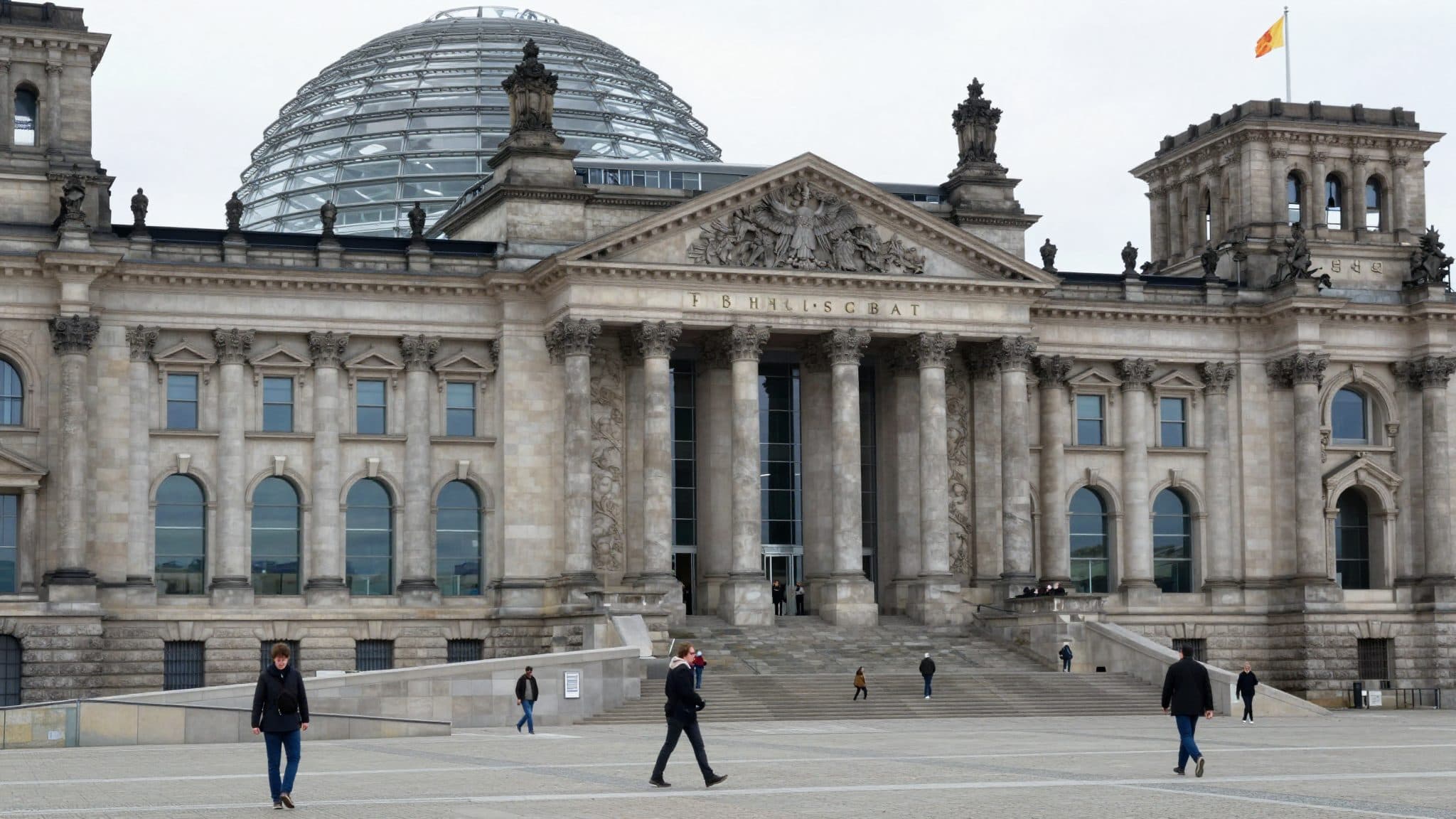
AI-generated image (z-image via Kie.ai)
Summary
The Bundestag and Bundesrat have passed a multi-billion-euro austerity package for statutory health insurance, intended to close a financial gap of 18.8 billion euros. Health Minister Nina Warken and the National Association of Statutory Health Insurance Funds see this as the basis for stable contributions over the coming two years – but warn against further dilution.
Berlin, July 19, 2026
The Bundestag and Bundesrat cleared the way on Friday for a multi-billion-euro austerity package for statutory health insurance, designed to cushion rising expenditures and prevent an increase in health insurance contributions in 2027.
The legislative package aims to close a grown financial gap of 18.8 billion euros and stabilize the average supplementary contribution rate at 2.9 percent. Health Minister Nina Warken (CDU) explained that the package would close precisely this gap. The general contribution rate, split equally between employees and employers, remains unchanged at 14.6 percent of gross wages.
Following the original cabinet draft, which provided for a buffer of only one billion euros, the savings targets were raised within a few weeks to 18.8 billion euros due to rapidly rising expenditures by the funds. Warken had originally targeted savings of 19.6 billion euros against an initially expected deficit of 15.3 billion euros. The report now submitted to the Bundestag for a vote by the Budget Committee provides no additional reserve for contingencies in 2027; the relief corresponds exactly to the deficit amount.
Financial Gap and Planned Relief
A mini-buffer is planned for 2028: relief of 25.3 billion euros is set against an expected shortfall of 25.0 billion euros. For 2029 and 2030, more than 30 billion euros in relief are earmarked each year, but these sums do not fully cover the gaps expected at that time. According to ministry figures, supplementary contribution increases of up to 3.5 percent are possible in 2027 should the measures fail to take effect.
In fact, the average supplementary contribution already stands at 3.1 percent, according to fund data. Many funds must still replenish their reserves to the legally required minimum level. A YouGov survey conducted on behalf of dpa found that 75 percent of respondents expect rising health insurance contributions in the coming years, 14 percent expect stable contributions, and only 2 percent expect falling contributions. The survey was conducted from July 10 to 13 among 2,230 people aged 18 and over.
Insured Persons' Expectations and Current Contribution Situation
The package includes spending brakes for medical practices, hospitals, pharmacies, and the pharmaceutical industry, as well as higher co-payments for medications and restrictions on contribution-free family coverage for spouses, which is now subject to broader exemptions. The coalition has eased the burden on insured persons in the adopted package: their share of the 2027 savings volume now stands at 13 percent, compared to 15 percent in the cabinet draft.
Oliver Blatt, board member of the National Association of Statutory Health Insurance Funds, said: „Wir haben jetzt eine solide Grundlage dafür, dass die Krankenkassenbeiträge in den kommenden zwei Jahren insgesamt stabil bleiben können." At the same time, he warned: „Sollte in den kommenden Monaten irgendwo die Finanzwirkung des Gesetzes wieder aufgeweicht werden, wäre auch das Ziel stabiler Beiträge gefährdet." Blatt emphasized that the law would merely dampen increases in fees, drug prices, and hospital remuneration, not cap them.
Assessment by the National Association
Blatt also explained that special payments to doctors for faster appointments had not shortened waiting times and would therefore be eliminated, while normal fees would continue to flow and rise. „Im nächsten Jahr wird mehr Geld zur Verfügung stehen als in diesem Jahr," he said. Looking beyond the savings measures, he called for fundamental structural reforms: „Nach den Einsparmaßnahmen in diesem Jahr brauchen wir im kommenden Jahr grundlegende strukturelle Reformen, um unser Gesundheitswesen finanziell und qualitativ für die Zukunft besser aufzustellen."
Minister Warken described the planned increases as „alles andere als eine Nullrunde." In doing so, she indirectly acknowledged that insured persons must expect rising burdens despite the austerity package. The coming weeks are considered politically decisive: if individual measures are further diluted in the parliamentary process, the National Association assesses that a renewed contribution jump is likely.
Outlook: Structural Reforms and Risks
Overall, observers assess the package as an interim solution. Demographic developments, medical progress, and rising labor costs in the healthcare sector will continue to drive expenditures upward in the long term. Without the structural reforms called for by Blatt – prevention, digitalization, and stronger management through family practices – the goal of stable contributions beyond 2028 will be difficult to maintain.
The federal government points out that the law creates, for the first time in years, a reliable financial foundation for statutory health insurance. Whether this will suffice will become clear once the funds set their supplementary contributions for 2027 – and once initial experience with the spending brakes in practices, clinics, and pharmacies is available.
Questions & Answers
What financial gap is the austerity package intended to close?
The legislative package is intended to close a grown financial gap of 18.8 billion euros in statutory health insurance and stabilize the average supplementary contribution at 2.9 percent.
Who represented the austerity package politically?
Health Minister Nina Warken (CDU) presented the package as the closure of the 18.8-billion-euro gap; Oliver Blatt, board member of the National Association of Statutory Health Insurance Funds, assessed it as a solid basis for stable contributions in the coming two years.
What specific measures does the austerity package include?
It includes spending brakes for medical practices, hospitals, pharmacies, and the pharmaceutical industry, higher co-payments for medications, and restrictions on contribution-free family coverage for spouses.
Statutory Health Insurance Austerity Package 2027 | allfacts360