Bundestag passes new Building Modernization Act and overturns 65-percent rule
Berlin, July 10, 2026
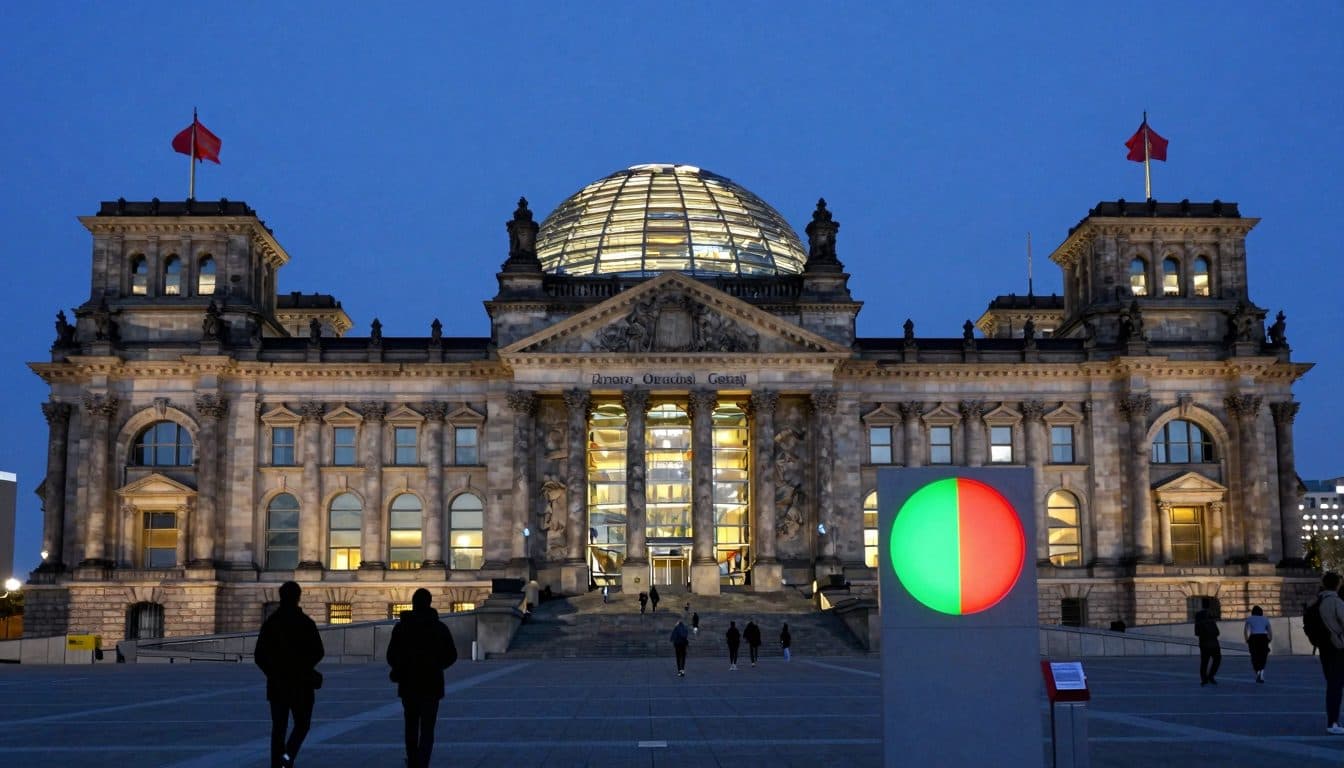
AI-generated image (z-image via Kie.ai)
Summary
On the last day before the summer recess, the Bundestag passed the Building Modernization Act, overturning key provisions of the old Heating Act. Oil and gas heating systems may be installed again, the 65-percent renewable quota is scrapped, and a bio-step and a green gas quota are intended to regulate the transition.
Berlin, July 10, 2026
The Bundestag passed the Building Modernization Act on Friday, thereby overturning key provisions of the previous Heating Act of the former "Ampel" coalition.
Vote on the last sitting day before the summer recess
With the votes of the black-red coalition of Union and SPD, 322 members of parliament voted in favor of the amendment in a roll-call vote, and 272 against it. The opposition of AfD, Greens, and Left rejected the project. The Left parliamentary group had attempted on Thursday to stop the vote before the Federal Constitutional Court but failed with an organ complaint. The court rejected the urgent application.
The core of the reform is the repeal of the so-called 65-percent rule. Since coming into force in 2024, this had initially prescribed for new buildings in new development areas that new heating systems had to be operated with at least 65 percent renewable energies. In the future, owners will once again have greater freedom of choice when installing heating systems. In addition to heat pumps, district heating, or biomass heating systems, oil and gas heating systems are also possible.
Core point: Abolition of the 65-percent rule
The black-red coalition had pushed the law through the responsible Bundestag committees in an expedited procedure in order to pass it before the parliamentary summer recess. In the coalition agreement, CDU, CSU, and SPD had agreed: "Wir werden das Heizungsgesetz abschaffen." Economics Minister Katherina Reiche (CDU) had also spoken of a "Zwang zur Wärmepumpe" with regard to the existing regulations. There should now be technological openness.
Deputy Union parliamentary group leader Sepp Müller defended the project and spoke of a good law for climate protection and freedom. "Wir ersetzen Bevormundung durch Wahlfreiheit," said Müller. CDU politician Lars Rohwer stated that the coalition was ending the "Heizungschaos" of Robert Habeck. "Der Eigentümer hat wieder Entscheidungsfreiheit, welche Heizungsoption er wählen möchte," the draft law states.
Greens parliamentary group leader Katharina Dröge sharply criticized the reform. "Diese Reform ist ein Brandbeschleuniger für die Klimakrise. Es ist völlig zukunftsvergessen, dass CDU und SPD wieder auf klimaschädliche Öl- und Gasheizungen setzen," she said. Greens parliamentary group vice-chair Julia Verlinden accused the coalition of destroying climate protection in the building sector and permanently allowing heating with fossil oil and gas.
Bio-step and green gas quota as transition
A so-called bio-step is planned for newly installed gas and oil heating systems. From January 2029, at least 10 percent climate-friendly fuels are to be used, from January 2030 at least 15 percent, from January 2035 at least 30 percent, and from January 2040 at least 60 percent. Gradually, more biomethane or bio-oil are to be blended in, which are however comparatively expensive.
A so-called green gas quota is planned for existing heating systems from 2028. Details are still open. The federal government wants to present a law by early December that ensures that fuels for heating systems are completely climate-neutral from 2045. An originally planned provision that was to prohibit the operation of heating boilers with fossil fuels from 2045 is being deleted.
The coalition also agreed to split the cost risks from grid fees, CO2 pricing, and biogas equally between tenants and landlords. Owners are to be involved by half in CO2 costs, grid fees, and the costs for the bio-share when installing fossil heating systems. Consumer advocates warn of a cost trap if new gas heating systems are installed and CO2 prices, gas grid fees, or biogas costs rise later.
Criticism from environmental associations and announced lawsuits
Environmental associations such as Deutsche Umwelthilfe have already described the planned new law as constitutionally "höchst zweifelhaft." Lawsuits against the reform are expected. Deutsche Umwelthilfe announced a constitutional complaint as soon as the law comes into force. From the perspective of environmental associations, the planned bio-step is insufficient because only a share of 60 percent climate-friendly fuels would be prescribed by 2040. In addition, it is unclear whether biogas and bio-oil would be available and affordable in sufficient quantities.
BUND climate expert Tina Löffelsend said: "Die Hitzewellen dieses Sommers sind ein weiterer Weckruf für mehr Klimaschutz. Doch die Bundesregierung heize mit dem Gebäudemernisierungsgesetz die Klimakrise weiter kräftig an." Environmental associations argue that Germany wants to be climate-neutral by 2045 and that the building sector must therefore emit significantly less CO2. The heating sector is considered a "Sorgenkind" in climate protection.
Reduction of heating subsidies from July 21
In parallel with the legislative amendment, state subsidies for heating replacement are being cut. Until now, heat pumps or other climate-friendly heating systems could be subsidized with up to 70 percent. From July 21, new income-dependent conditions apply. Households with incomes up to 40,000 euros will continue to receive an income bonus of 30 percent, households up to 50,000 euros initially still 10 percent. Less money is available primarily for households with high incomes.
The maximum subsidy amount is falling from 30,000 to 28,000 euros and will be reduced by a further 750 euros every six months in the future. The climate speed bonus of 20 percent for early heating replacements is being stretched over time and will fall every six months from next year until it expires in 2029. A new child allowance reduces the basic income once by 10,000 euros. The government justifies this step with the need to save and with recently falling heat pump prices.
Anne Held, managing director of the Karlsruhe Energy and Climate Protection Agency, reassured concerned consumers: "Es ist nicht so, dass die Förderung komplett eingestellt wird". One is currently in the transition phase; in principle, the subsidy continues. However, the income limits are at a rather low income, so that the social gradation does not come into play as strongly, since low-income people rarely own property in the form of real estate.
Information for consumers
Held advised consumers to consider a long-term heating solution for their residential building, to find out early, and to obtain various offers. Why the view of the acquisition costs is important but should not be decisive for a decision, she explained in conversation with SWR Aktuell moderator Simon Dörr. In other European countries, heat pumps are already cheaper, which suggests that the high prices in Germany are due to the subsidies. What remains is the hope that prices for heat pumps will fall.
Economics Minister Reiche said that in the future too, the heat pump would remain a dominant technology. So far, however, there has been a reluctance to invest. For existing buildings, there are comprehensive transition periods in the existing law. Functioning heating systems can continue to be operated. The Federal Constitutional Court had decided in 2021 that drastic steps to reduce CO2 emissions must not be postponed to the disadvantage of the younger generation.
The law was not subject to approval in the Bundesrat, but the upper chamber could have delayed the project and called the Mediation Committee. The reform is expected to pass the Bundesrat on the same Friday. The law is being renamed from the "Heizungsgesetz" to "Gebäudemodernisierungsgesetz." Paragraph 71 of the previous law on the requirements for a heating system is being deleted.
Questions & Answers
What did the Bundestag decide on July 10, 2026?
The Bundestag passed the Building Modernization Act, thereby overturning key provisions of the previous Heating Act of the former "Ampel" coalition. In a roll-call vote, 322 members of parliament voted in favor and 272 against.
What does the repeal of the 65-percent rule mean for owners?
Owners can once again freely choose between heat pumps, district heating, biomass, and oil and gas heating systems when installing heating. The obligation to operate new heating systems with at least 65 percent renewable energies is eliminated.
What transitional rules apply to new gas and oil heating systems?
A bio-step applies to newly installed gas and oil heating systems: from 2029 at least 10 percent climate-friendly fuels, from 2030 at least 15 percent, from 2035 at least 30 percent, and from 2040 at least 60 percent. A green gas quota is planned for existing heating systems from 2028.
Bundestag adopts new Heating Act: Oil and gas remain | allfacts360