Canada set to award multi-billion submarine contract to Germany's TKMS, reports say
7/6/2026
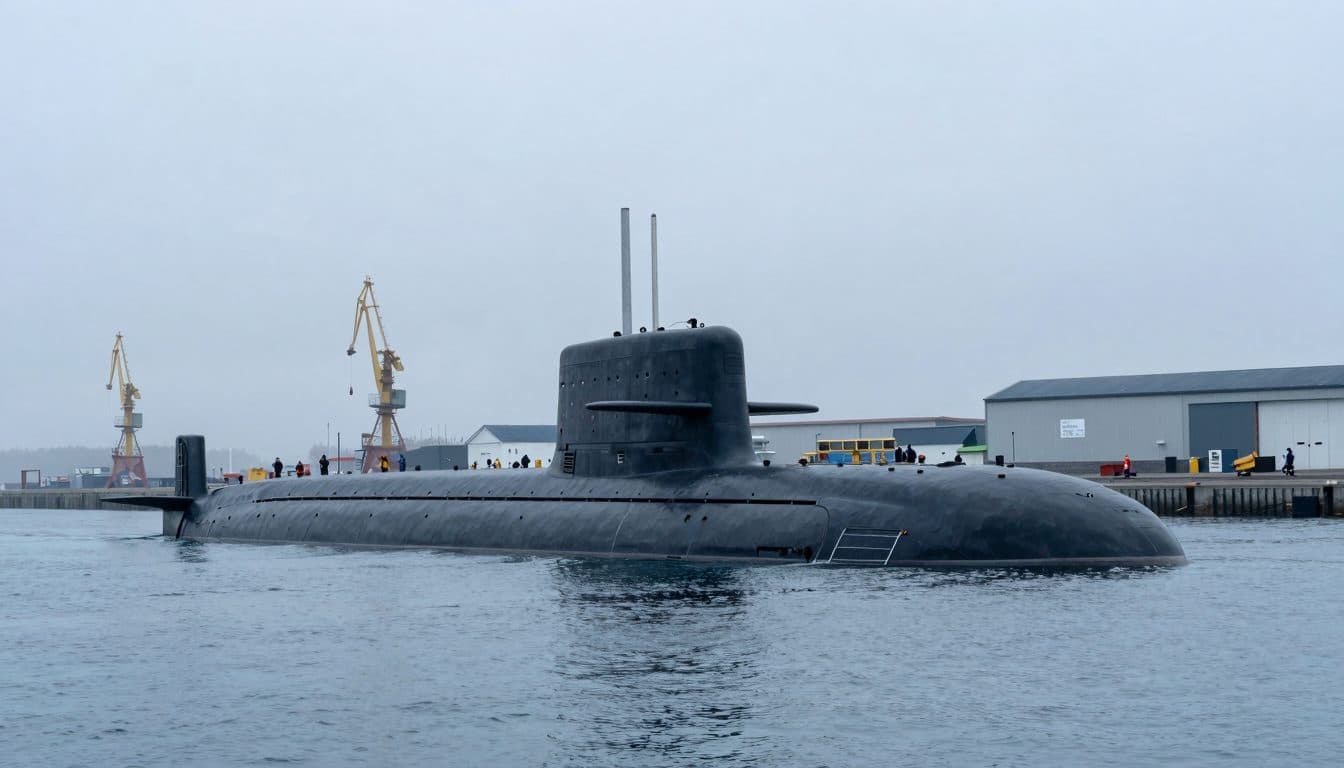
AI-generated image (z-image via Kie.ai)
Summary
According to reports from The Globe and Mail and Canadian public broadcaster CBC, the Canadian government in Ottawa intends to award a submarine contract worth more than ten billion euros to Kiel-based TKMS, Thyssenkrupp's defence subsidiary. The deal for twelve Type 212 CD submarines would double production of the type and create new jobs at shipyards in Kiel and Wismar ahead of the NATO summit in Ankara.
The Canadian government is set to award a multi-billion-euro submarine contract to the German naval shipbuilder TKMS, Thyssenkrupp's defence subsidiary based in Kiel, according to reports from The Globe and Mail and Canadian public broadcaster CBC on 6 July 2026.
Context: The Type 212 CD submarine
According to those reports, citing informed circles, Ottawa intends to select TKMS over its South Korean competitor Hanwha Ocean for the construction of twelve highly advanced Type 212 CD submarines. The deal is estimated to be worth more than ten billion euros. There was no official confirmation of the decision initially, and TKMS declined to comment.
Type 212 CD submarines are extremely difficult to detect and can operate autonomously and silently for weeks using modern lithium-ion batteries, technology that is already being procured by the German and Norwegian navies. With Canada's order, the production volume of this submarine type would double, since Germany and Norway had previously decided to procure six submarines each. The planned deal also strengthens cooperation between Canada, Germany, and Norway on the industrial and on the northern flank security level.
Industrial impact for Kiel and Wismar
The contract could create substantial new jobs at TKMS shipyards in Kiel and Wismar in Mecklenburg-Western Pomerania. TKMS took over the Wismar shipyard in mid-2022 after its previous operator went insolvent, and has since converted it to the construction of naval and special ships, including a production line for submarine hulls. All TKMS production sites are expected to be fully utilised for many years thanks to the Canadian order.
German political backing
The German government expressed hope on Monday morning that Canada would choose TKMS. According to a government representative in Berlin, the deal is a major strategic project that would bind Canada to Germany for decades: "Das ist ein großes strategisches Vorhaben. Wenn es gelingt, dann wird es Kanada an uns für Jahrzehnte binden."
The political groundwork in Berlin was extensive. Chancellor Friedrich Merz (CDU) invested significant political work in recent weeks and months to support the deal, while Defence Minister Boris Pistorius (SPD) travelled to Canada in May to promote the submarines. Pistorius argued that, together, Germany and Canada could build the largest and most modern conventional submarine fleet in the world: "Zusammen können wir die größte und modernste konventionelle U-Boot-Flotte der Welt bauen." He also underlined what makes the type distinctive, stating that "Es gebe nichts Vergleichbares unter konventionellen U-Booten."
TKMS is supported in its bid by the German federal government and by Norway as a partner. Discussions between Berlin and Ottawa reportedly extended beyond submarines to include potential investment commitments in rare earths, mining, artificial intelligence, and battery production for the automotive sector, suggesting the submarine deal is part of a broader industrial package rather than a stand-alone procurement.
TKMS chief executive Oliver Burkhard announced plans to win the Canadian order with a comprehensive industrial package and described the potential contract as "der größte, der jemals in dieser Welt der konventionellen U-Boote bei einem NATO-Partner vergeben wurde." That characterisation matches the scale: at more than ten billion euros across twelve vessels, it would be the largest conventional-submarine order ever placed by a NATO member.
Strategic timing around the NATO summit
On financial markets, the news was reflected in the share price of TKMS, which at one point rose by up to eleven percent, leading the MDAX. Analyst ratings from Deutsche Bank AG have included a "Buy" recommendation for the stock, while Bernstein Research has maintained a "Market-Perform" rating, according to available research summaries.
The timing of the decision carries geopolitical weight. NATO is holding its annual summit on Tuesday and Wednesday in the Turkish capital Ankara. The award is also seen as a possible signal from Canada to the United States ahead of that meeting, with Washington demanding increased defence spending from Canada as well as from other alliance members: "Washington fordert vom Nachbarland wie von anderen Bündnismitgliedern auch eine Erhöhung der Verteidigungsausgaben." Canadian officials suggested that announcing such a decision "im Kontext" of the NATO summit would be "ein sehr gutes Signal."
Reporting and market reaction
The contract award also fits a broader pattern of NATO reorientation, as the United States reduces its military contributions and Europe is being asked to do more and to rearm. A government source in Berlin said the deal would be "ein sehr guter Startpunkt für eine strategische Zusammenarbeit" between Canada and Germany.
TKMS, headquartered in Kiel, is the defence subsidiary of Thyssenkrupp. The company has been pursuing the multi-billion submarine contract for months: "Der Konzern treibt seit Monaten seine Bemühungen um den milliardenschweren U-Boot-Auftrag voran." Its competitor in the procurement is a South Korean shipbuilding company, described as "ein südkoreanisches Schiffbau-Unternehmen," later identified as Hanwha Ocean.
According to Canadian public broadcaster reporting, the government in Ottawa is leaning toward awarding the contract to TKMS: "Auch der kanadische Rundfunk erfuhr, dass die Regierung in Ottawa sich für die Thyssenkrupp-Rüstungstochter TKMS entscheiden wolle." A German newspaper summarised the news as: "Kanada werde den Auftrag nach Deutschland vergeben."
The two companies competed for the contract over several months, and a Canadian newspaper, The Globe and Mail, was first to report that TKMS had prevailed: "Wie die kanadische Tageszeitung 'The Globe and Mail' berichtet, hat Ottawa informierten Kreisen zufolge das deutschen Unternehmen aus Kiel für den Bau der neuen kanadischen U-Boote ausgewählt." The report went on to describe the order as "milliardenschweren U-Boot-Auftrag."
Outlook
The expected economic effect in northern Germany is concrete. "Durch den milliardenschweren Großauftrag könnte es neue Arbeitsplätze in den Werften in Kiel und Wismar geben," reporting noted, turning a former cruise-ship yard in Wismar into a multi-year hub of submarine construction. Combined with new jobs being created at the Wismar shipyard and an already-established hull production line, the order would secure industrial capacity for at least a decade.
In the broader Canadian context, ordering German-built submarines represents a significant shift after years of uncertainty over how Ottawa would replace its ageing fleet and signals long-term interoperability with Germany and Norway on NATO's northern flank. The security dimension of the deal, alongside the industrial package, underscores why Berlin treated the outcome as strategically vital on the eve of the Ankara summit.
Germany's TKMS has not issued a statement regarding the reported decision: "Auch TKMS gab keine Stellungnahme ab." German government circles nevertheless indicated optimism that the deal would be confirmed in time to frame the conversation at the NATO summit. The news was broadcast on Deutschlandfunk on 6 July 2026, "Diese Nachricht wurde am 06.07.2026 im Programm Deutschlandfunk gesendet," but "dafür gab es jedoch zunächst keine offizielle Bestätigung" from either Ottawa or Kiel.
Should formal confirmation follow, the deal would mark the largest conventional-submarine procurement ever placed by a NATO partner, deepen German-Canadian industrial ties for decades, and reposition Kiel and Wismar as the centre of Europe's non-nuclear submarine industry at a moment when the alliance is being asked to shoulder a greater share of its own defence.
Questions & Answers
Why is Canada reportedly choosing Germany's TKMS over South Korea's Hanwha Ocean?
According to The Globe and Mail and Canadian public broadcaster CBC, Ottawa is set to select TKMS as the winner of its submarine tender, ending a months-long competition that saw TKMS supported by the German federal government and by Norway as a partner against the South Korean competitor Hanwha Ocean.
How large is the contract and what would it deliver?
The deal is estimated at more than ten billion euros and covers twelve Type 212 CD submarines, which would double the production volume of the type alongside earlier orders from Germany and Norway.
What role is the NATO summit in Ankara playing in the announcement?
NATO is holding its annual summit in the Turkish capital on Tuesday and Wednesday, and the contract award is seen as a possible signal from Canada to the United States ahead of that meeting, since Washington is demanding higher defence spending from alliance members.