Carinthia Chamber of Commerce wants Wörthersee classified as a "heavily modified water body"
Klagenfurt, 16 June 2026
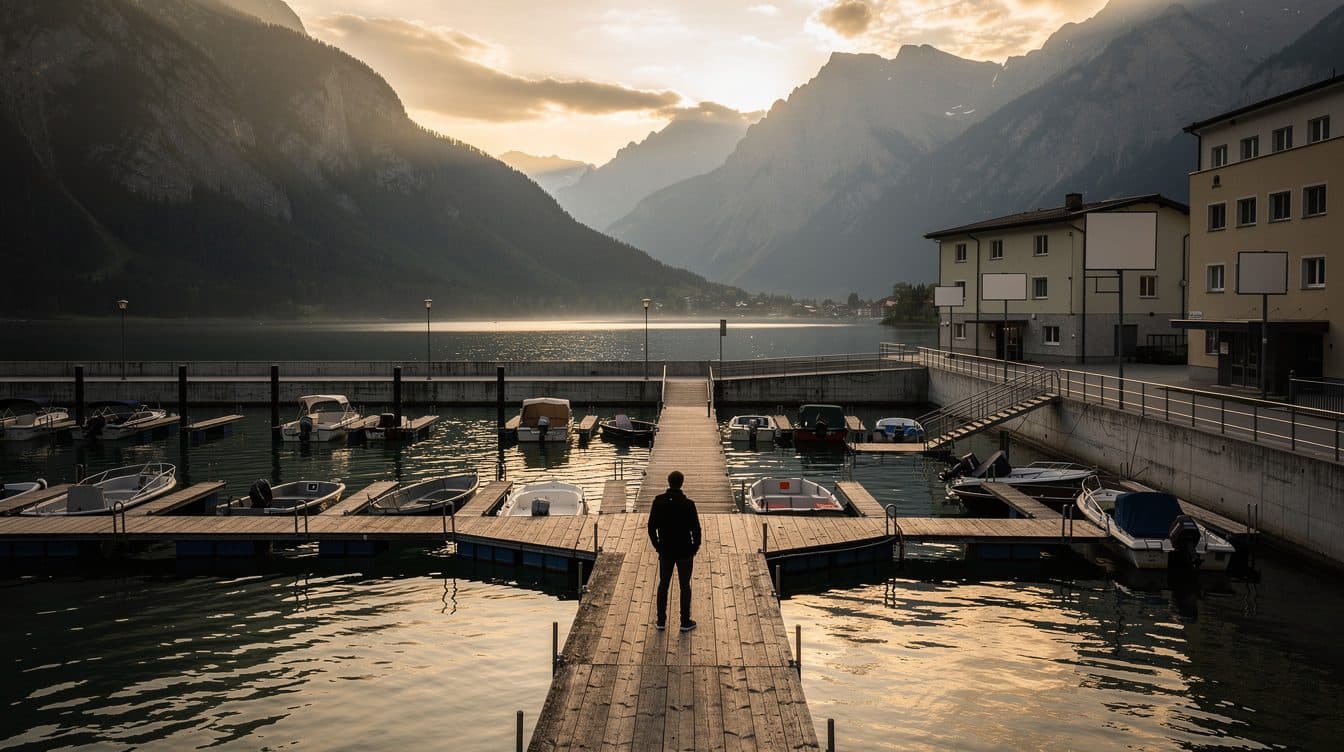
AI-generated image (flux-2/pro-text-to-image via Kie.ai)
Summary
The Carinthia Chamber of Commerce has called in a submission for the Wörthersee to be classified in the National Water Management Plan no longer as a "natural"…
Klagenfurt, 16 June 2026
The Carinthia Chamber of Commerce has called in a submission for the Wörthersee to be classified in the National Water Management Plan no longer as a "natural" but as a "heavily modified water body." Environmental associations speak of an unacceptable path and warn of an end to renaturation measures.
The Carinthia Chamber of Commerce has called in a submission to Environment Minister Norbert Totschnig (ÖVP) for the Wörthersee to be classified in the National Water Management Plan no longer as a "natural" but as a "heavily modified water body."
Background: EU Water Framework Directive and Management Plan
According to APA, the initiative has been on the table for a short time. Should the reclassification occur, lower assessment criteria and ecological targets would apply to the lake. "Bei einem 'erheblich veränderten Wasserkörper' sind die Bewertungskriterien und ökologischen Ziele niedriger gesteckt," the submission states, which the Chamber justifies with the ring canalisation around the lake, shoreline developments, shipping, and tourist use.
In the paper, which is available to APA, it states verbatim: „Davon möchte man sich hier verabschieden." This refers to strict ecological requirements. According to the Chamber's presentation, the reclassification is intended to create room for tourist development and existing lake installations.
Until now, the Wörthersee, like most lakes in Austria, has been classified as a "natural water body." The classification follows the EU Water Framework Directive, which is intended to bring waters into a better condition. It provides for renaturation as well as the removal of installations and straightening.
Ecological status downgraded from "good" to "moderate"
The trigger for the initiative is a current measurement that downgrades the lake's ecological status from "good" to "moderate." The main problem, according to this, is too few aquatic plants, so-called macrophytes. A measures plan was therefore presented last year.
The Chamber of Commerce sees tourist use of the lake threatened by the measures plan. „Wenn ich höre von Rückbauten von Stegen: Das hat einen ökonomischen Schaden!" Jetties would meanwhile have to be re-approved every ten years, the submission states. WK spokesperson Stefan Sternad said according to APA: „Das ist kein Natursee, es gibt sehr viel verbautes Seeufer."
Arguments of the Chamber of Commerce
Sternad also emphasises that the classification as "moderate" says nothing about the quality of the lake; it is only about "gewisse Parameter". He criticises that an "Anti-Motorboot- und Anti-Establishment-Diskussion" is being conducted about the lake. Sternad also spoke of a contradiction with the tourist marketing of the lake as intact nature. „Ich sehe einen gewaltigen Widerspruch dazu, wie man den Wörthersee üblicherweise verkauft: als intakte Natur."
Environmental organisations are responding with sharp criticism. Franz Maier, President of the Umweltdachverband, said: „Man will sich von Renaturierung verabschieden." The Chamber of Commerce wants to get rid of the measures, "ein inakzeptabler Weg". According to Maier, the category "heavily modified water body" is for "Gewässer, wo ein Kraftwerk nach dem anderen ist, oder wo überhaupt kein natürliches Ufer mehr vorhanden ist".
Criticism from the environmental side
Maier also considers the Chamber's argumentation contradictory in the tourist context. „Das halte ich für unlauter und für einen Widerspruch zur touristischen Zielsetzung." Anyone who markets the Wörthersee as a natural lake must also be willing to bring it into a better condition, Maier said.
With the submission, Environment Minister Norbert Totschnig (ÖVP) is called upon to "aktualisieren" the classification of the Wörthersee in the National Water Management Plan. The final decision as to whether a body of water is classified as "natural" or as "heavily modified" lies with the responsible authorities. According to the submission, experts had explained that the Wörthersee is currently "wie ein Bergsee beurteilt".
Open decision at the Environment Ministry
„Experten haben uns gesagt, wir würden den Wörthersee wie einen Bergsee beurteilen," APA quotes from the submission. The Chamber argues that the existing classification does not do justice to the actual conditions at the lake. According to experts' assessment, an extension of the deadlines for achieving the targets will only be possible if the ecological requirements are met.
The EU Water Framework Directive provides for waters to reach a "guten ökologischen Zustand" by a certain date. If this is not achieved, further requirements threaten. „Wenn ökologisch Verbesserungsbedarf herrscht, wird eine Verlängerung schwierig, ganz besonders bei einem 'natürlichen Wasserkörper'," the submission states.
The debate is part of a larger conflict over the use and protection of Austrian lakes. While business and tourism representatives insist on existing rights protection and investment security, environmental associations call for more consistent renaturation steps. At the Wörthersee, these interests collide particularly visibly, because the lake plays an outstanding role in Carinthia both ecologically and economically.
Sternad defends the initiative as a necessary adjustment to reality. „Davon möchte man sich hier verabschieden," he is quoted with a view to the strict requirements. The Chamber of Commerce does not see the lake as untouched nature, but as a living and economic space that has been used and altered over decades.
Maier, on the other hand, warns that a reclassification would further soften the already tight deadlines. „Man will sich von Renaturierung verabschieden," he said. He pointed out that lakes in Austria must be brought into a better condition according to the Water Framework Directive, „zu Renaturierung, Einbauten und Begradigungen müssten entfernt werden".
It remains unclear how the responsible ministry and the specialist authorities will respond to the submission. Observers expect a political and legal dispute, as the classification would have far-reaching consequences for future approvals, investments, and renaturation projects at the Wörthersee. The dispute is also likely to continue over the question of which measures will actually be implemented at the lake.
The Chamber of Commerce emphasises that it wants to create planning security with the submission. "Inakzeptabler Weg" is the accusation of the Umweltdachverband, on the other hand. The positions are therefore clearly opposed: on one side are tourist and economic interests, on the other side is the claim to bring the lake ecologically into a better condition.
One thing is certain: should the Wörthersee actually be classified as a "heavily modified water body," this would change not only the ongoing measures but also the future interpretation of the EU Water Framework Directive at one of Austria's best-known lakes. The debate is a test case for dealing with ecological requirements in heavily used tourist waters.
Questions & Answers
What exactly does the Carinthia Chamber of Commerce demand regarding the Wörthersee?
The Carinthia Chamber of Commerce has called in a submission to Environment Minister Norbert Totschnig (ÖVP) for the Wörthersee to be classified in the National Water Management Plan no longer as a "natural" but as a "heavily modified water body."
Why is the Wörthersee's ecological status currently "moderate"?
According to APA, the ecological status of the lake was downgraded from "good" to "moderate" in a measurement; the main problem is considered to be too few aquatic plants, so-called macrophytes.
What consequences would a reclassification as a "heavily modified water body" have?
With a classification as a "heavily modified water body," lower assessment criteria and ecological targets apply, which would change planned renaturations and requirements for shoreline developments, jetties, and tourist uses.
Carinthia Chamber of Commerce wants Wörthersee… | allfacts360