Colombia Election 2026: De la Espriella Wins Runoff | allfacts360
Colombia Elects Right-Winger de la Espriella as New President
Bogotá, June 22, 2026
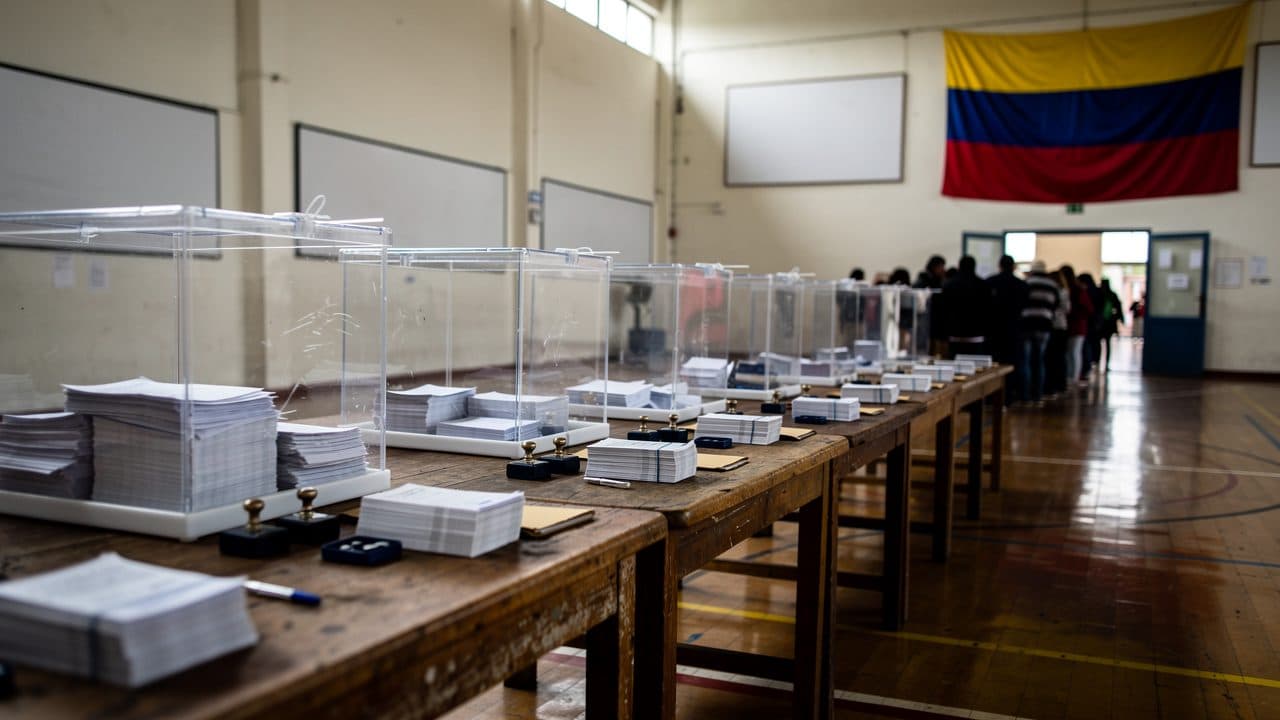
AI-generated image (flux-2/pro-text-to-image via Kie.ai)
Summary
The right-wing politician Abelardo de la Espriella has won Colombia's presidential runoff with roughly 49.7 percent of the vote against the left-wing coalition candidate Iván Cepeda. The 47-year-old lawyer will succeed the left-leaning incumbent Gustavo Petro on August 7 and has already announced a hard line against armed groups and drug cartels.
Bogotá, June 22, 2026
The right-wing conservative lawyer Abelardo de la Espriella has won Colombia's presidential runoff according to preliminary official results, with around 49.7 percent of the vote against left-wing senator Iván Cepeda, who received approximately 48.7 percent.
Election Victory by a Narrow Margin
After 99.9 percent of ballots had been counted, de la Espriella led with about 49.6 percent of the vote, ahead of Cepeda, who received 48.7 percent. The electoral authority rated the preliminary results as extraordinarily reliable; deviations from the official final result are considered minor. The State Election Oversight body declared that the vote had proceeded in an orderly manner overall.
Platform: Tough Stance on Guerrillas and Drug Trafficking
The election victory of the political newcomer, who has given himself the nickname "El Tigre" (The Tiger), represents a clear change of direction for the country. With the win by the 47-year-old lawyer, the term of Colombia's first left-leaning head of state in history, Gustavo Petro, comes to an end; Petro was barred from running again due to term limits. Cepeda, like Petro, belongs to the Pacto Histórico (Historic Pact) alliance and had promised a continuation of key projects of the outgoing government.
De la Espriella ran for the conservative movement Movimiento Defensores de la Patria (Defenders of the Fatherland). He announced plans to deregulate the economy and drastically shrink the state apparatus. During the campaign, he promoted a hard security line: planned are a 90-day military offensive against gangs involved in drug trafficking, airstrikes against guerrilla groups, and the bombardment and chemical destruction of coca plantations. According to his own statements, he intends to secure military support from the United States and Israel for this offensive.
Security Situation and Wave of Violence
In a statement following the announcement of the preliminary results, de la Espriella spoke of a "great responsibility" for the upcoming term in office. He also announced plans, modeled on Salvadoran President Nayib Bukele, to build mega-prisons in which inmates would, in his words, live on "water and bread." The right-wing politician, who calls himself "The Tiger," is a lawyer by profession, a father of four, and holds Colombian as well as U.S. citizenship.
Critics accuse the outgoing president Petro of having failed to achieve decisive improvements despite negotiations with armed groups such as the ELN guerrilla. Supporters of the government camp pointed instead to progress such as increased financial support for the socially vulnerable and a decline in poverty during Petro's term.
Support from Washington
U.S. President Donald Trump had repeatedly and openly backed de la Espriella during the campaign and described his election victory as important for relations between the two countries. Trump had expressed his "complete and total support," de la Espriella said. After the preliminary results were announced, Trump congratulated him on his platform Truth Social, calling his candidate a great election winner. According to de la Espriella, the U.S. leadership was among the first to offer congratulations; U.S. Secretary of State Marco Rubio also extended congratulations.
Trump simultaneously warned of consequences for U.S.–Colombia relations should Cepeda win. He called the opposition candidate a "radical leftist Marxist." With de la Espriella's victory, Trump gains another close ally on the American continent alongside other right-wing populist presidents such as Argentina's Javier Milei and El Salvador's Nayib Bukele.
Strained Relations Between Bogotá and Washington
Relations between Bogotá and Washington had cooled considerably of late. The Trump administration had classified Colombia last year as a country failing to meet its international obligations in the fight against illegal drugs. The U.S. also imposed sanctions on Petro, citing insufficient action against drug trafficking. De la Espriella announced plans to expand the recently cooled relations with Washington and cooperate more closely in the fight against drug trafficking.
With around 53 million inhabitants, Colombia is the second-largest country in South America and has long been considered the United States' most important partner in the region. The country is the world's largest producer of cocaine. The security situation had shaped the campaign massively: the election was overshadowed by the worst wave of violence in Colombia in a decade, with several car bombings and drone attacks as well as clashes between security forces and armed groups in multiple regions. In a bombing in western Colombia, at least 14 people were killed and others wounded; President Petro blamed terrorists.
In addition, right-wing presidential candidate Miguel Uribe was murdered in June 2025. Ten years after the historic peace agreement between the government and the former FARC guerrilla, numerous armed groups remain active in Colombia, including FARC splinter factions, right-wing paramilitaries, and drug cartels.
Challenge and Review
De la Espriella had already surprisingly placed first in the first round of voting three weeks ago, with 44 percent of the vote, while Cepeda received 41 percent. In Sunday's runoff, the gap between the two candidates ultimately amounted to around 250,000 votes.
Because of this narrow result, Cepeda pointed to the still-pending official review of all electoral protocols and stated that he would recognize the final result only after the completion of this process. Cepeda's campaign team announced plans to challenge the results from approximately 33,000 polling stations. Outgoing President Petro also warned against declaring a winner given the narrow lead.
Outlook on the Transfer of Power
De la Espriella, by contrast, said he had just spoken with the U.S. president, who had expressed his support and recognition of the victory: "Ich habe gerade vor ein paar Minuten mit dem Präsidenten der Vereinigten Staaten gesprochen. Er hat seine Unterstützung, seine Anerkennung unseres Siegs zum Ausdruck gebracht." Supporters of de la Espriella celebrated the election victory and waved flags.
Colombia's Ministry of Defense had deployed more than 408,000 members of the armed forces and police across the country for the election in order to secure the vote in light of the wave of violence. Around 41 million citizens had been called to vote in the runoff.
De la Espriella will take office on August 7, succeeding Gustavo Petro, who had gone down in history as Colombia's first left-wing head of state. With the election victory, the country's political course is visibly shifting to the right: economic deregulation, a massive expansion of the security forces, a hard line against armed groups, and a clear rapprochement with Washington shape the program of the incoming president. The coming weeks will show whether Cepeda and his supporters will pursue the announced legal steps and whether the official review can still change the preliminary result.
Questions & Answers
Who is Abelardo de la Espriella?
Abelardo de la Espriella is a 47-year-old Colombian lawyer who ran for the conservative movement Defensores de la Patria and won the 2026 presidential runoff with around 49.7 percent of the vote according to preliminary results. He also holds U.S. citizenship and calls himself "El Tigre."
Why has Iván Cepeda challenged the election?
Cepeda pointed to the narrow margin of around 250,000 votes and announced plans to have the results from approximately 33,000 polling stations legally reviewed. He stated that he would recognize the final result only after completion of the official review of all electoral protocols.
What are de la Espriella's plans for security policy?
De la Espriella announced a 90-day military offensive against drug gangs with airstrikes and the destruction of coca plantations. According to his own statements, he intends to obtain military support from the United States and Israel for this campaign and to build mega-prisons modeled on El Salvador.