Peru Runoff Election: Conservative Fujimori Narrowly Leads Left-Wing Challenger Sánchez in Preliminary Count
Lima, June 8, 2026
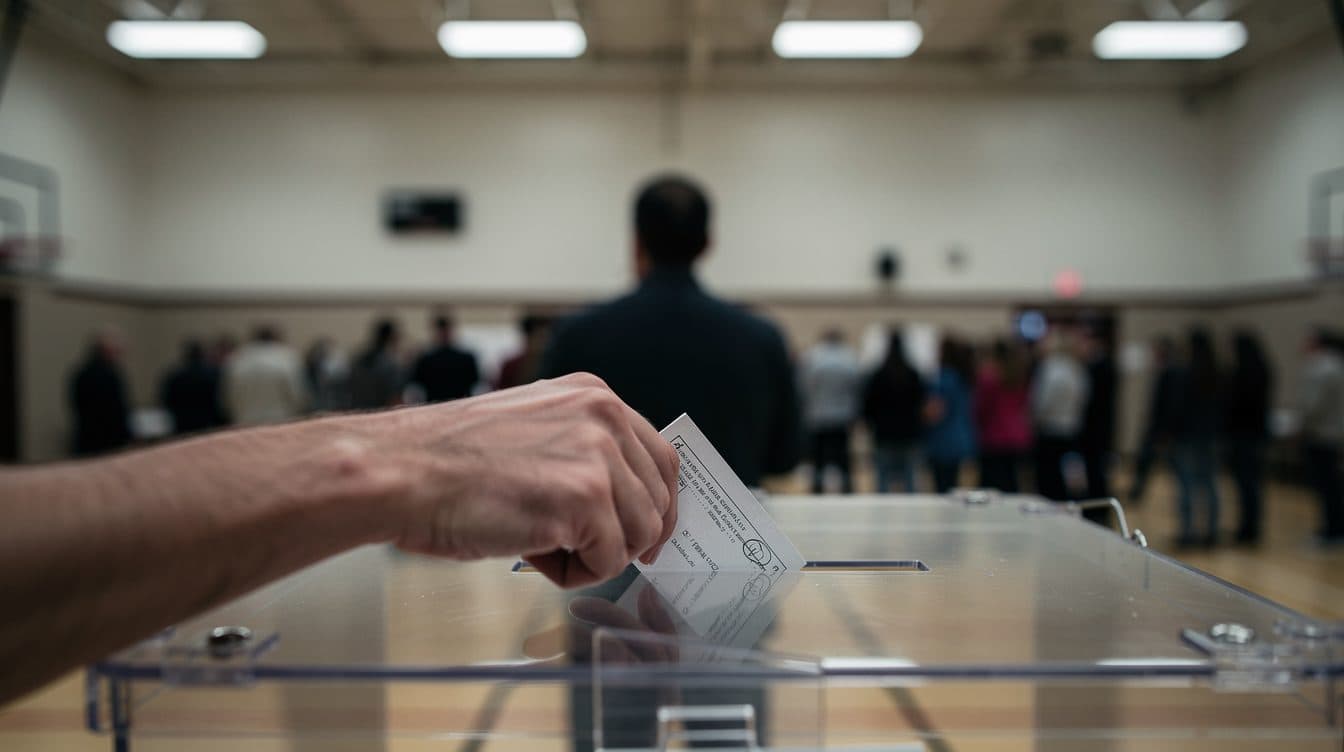
AI-generated image (flux-2/pro-text-to-image via Kie.ai)
Summary
In Peru's presidential runoff election, Keiko Fujimori held a narrow lead over left-wing challenger Roberto Sánchez after a preliminary count of more than 45…
Lima, June 8, 2026
In Peru's presidential runoff election, Keiko Fujimori held a narrow lead over left-wing challenger Roberto Sánchez after a preliminary count of more than 45 percent of the votes.
As the electoral authority announced late Sunday night (local time), Fujimori reached roughly 53 percent on Sunday evening. Her left-wing challenger Roberto Sánchez received 47 percent. Two exit polls by the institutes Ipsos and Daum had given Fujimori only the slimmest of leads immediately after the polls closed.
More than 27 million Peruvians were called upon to cast their ballots on Sunday. The country of around 35 million inhabitants thus faces a decision on its political direction, the outcome of which, according to analysts, reflects the deep divisions in society. Analyst Paulo Vilca of the Institute of Peruvian Studies (IEP) told the AFP news agency: "Dieses Ergebnis spiegele die Spaltung des Landes wider." It also shows "dass keine politische Kraft eine Vormachtstellung einnimmt".
Background: Why There Is a Runoff at All
The runoff came about after none of the 35 candidates in April had received the necessary majority to prevail in the first round. In the first round of the presidential election, Fujimori and Sánchez each received less than 30 percent of the votes. Even before the runoff, one-fifth of the roughly 27 million eligible voters were still considered undecided according to pollsters.
It was expected that Fujimori's lead could shrink once votes from rural areas were counted. After the complete count, the Supreme Electoral Court has until mid-July to officially declare a winner. The new president's inauguration is scheduled for July 28.
Keiko Fujimori: Fourth Candidacy and Her Father's Legacy
Fujimori (51) is the daughter of former President Alberto Fujimori, who was convicted of human rights violations and has since died. The politician from the conservative party Fuerza Popular was running for the presidency for the fourth time. Her father had ruled Peru from 1990 to 2000; he was later convicted of human rights violations and corruption while simultaneously being regarded by supporters as the conqueror of the "Shining Path." Fujimori died in 2024.
Her father's political legacy continues to shape the daughter's identity to this day — both as an advantage and a disadvantage. Keiko Fujimori was taken into pretrial detention in October 2018 on suspicion of bribery; the Constitutional Court overturned the detention a year later. In 2006 she was first elected to Congress, later founding the party Fuerza Popular, which she has led ever since.
In the event of an election victory, Fujimori announced a tough crackdown on crime and illegal migration. She has announced that she will take a hard line against organized crime and, in the first 100 days, deploy the military, tighten prison conditions, and deport migrants without legal status. She is also planning a deregulation of the economy.
Security and Migration: Fujimori's Platform
In a statement, Fujimori said: "Heute, da Peru unter Kriminellen und Erpressern leidet, verlangen die Menschen nach einer Fujimori – hier bin ich". A leading trade unionist had also accused Fujimori of having carried out a "slow coup" after the 2021 election; Fujimori had at that time unsuccessfully tried to have part of the votes cast annulled.
Challenger Sánchez (57) was minister of foreign trade and tourism in the government of imprisoned former President Pedro Castillo (2021-2022). The candidate of the alliance Juntos por el Perú advocates for the rights of the poor rural population and calls for a reform of the police and judiciary. He also argues for a stronger role for the state in the economy.
Roberto Sánchez: A Left-Wing Alternative and the Castillo Line
He is supported by followers of left-wing former President Pedro Castillo, who is in prison after an attempted coup. Sánchez views the former president as the victim of a political maneuver. In the event of an election victory, he intends to pardon Castillo. In the event of an election victory, Sánchez announced his intention to abolish laws that, in his view, favor organized crime.
Sánchez accuses Fujimori of having contributed to the political crisis. Her party shares responsibility for the ouster of several presidents. Over the past ten years, Peru has had eight presidents. Congress can remove presidents from office for "moral incapacity" — a mechanism that has been used repeatedly in recent years and that Sánchez wants to limit through judicial reform.
Political Crisis: Eight Presidents in Ten Years
Sánchez visited Castillo in prison after casting his vote. Observers interpreted the visit as a symbolic act of solidarity with the imprisoned former head of state. Fujimori, for her part, pointed to her own plans for greater security and economic deregulation as an answer to the dissatisfaction of many voters.
The campaign was marked by violence and anger at those in political responsibility, whom many voters blame for the instability that has prevailed in the country for years. Observers see the polarization between Fujimori's conservative camp and Sánchez's left-leaning movement as an expression of the deep-seated crisis the country has been experiencing for years.
Mood in the Country: Violence and Anger in the Campaign
For Sánchez, it would be his first presidential candidacy. He advocates for the rights of the poor rural population and calls for a reform of the police and judiciary, as well as a stronger role for the state in the economy. Fujimori is running for the highest state office for the fourth time in a row and is relying on a tough course on security policy.
After the preliminary count of more than 45 percent of the votes, Fujimori reached just under 53 percent, while Sánchez achieved 47 percent. According to official figures, Fujimori was at roughly 53 percent on Sunday evening; in a partial count of around 36 percent, she had also reached roughly 53 percent, with Sánchez at 47 percent. At around half of the polling stations counted, Fujimori's lead amounted to nearly six percentage points.
For Peru, the runoff is about nothing less than the country's future direction: more state control and social reforms under Sánchez, or more security and economic deregulation under Fujimori. Both camps have announced that, in the event of defeat, they will scrutinize the election result closely; the final decision of the Supreme Electoral Court is expected by mid-July.
Questions & Answers
Who is Keiko Fujimori?
Keiko Fujimori (51) is a conservative politician from the Fuerza Popular party and was running for the presidency in Peru for the fourth time. She is the daughter of former President Alberto Fujimori, who died in 2024, ruled from 1990 to 2000, and was later convicted of human rights violations and corruption.
Who is Roberto Sánchez?
Roberto Sánchez (57) is a left-wing politician and candidate of the alliance Juntos por el Perú, running for the presidency for the first time. He served as minister of foreign trade and tourism from 2021 to 2022 in the government of imprisoned former President Pedro Castillo.
What happens after the runoff in Peru?
After the complete count, the Supreme Electoral Court has until mid-July to officially declare a winner. The inauguration of the newly elected president is scheduled for July 28.
Peru Runoff Election: Conservative Fujimori Narrowly… | allfacts360