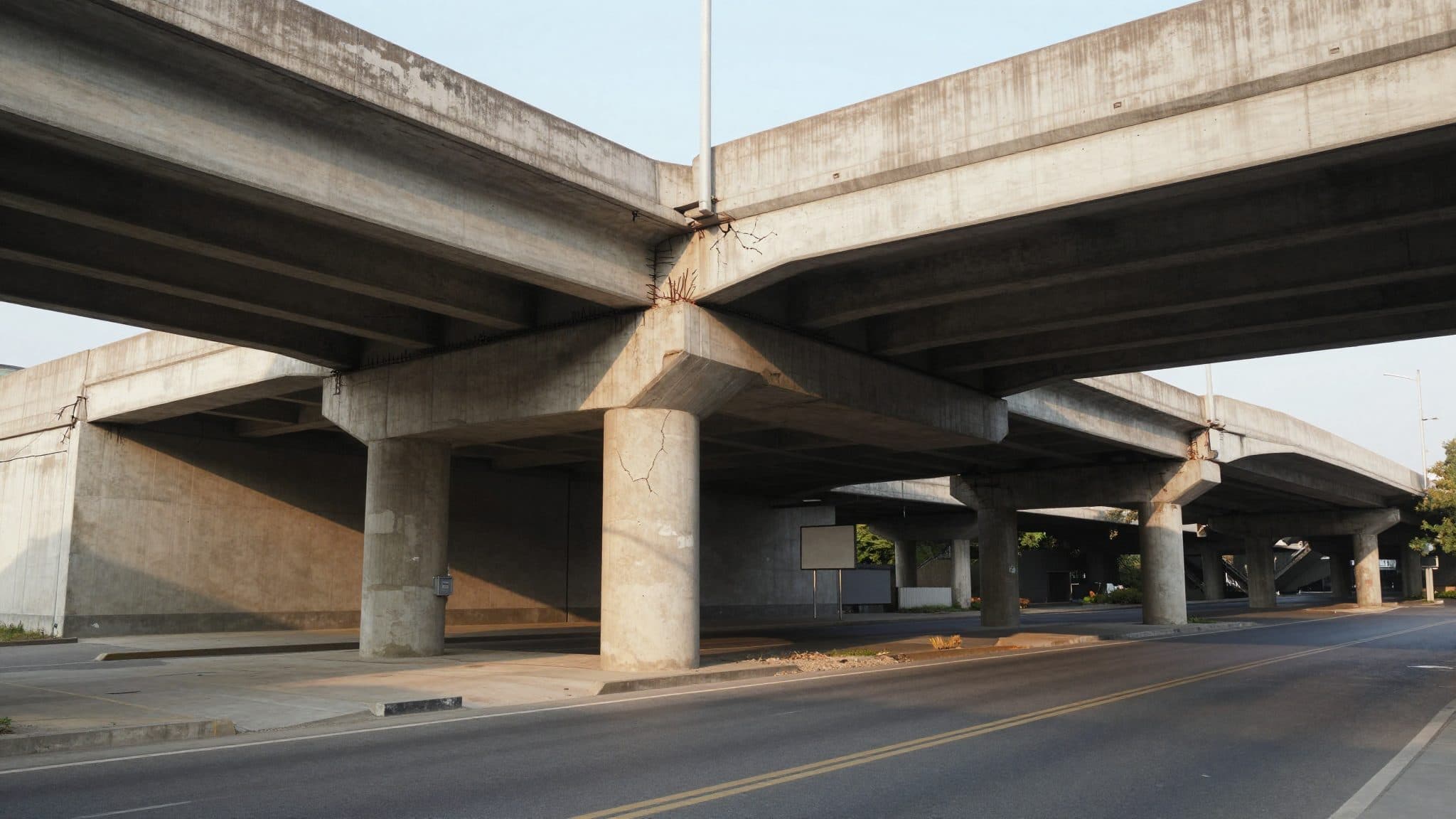
Crumbling Bridges in Germany: Experts Say High Costs Are Avoidable
Berlin, 10 July 2026
AI-generated image (z-image via Kie.ai)
Summary
Bridge experts are warning of a wave of dilapidated structures in Germany and consider the resulting costs from demolition and new construction to be largely avoidable. According to their analysis, the causes lie in decades of neglected maintenance and a "build and forget" strategy pursued since the Second World War.
Berlin, 10 July 2026
Bridge experts from Germany are warning of a growing wave of severely damaged bridges and consider the resulting costs from unnecessary new construction to be largely avoidable.
Important bridges have repeatedly been suddenly closed at short notice due to risk of collapse, often for months or even years. Whether the Bonn Nordbrücke, the Rahmede Valley Bridge on the A45, or the Ringbahn Bridge in Berlin: time and again, central traffic bridges have recently been suddenly closed or, as in the case of the Carolabrücke in Dresden, have even collapsed. The Carolabrücke is said to be the first bridge to have collapsed during ongoing operation since the Second World War.
Current Condition of Many Structures Critical
"The condition of many heavily used bridges in Germany is critical," said Martin Claßen from RWTH Aachen University. This applies in particular to the autobahn network. "The current situation is not a sudden problem, but the result of a long-term development."
Many bridges were built after the Second World War and designed for a service life of 80 years, said Steffen Marx, Director at the Institute for Concrete Structures at TU Dresden. "That is why a large wave of bridges in poor condition is now heading our way." Afterwards, a maintenance strategy was pursued that could be called "build and forget," said Marx. "The bridges are built, but then not maintained." Only the legally prescribed inspections every six years take place.
At the same time, the load on the structures has increased significantly since they were built. "We have much more heavy goods traffic and traffic overall today than in the time when many bridges were planned and built," explained Marx. The result is an acceleration of the progression of damage, which could have been slowed down with consistent maintenance.
Causes: "Build and Forget" for Decades
Maintaining bridges is comparable to brushing your teeth: if I don't brush my teeth for one day, that's not so bad." A bridge will tolerate it well if it is not maintained for a year. "But if I don't bother with maintenance for 30 years - as has happened in Germany - then the progression of damage accelerates. With so many bridges in very poor condition, there would inevitably be some in even worse condition than assumed anyway - collapses would at some point be almost inevitable.
A defective drain, for example, is easy to repair. But if this is not done, the bridge becomes waterlogged, the steel rusts, and it becomes much more complex and expensive to remedy the damage. Compared with the costs of maintenance, one would have to invest many times more to repair or rebuild a bridge, said Marx.
However, the government understood modernization largely as demolition and new construction, said Marx. Around half of the bridges slated for demolition could instead be refurbished - which would save considerable costs. "The relevant parts need to be repaired, but the bridge doesn't have to look brand new." For many structures, intelligent condition assessment can help to stagger measures efficiently.
Many Bridges Can Still Be Saved
The Transport Ministry under the SPD-Greens-FDP "Ampel" coalition had identified 4,000 autobahn bridges that are particularly important for traffic but in need of modernization. They are to be refurbished or renewed within a few years - a goal the current federal government is also sticking to.
It was also important to improve existing monitoring strategies for bridges, said Claßen. And, despite all the shortcomings and room for improvement: "The risk of an unexpected collapse remains low overall in Germany." Full closures usually happen suddenly because significant damage is discovered and experts certify a risk of collapse.
"Many bridges are still being treated as individual projects," said Claßen. Yet there are technically mature rapid construction approaches that could drastically reduce construction times - and thus also closure periods. When it comes to replacing bridges, the greatest challenge often lies in planning, approval, and procurement.
Faster Procedures and Functional Tendering
An important lever is what are known as functional tenders: "Instead of predefining projects down to the last detail, greater emphasis should be placed on describing what function a structure must fulfill. This creates room for innovative and more efficient solutions."
In the case of the Carolabrücke in Dresden, the causes were hidden wire breaks inside the structure - they could not be seen during inspections. Due to damage to the supporting structure, the Ringbahn Bridge on Berlin's city autobahn was closed at short notice in spring 2025 and demolished. The costly new build is scheduled for completion in the first half of 2027. Steel superstructures are currently being hoisted into place for this purpose. The carriageway, footpaths, and cycle paths of the Bonn Nordbrücke have been off-limits since the beginning of June.
The Elbe Bridge in Bad Schandau in 2024, the Rahmede Valley Bridge in the Sauerland in 2021. Both structures had to be closed and exemplify how quickly the consequences of decades of neglect become visible.
Germany cares too little about bridge maintenance, criticized Steffen Marx of TU Dresden. At the same time, he expressed his conviction that many of the tasks ahead could be solved significantly more cheaply than currently planned with the available technical options and forward-looking planning.
Questions & Answers
Why is the condition of many bridges in Germany so poor?
According to Steffen Marx of TU Dresden, many bridges were built after the Second World War and designed for a service life of 80 years. However, continuous maintenance has hardly taken place; instead, a "build and forget" strategy has prevailed, while traffic and especially heavy goods traffic increased sharply.
Which bridges have recently had to be closed or have collapsed?
According to the report, closures have included the Bonn Nordbrücke, the Rahmede Valley Bridge on the A45, the Ringbahn Bridge in Berlin, and the Elbe Bridge in Bad Schandau. The Carolabrücke in Dresden is also said to be the first bridge to have collapsed during ongoing operation since the Second World War.
What solutions are the experts proposing?
Steffen Marx considers it possible to preserve around half of the bridges slated for demolition through refurbishment. Martin Claßen of RWTH Aachen is calling for more standardization, rapid construction approaches, and functional tenders in order to significantly shorten construction and closure times.
Dilapidated Bridges: Experts View High Costs as Avoidable | allfacts360