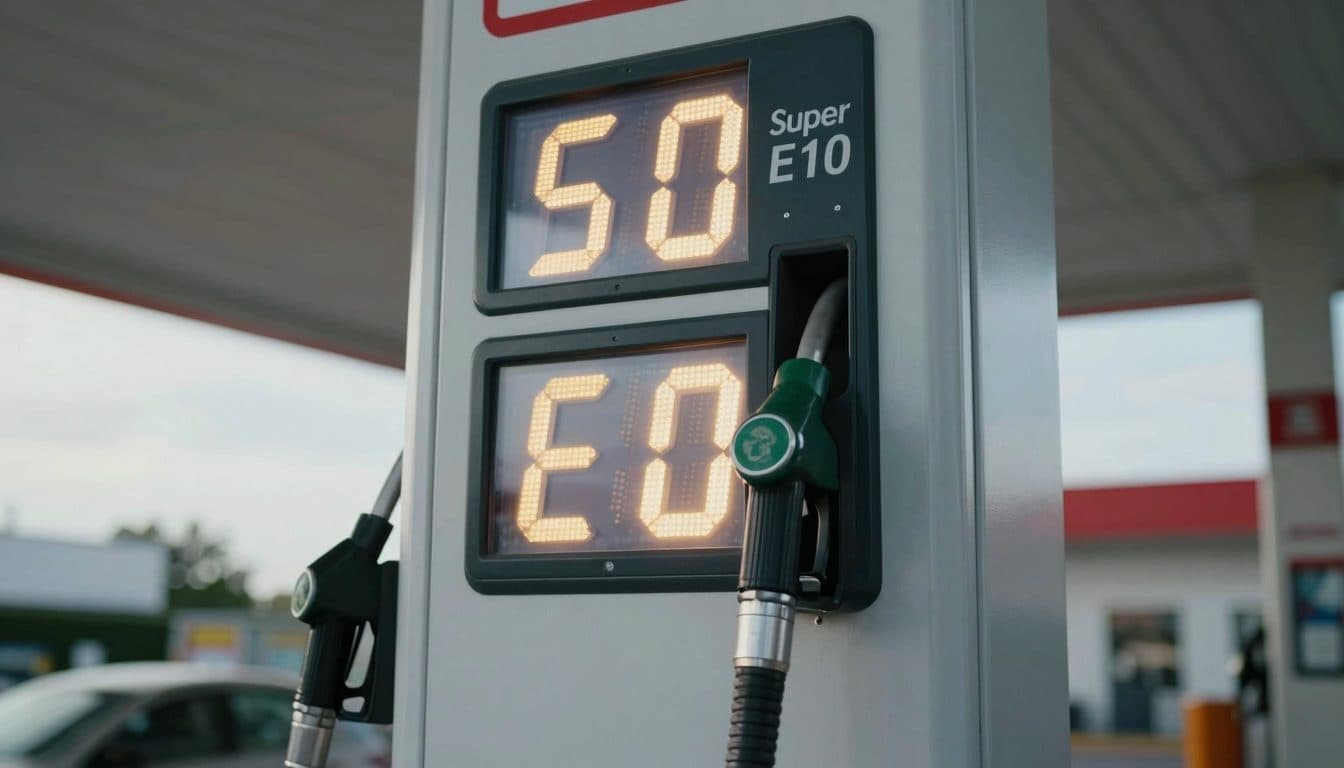
Diesel and Super E10 Cost More Than Two Euros per Liter Again
Berlin, July 10, 2026
AI-generated image (z-image via Kie.ai)
Summary
For the first time since mid-May, diesel at German gas stations is once again costing more than two euros per liter on a national daily average. Super E10 also rose significantly and now stands at 2.060 euros. The ADAC cites the renewed tensions between the USA and Iran as the cause.
Berlin, July 10, 2026
For the first time since mid-May, diesel at German gas stations is once again costing more than two euros per liter on a national daily average, as the ADAC announced on Thursday.
Price Increase in Daily Comparison
For the first time since mid-May, diesel at German gas stations is once again costing more than two euros per liter on a national daily average, as the ADAC announced on Thursday. The average diesel price on Thursday was 2.012 euros. That was 4.2 cents more than on Wednesday.
Super E10 also rose significantly, with a daily increase of 2.6 cents to 2.060 euros per liter. Both grades have thus crossed the psychologically important two-euro mark, which many drivers perceive as a noticeable price threshold.
According to the ADAC, both diesel and Super E10 gasoline cost more than 2 euros per liter on a national daily average for the first time since mid-May. The increase is therefore particularly pronounced because prices had been below this mark in recent weeks.
Trigger: Tensions in the Strait of Hormuz
Looking back to the beginning of the week — before the recent escalation — there has been an increase of 6.2 cents. Within just a few days, diesel has become noticeably more expensive, while Super E10 rose somewhat less sharply.
The current prices are likely also reflecting the oil price, which has risen quite a bit since the start of the week, as tensions around the Strait of Hormuz have increased again. The waterway between Iran and the Arabian Peninsula is one of the most important routes for global oil transport.
The military tensions between the USA and Iran are increasing significantly after a phase of ceasefire. This geopolitical development is directly impacting the international oil market and, through crude oil prices, is affecting pump prices in Germany.
Geopolitical Background: USA and Iran
The tensions between the USA and Iran are causing fuel prices to rise significantly. The ADAC attributes the current price increase directly to these Middle East tensions, as the ADAC states.
Both fuels are therefore still well below the levels before the start of the fuel discount that applied in May and June, but very significantly above the levels before the start of the war or in the second half of June. The fuel discount has expired … that had applied in May and June.
Expiration of the Fuel Discount Amplifies the Effect
At the time, the fuel discount had temporarily pushed diesel down to pre-war levels. With the expiration of the government subsidy, this dampening effect on prices disappeared, so that market movements in the crude oil market are now feeding through more strongly again.
The price increase is distributed unevenly between the two grades: diesel rose by 4.2 cents within a day, Super E10 by only 2.6 cents. However, the daily increase in gasoline was not quite as strong as that of diesel fuel, which is typically more crisis-prone.
Diesel Reacts More Strongly Than Gasoline
Diesel traditionally reacts more strongly to geopolitical crises than gasoline, because the European market is more dependent on imports and diesel fuel plays a central role in logistics and freight transport. Rising diesel prices therefore also have an impact on many other product categories through freight costs.
For E10, it was 2.06 euros per liter. The average price for diesel was therefore 2.01 euros yesterday. These figures represent the national average across all brands and regions; regionally, prices at individual gas stations can deviate significantly upward or downward.
The price increase comes at an unfavorable time for many households: with the end of the fuel discount, a political instrument that had artificially kept fuel costs low in recent months is gone. At the same time, international tensions are putting additional pressure on crude oil prices.
Outlook and Options for Action
The ADAC monitors price developments daily and publishes the national average values. The current data comes from the dpa news channel and was broadcast on July 10, 2026 on Deutschlandfunk. Reliable, up-to-date daily figures are therefore available to track price developments.
For drivers, this development means higher costs per kilometer driven. Those who want to refuel economically can take advantage of price fluctuations between different gas stations and times of day, as final prices sometimes deviate significantly from the average depending on the provider and region.
In the medium term, price developments depend heavily on whether the situation around the Strait of Hormuz calms down again. If the military escalation between the USA and Iran continues, further rising fuel prices are to be expected. A diplomatic easing, on the other hand, could cause prices to fall again.
Questions & Answers
How high are the current fuel prices according to the ADAC?
The ADAC puts the national daily average for diesel on Thursday at 2.012 euros per liter. Super E10 cost an average of 2.060 euros per liter and was therefore also above the two-euro mark.
Why are fuel prices in Germany currently rising?
The ADAC attributes the increase to the renewed tensions between the USA and Iran. This geopolitical situation has caused the oil price to rise noticeably since the beginning of the week, which has a direct effect on pump prices.
What does the end of the fuel discount mean for prices?
The fuel discount that had applied in May and June has expired. Without this government subsidy, the price-dampening effect is missing, so that market movements in the crude oil market are feeding through more strongly to end prices again.
Fuel Prices July 2026: Diesel Above 2 Euros Due to Middle | allfacts360