Diesel Price in Germany and Austria Falls Below Pre-War Level
MUNICH, June 22, 2026
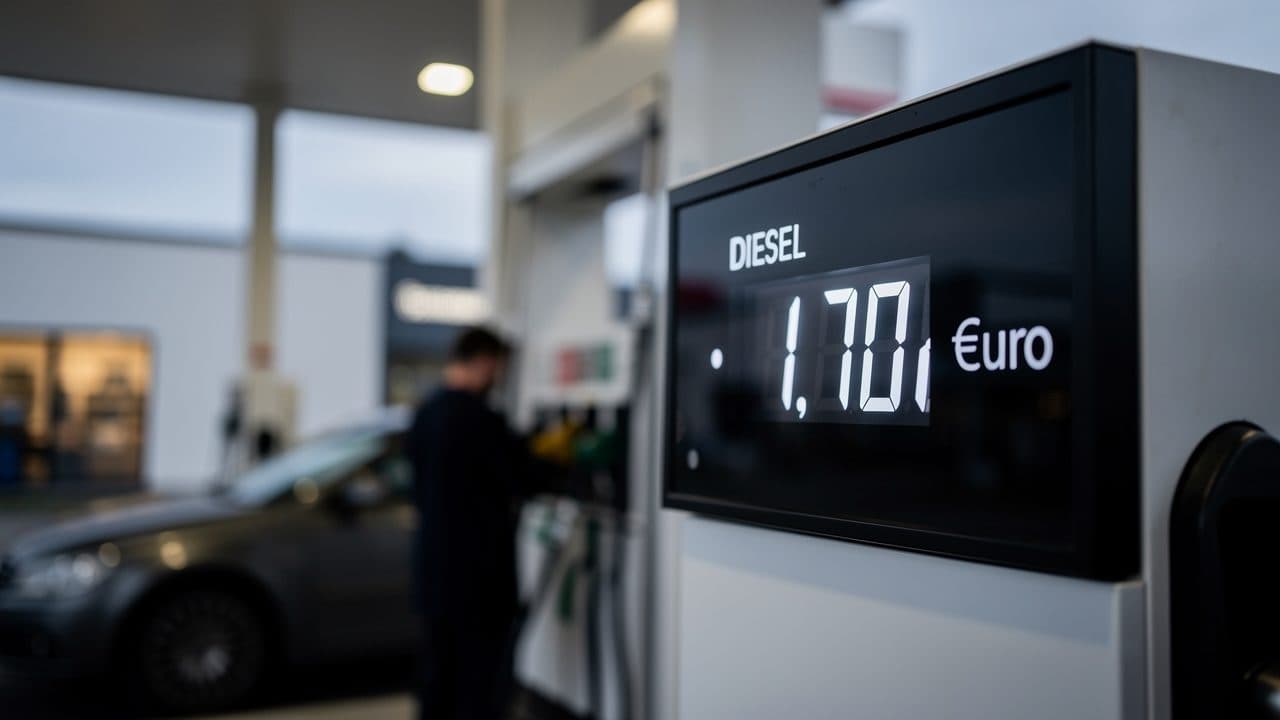
AI-generated image (flux-2/pro-text-to-image via Kie.ai)
Summary
Diesel prices in Germany and Austria have fallen in the past week below the level that prevailed before the Iran war at the end of February 2026.
MUNICH, June 22, 2026
Diesel prices in Germany and Austria have fallen in the past week below the level that prevailed before the Iran war at the end of February 2026.
Prices Below Pre-War Level
The nationwide daily average price for diesel in Germany stood at 1.733 euros per liter on Friday and thus 1.3 cents below the figure from February 27, 2026 — the last day before the war began — according to ADAC data. On Sunday, the liter price stood at 1.738 euros; on Monday at 10:45 a.m. it was even just below 1.70 euros. Diesel is thus back below the pre-war level for the first time, while Super E10 remains 4.4 cents above it.
In Austria, the diesel price on Sunday averaged 1.685 euros per liter nationwide, as reported by E-Control. The day before, gasoline averaged 1.614 euros per liter. There too, fuel prices are thus again approaching pre-crisis levels, as the ÖAMTC confirmed on inquiry from APA.
Oil Market and Geopolitical Background
The easing is due primarily to a significantly lower oil price. The blockade of the Strait of Hormuz had pushed the Brent price temporarily above 120 dollars per barrel in March; in April, diesel in Germany reached its previous record high of 2.447 euros per liter. Brent currently stands at 79 dollars (just under 69 euros) and thus near the pre-war level, when 72 dollars was paid.
On Friday, Brent had still traded above 80 dollars; on the reporting day, the August contract fell by almost two percent to 78.98 dollars. The decline was triggered by what mediators Qatar and Pakistan described as "ermutigende Fortschritte" in negotiations between the United States and Iran over an agreement to end the war. The talks aim at a safe passage for commercial ships through the strait.
Political Measures and Tax Reliefs
An additional dampening effect in Austria came from the fuel price brake introduced by the government in April. In Germany, the federal government did not extend the two-month tax cut, the so-called Tankrabatt. The Tankrabatt cuts fuel taxes by 16.7 cents per liter and expires at the end of the month.
Despite the easing at the pumps, the markups charged by the oil companies per liter of crude oil remain significantly elevated compared to the period before the Iran war. The ÖAMTC criticized this and called for an investigation and stronger regulation of the international price quotations for diesel and gasoline, which are used by domestic providers as reference prices.
ÖAMTC Criticism of Markups
Sepp Müller (CDU), deputy parliamentary group leader, recently said that the Tankrabatt had indeed worked well; extending it would not, however, make sense from a fiscal policy perspective. "Wir können es uns in der aktuellen Lage nicht leisten, Schulden dafür aufzunehmen."
Together with another politician whose name was not given, Müller also warned oil companies against significant price increases from July 1. The coalition was prepared to stop any price explosion.
Detailed Price Trend
Current prices suggest, however, that diesel and E10 could remain below 2 euros per liter even without the expiring discount. On the reporting day at 1 p.m., the diesel price averaged 1.70 euros again; one liter of E10 cost 1.79 euros, and thus three cents more than at the start of the war.
The ADAC had determined that Super E10 in Germany had cost up to 2.192 euros per liter at peak — gasoline thus around 40 cents more expensive than before the war, diesel more than 70 cents. In Austria, the median price for gasoline at the end of March was around 1.9 euros, and for diesel around 2.2 euros.
The ARD/SWR data analysis of all fuel prices from the roughly 15,000 German filling stations shows how sharply prices have fallen since Easter. At that time, many filling stations had charged peak values above the 2-euro mark. Average values are now approaching the level from the end of February, the last trading day before the start of military conflict in the region.
The Austrian mobility club nevertheless sees a need for action on pricing. The markups per liter of fuel over the liter of crude oil continue to be significantly higher than before the Iran war, it said. The association has long called for regulation of the international quotations.
Outlook and Refueling Timing
In April, Austria had cut the mineral oil tax by 5 cents per liter and imposed a margin cap of 5 cents; in May, the margin cap was 2.5 cents and the tax cut was 2 cents. Since June, no margin intervention has applied, only the mineral oil tax cut of 1.7 cents per liter.
In Germany, the 12 o'clock rule continues to have an effect: refueling at 10:45 a.m. is among the cheapest times of day. Those who refueled on Monday at that time paid 0.6 cents less than the previous Sunday at the same time.
Despite all political warnings and market mechanisms, the trend of the past week points clearly downward. Should the negotiations between the United States and Iran make further progress, fuel prices in Germany and Austria are likely to remain stable in the coming weeks as well.
The ÖAMTC is also calling for a fundamental reform of the price quotations that serve as the basis for Austrian providers. This is the only way to prevent markups from becoming entrenched regardless of actual market developments.
Overall, it remains to be seen how prices will develop after the Tankrabatt expires at the end of June. The current signals from the oil market and the diplomatic negotiations, however, point to a continued easing.
Questions & Answers
What is the current diesel price in Germany and Austria?
On Monday, the nationwide average price for diesel in Germany was just under 1.70 euros per liter; in Austria on Sunday it was 1.685 euros. Prices are thus back below the level of February 27, 2026, the day before the start of the Iran war.
Why have fuel prices fallen again?
The main reason is the significantly lower oil price: Brent is trading at around 79 dollars, after rising temporarily above 120 dollars in March due to the blockade of the Strait of Hormuz. There is also progress in negotiations between the United States and Iran.
What is the ÖAMTC calling for in light of the price trend?
The ÖAMTC criticizes the fact that the oil companies' markups per liter of fuel remain significantly elevated compared to the period before the Iran war. The club is calling for an investigation and stronger regulation of the international price quotations for diesel and gasoline.
Diesel Price in Germany and Austria Falls Below Pre-War… | allfacts360