Bunker New Reich Chancellery Berlin: Demolition for Housing | allfacts360
Dispute over Bunker of the New Reich Chancellery: Berlin Plans Demolition for Housing
Berlin, 30 June 2026
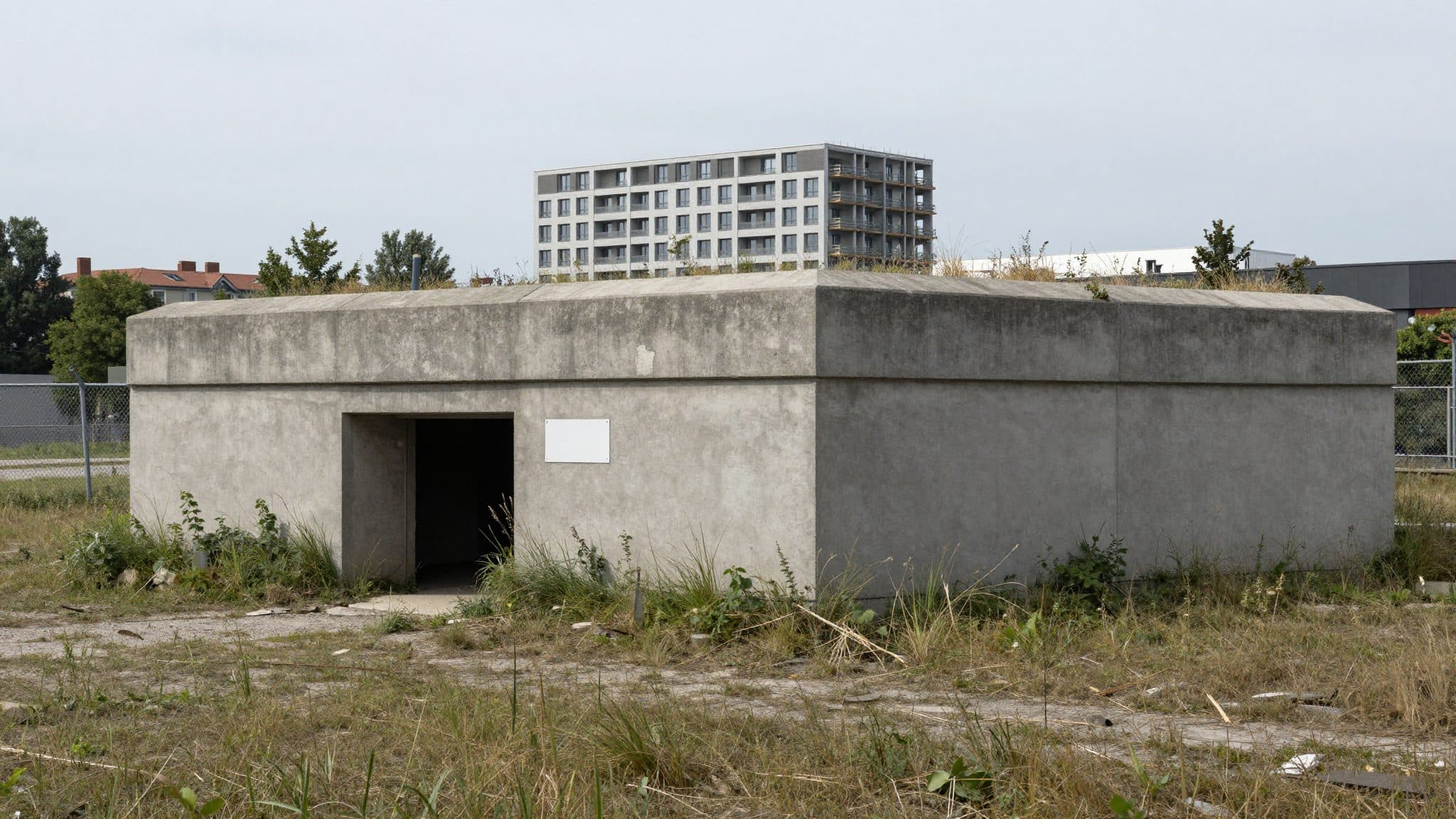
AI-generated image (z-image via Kie.ai)
Summary
In Berlin-Mitte, a bunker on the former New Reich Chancellery site is to be partially demolished to make room for housing and an office building. Preservationists and the Berliner Unterwelten association are pushing back, while Building Senator Christian Gaebler supports the new construction.
Berlin, 30 June 2026
In Berlin-Mitte, a bunker on the site of the former New Reich Chancellery is to be partially demolished to build 66 apartments and an office building, while preservationists and the Berliner Unterwelten association are calling for the preservation of the last pre-war bunker of the Nazi government district.
The Bunker Underground
Beneath an unremarkable vacant lot in Berlin-Mitte lie the last structural remains of Adolf Hitler's former center of power: a bunker that once belonged to the New Reich Chancellery and, according to the Berliner Unterwelten association, is the last surviving pre-war bunker of Berlin's Nazi government district. Around 1,200 square meters of the bunker complex are still intact, with walls and ceilings each measuring 1.70 meters thick, according to the available reports.
This bunker — not to be confused with the so-called Führerbunker on Gertrud-Kolmar-Straße — is now set to partially give way according to an investor's plans. About half of the bunker is to be demolished so that a seven-story residential building with 66 apartments and a six-story office building can be constructed on the site. This is reported by the Berlin newspaper B.Z. in reference to the construction project.
Berlin's Building Senator Christian Gaebler (SPD) has spoken out against preserving the bunker and supports the project. He told B.Z.: "Wir stehen dem Neubau von Wohnungen nicht im Wege, um einen Bunker zu erhalten, der dann womöglich noch zum Wallfahrtsort wird." He justifies the planned partial demolition in part with the concern that the bunker could become a pilgrimage site for right-wing extremists.
Dispute Between Senator and Preservationists
Dietmar Arnold, the chairman of the Berliner Unterwelten association, who has campaigned for years to preserve historic bunker facilities, disagrees. Arnold calls the project "absoluten Wahnsinn": "Eine der letzten Spuren der NS-Machtzentrale abzureißen, das ist heutzutage totaler Wahnsinn" He finds it "oberpeinlich" for Berlin to demolish the last authentic remnant of the New Reich Chancellery.
Arnold explicitly rejects the argument about a possible pilgrimage site and describes it as pretextual: "Das ist nur ein vorgeschobenes Argument. Der Verein Berliner Unterwelten zeigt seit Jahren erfolgreich, wie man sich mit solchen Gebäuden auseinandersetzen kann, ohne sie gleich abzureißen." He also warns that the planned partial destruction would destabilize the bunker: "Wenn man den Bunker zur Hälfte wegsägt oder wegbaggert, geht die Stabilität verloren. Dann macht es keinen Sinn, noch etwas zu erhalten."
The Berliner Unterwelten association instead proposes setting up an exhibition on the end of the war at the site. As early as 2006, the association installed an information panel on the history at the location of the former Führerbunker. Arnold also criticizes that the planned apartments would not count as the affordable housing Berlin urgently needs.
Background of the New Reich Chancellery
The dispute is meanwhile being closely monitored by official heritage preservation authorities. Sebastian Heber, head of department for archaeological monument preservation at the Berlin State Office for Monument Protection, attributes "umfassende historische und wissenschaftliche Bedeutung" to the bunker.
The State Monument Council, an expert panel, shares this assessment and issued a corresponding recommendation in March 2025. It states that the New Reich Chancellery was the "Planungs- und Ausgangsort des Zweiten Weltkrieges und steht symbolhaft auch für das katastrophale Ende des NS-Regimes." The Council recommended examining preservation and possible entry in the monument register.
Despite this expert opinion, however, the bunker has not yet been designated as a monument. The reason is a directive from the Senate Department for Urban Development, Building and Housing, as the available reports indicate. The professional recommendation of the preservationists thus currently stands opposed to the political line of the Building Senator.
Führerbunker and the End of the War
According to the German Historical Museum in Berlin, the New Reich Chancellery itself was "ein monumentaler Regierungs- und Repräsentationsbau des NS-Regimes in Berlin, den Adolf Hitler als architektonisches Symbol seines Herrschaftsanspruchs errichten ließ." It was built from 1934 on Vossstraße to plans by Albert Speer, after entire rows of streets had previously been demolished.
In just around twelve months, the building was largely completed by January 1939. In 1945, the Chancellery was captured by the Red Army and demolished starting in 1949. General Helmuth Weidling left the bunker on 6 May 1945, an event documented by a famous photograph of the capitulation.
The Führerbunker itself was completed in April 1944 and is regarded as the place where Adolf Hitler and Eva Braun took their own lives. Today a parking lot stands in its place. As Arnold emphasizes, the bunker now under discussion is expressly not the Führerbunker, but another, less well-known part of the former government complex.
The controversy is being closely followed not only in Berlin but also among young and historically interested audiences in Austria, as the available reports indicate. Other preservationists have also spoken out critically about the demolition plans, according to the reports.
Culture of Remembrance in the Debate
Ultimately, Berlin faces a fundamental decision: Should the city meet growing demand in the tight housing market by building new homes, or should the last structural testimony of the Nazi center of power be preserved as a place of remembrance? Arnold sees preservation not as an obstacle, but as an opportunity: "Der Verein Berliner Unterwelten zeigt seit Jahren erfolgreich, wie man sich mit solchen Gebäuden auseinandersetzen kann, ohne sie gleich abzureißen."
The expert recommendation of the Monument Council has so far not been implemented as a formal protection order. If the planned partial demolition goes ahead, the bunker on the former Reich Chancellery site would at least in part be irretrievably lost.
Outcome Uncertain
The discussion fits into a broader debate about how to deal with Nazi-era buildings in German cities. While some municipalities rely on consistent removal, initiatives such as Berliner Unterwelten point to alternative ways of engagement through education and remembrance.
An outcome of the proceedings is currently uncertain. What is clear, however, is that the decision about the bunker on the New Reich Chancellery site is being noted well beyond Berlin.
Questions & Answers
Which bunker in Berlin-Mitte is to be demolished?
It concerns a bunker on the site of the former New Reich Chancellery in Berlin-Mitte, which according to the Monument Council is the last surviving pre-war bunker of the Nazi government district. It is not the well-known Führerbunker on Gertrud-Kolmar-Straße.
Who is opposed to the demolition of the bunker?
The Berliner Unterwelten association, with its chairman Dietmar Arnold, as well as the State Office for Monument Protection and the State Monument Council, advocate preservation. Berlin's Building Senator Christian Gaebler (SPD) supports the new construction.
What construction project is planned on the site?
According to a B.Z. report, a seven-story residential building with 66 apartments and a six-story office building are to be built on the site, for which roughly half of the bunker would have to be demolished.