Vienna Murder Trial: 14-Year-Old Sentenced to Eight Years | allfacts360
Eight Years in Prison for 14-Year-Old After Murder of Retiree at Vienna's Baumgarten Cemetery
Vienna, June 21, 2026
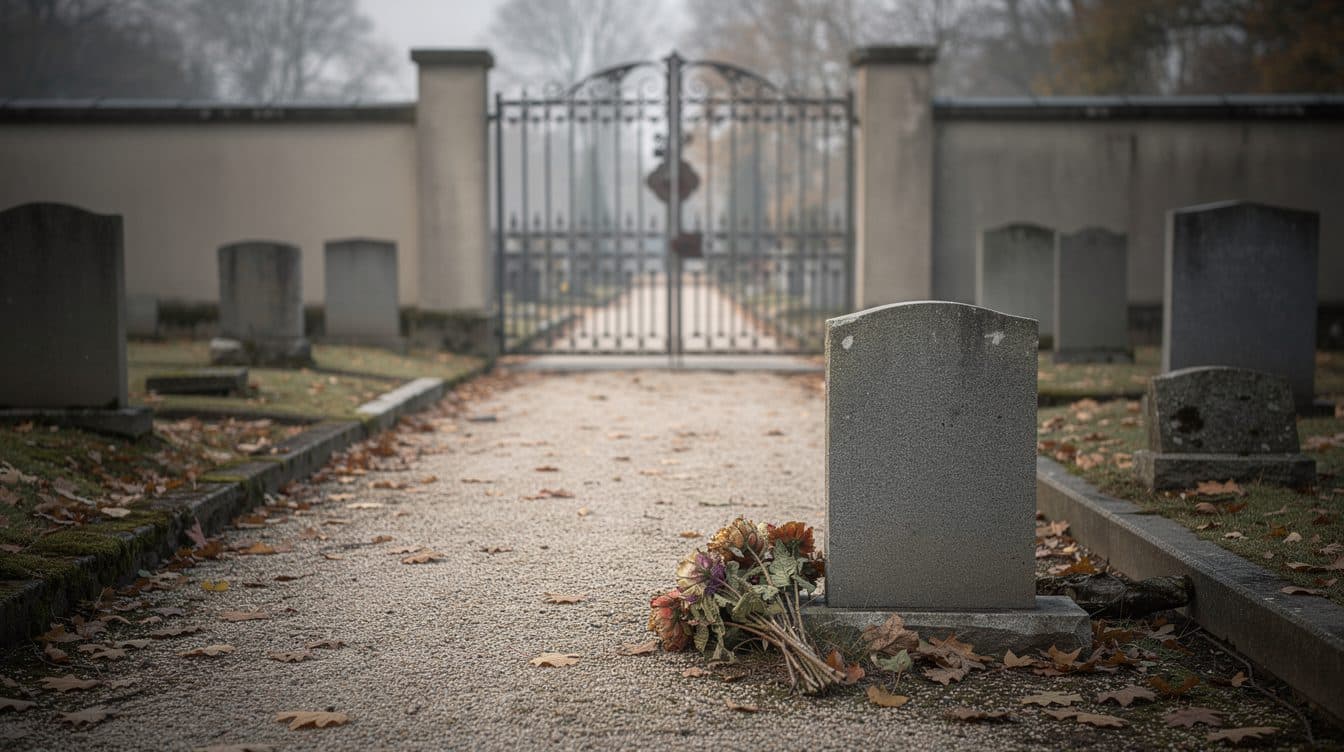
AI-generated image (flux-2/pro-text-to-image via Kie.ai)
Summary
The Vienna Regional Criminal Court has sentenced a 14-year-old to eight years in prison and commitment to a forensic-therapeutic center for the murder of a 64-year-old retiree at Baumgarten Cemetery. The teenager had attacked the woman, who was a complete stranger to her, with a pocket knife on February 23.
Vienna, June 21, 2026
A 14-year-old has been sentenced to eight years in prison by the Vienna Regional Criminal Court for the murder of a 64-year-old retiree at Baumgarten Cemetery and committed to a forensic-therapeutic center.
What Is New Since the Previous Update
Update from June 21, 2026: The verdict in the murder trial against the 14-year-old has been handed down: eight years in prison and commitment to a forensic-therapeutic center are the result of the guilty verdict announced by the judges at the Vienna Regional Criminal Court on Wednesday. This brings the trial over the bloody deed at Baumgarten Cemetery, which had already caused a stir the previous week, to a preliminary conclusion.
What is new compared to the previous stage of proceedings is that the court has now not only classified the teenager as criminally responsible, but also determined a high risk of recidivism. The prosecution had highlighted precisely this combination of criminal responsibility and risk of reoffending in its closing argument and called for commitment to a forensic-therapeutic facility. With the verdict, the panel fully follows this reasoning — something that is rather rare in juvenile criminal proceedings.
What remains unchanged: The 14-year-old is alleged to have attacked a 64-year-old woman completely unknown to her with a pocket knife on February 23 at Baumgarten Cemetery in Vienna's Penzing district. According to the experts' findings, the victim sustained more than 80 stab and slash wounds, especially to the head and neck area, and died at the scene. After the crime, the teenager is said to have taken photos of the body and sent them off before confessing to the act via an emergency call.
Background: The Crime at Baumgarten Cemetery
In an interrogation, the defendant reportedly stated that she had been experiencing homicidal fantasies and therefore proceeded with the act, according to trial reports. The original quote from the court records reads verbatim: Ich hab' mir gedacht, dass ich jemanden umbringen muss. This confession was not disputed by the defense during the course of the trial, although the specific circumstances of the crime and the personal background of the teenager were discussed at length.
The expert assessment, which played a central role in the proceedings, also remains in place as the basis for the verdict: A forensic-psychiatric expert concluded that the defendant was criminally responsible at the time of the offense. At the same time, she pointed to a high risk of recidivism, derived from the defendant's history and psychological condition. It was only the combination of both findings that gave the court the latitude to order her additional commitment to a forensic-therapeutic center.
Expert Assessment and Risk of Recidivism
From a legal standpoint, the case sits at the intersection of Austrian juvenile criminal law. For 14- to 16-year-olds, the law provides for a sentence of one to ten years in prison for murder, with the specific assessment tied to the defendant's maturity, motives, and personal circumstances. At eight years, the verdict lies in the upper third of this range, which can be read as a clear signal against the perpetrator without exhausting the maximum penalty.
The now-ordered commitment to a forensic-therapeutic center means that the teenager will not only serve her prison sentence at Asten correctional facility but will also receive structured psychiatric-therapeutic treatment in parallel. Such centers in Austria are concentrated at only a few locations and are aimed at young offenders for whom a purely custodial measure would not sufficiently reduce the risk of reoffending.
Legal Framework and Sentence
From the victim's perspective, the full gravity of the crime is reflected in the verdict. The 64-year-old was a regular visitor to Baumgarten Cemetery, where she would frequently visit the graves of relatives. She had no connection whatsoever to the perpetrator, which investigators classify as what is known as a relational offense without a personal motive. The defense had used precisely this circumstance in advance to argue for diminished criminal responsibility due to a massive psychological crisis — an argument that ultimately failed to convince the court.
The teenager was defended by Astrid Wagner, whose name appears in several trial reports as a key voice of the defense. In her closing statements, she pointed to the defendant's stage of development and asked the court to apply the sentence at the lower end of the range in order not to jeopardize the chances of rehabilitation. The prosecution, by contrast, had requested the maximum sentence and forensic placement. The verdict lies, as outlined above, considerably closer to the prosecution's request.
Forensic-Therapeutic Commitment
Another detail that only became public in the final phase of the trial concerns the content of the photos that were sent. Nachrichten.at reports that the teenager is alleged to have taken pictures of the body after the crime and forwarded them via messenger services. The outrage over this was a central theme in media coverage in recent days and also fed into the reasoning behind the sentence.
The case attracted media attention not only because of the brutality of the crime, but also because of the young age of the defendant. True-crime series, which were repeatedly discussed in forums as a possible influencing factor on the teenager's fantasy world, played a role in the proceedings as a possible background — though no direct causal link was established.
Media Coverage and Public Debate
The victim's family issued a statement after the verdict through their legal representation, saying that the sentence corresponded to the severity of the loss they had suffered, even though no verdict could undo the death of their relative. The teenager is to be admitted to Asten correctional facility in the coming days; the exact timing of the transfer to the forensic-therapeutic center depends on the availability of a therapy placement.
Until the verdict becomes final, both the prosecution and the defense may file an appeal within the statutory deadline. If neither party lodges a legal remedy, the verdict will take effect once the deadline has passed. Otherwise, the Vienna Higher Regional Court would have to deal with the case and re-examine the question of forensic placement in particular.
Vienna's Penzing district, where Baumgarten Cemetery is located, experienced a severe upheaval as a result of the crime. Local residents reported in recent weeks that their sense of security had changed, since a cemetery in Vienna had previously been regarded as a comparatively protected space. The City of Vienna announced it would review the lighting and social-work support in heavily frequented cemetery areas, without, however, drawing a direct link to the specific case.
For the sentencing range in juvenile criminal law, the case nevertheless remains a textbook example: it shows that courts can make full use of the law's latitude even when the defendant is 14 years old, provided expert assessments confirm criminal responsibility and classify the risk of reoffending as high. The combination of eight years in prison and forensic-therapeutic commitment is regarded in expert circles as a comparatively rare — and therefore remarkable — ruling.
At the end of the hearing day, the victim's relatives left the courtroom without answering further questions. The defendant was taken into custody immediately after the verdict was announced, where she will remain until her transfer to Asten. Coverage of the case is likely to flare up again in the coming weeks once the verdict becomes final or an appeal proceedings begin.
Questions & Answers
What is the verdict against the 14-year-old in the murder trial at the Vienna Regional Criminal Court?
The court sentenced the teenager to eight years in prison and additionally ordered her commitment to a forensic-therapeutic center, as it determined a high risk of recidivism.
What is known about the crime at Baumgarten Cemetery?
The 14-year-old is alleged to have attacked a 64-year-old retiree, unknown to her, with a pocket knife on February 23 at Baumgarten Cemetery in Vienna's Penzing district. The victim sustained more than 80 stab and slash wounds and died at the scene.
Why was the teenager committed to a forensic-therapeutic center rather than a regular juvenile facility?
The prosecution and the court classified the defendant as criminally responsible and at the same time saw a high risk of recidivism, which is why the additional therapeutic placement alongside the prison sentence was deemed necessary.