Escalation Between USA and Iran: More Fighter Jets Deployed, Iranian Retaliation Hits Neighboring States
Washington/Tehran, July 19, 2026
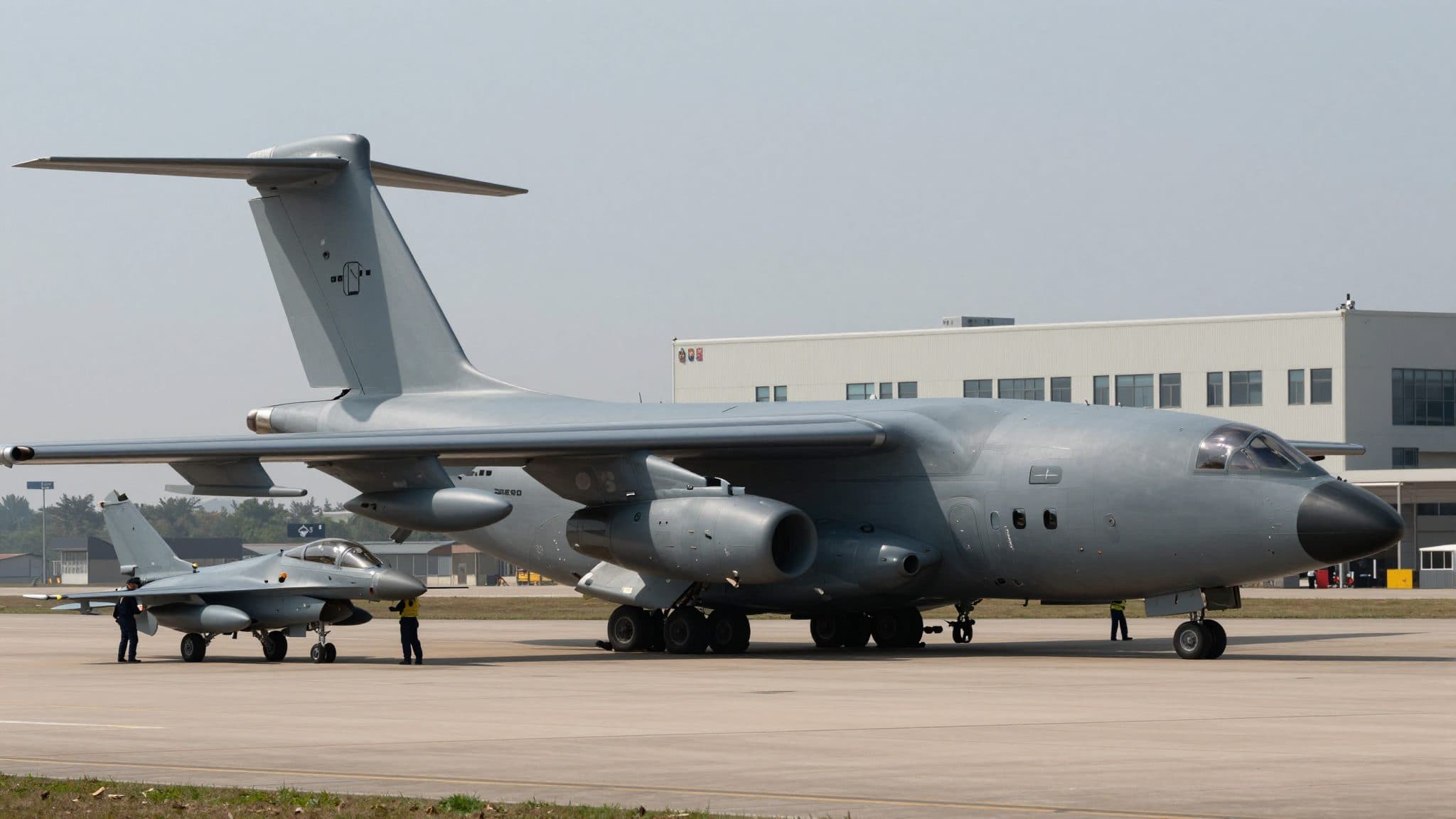
AI-generated image (z-image via Kie.ai)
Summary
The USA is deploying additional fighter jets and tanker aircraft to the Middle East as the war with Iran continues to escalate. Over the weekend, two US soldiers were killed in Jordan, Iran expanded its attacks to Kuwait and Bahrain, and both sides declared the ceasefire concluded in April to be over.
Washington/Tehran, July 19, 2026
The United States has deployed additional F-16 and F-35 fighter jets as well as tanker aircraft to the Middle East as the war with Iran in the Gulf continues to escalate following the shelling of a US base in Jordan, which killed two soldiers.
Military Deployments
The deployment of F-16 fighter jets from Spangdahlem Air Base in the Eifel region as well as F-35 aircraft from Britain's RAF Lakenheath to the Middle East was reported by the Wall Street Journal and the New York Times, citing US government officials. According to the New York Times, the decision to redeploy troops had already been made before two American soldiers were killed on Friday in an Iranian missile attack on a US base in Jordan. Tanker aircraft are also reportedly en route to the region.
The two killed soldiers are the first American casualties since the fragile ceasefire agreement between Tehran and Washington was signed in April. Another US soldier has been missing since the attack. According to US regional command Centcom, the two soldiers died from Iranian fire; a third rocket hit a remote area without causing damage, according to the Jordanian news agency Petra, while Israeli and Jordanian forces intercepted an Iranian rocket aimed at the Jordanian port city of Aqaba on the Red Sea. Israel had previously reported observing rocket fire from Iran at the city.
American Retaliation and Targets
On Sunday, the United States said it had carried out retaliatory strikes against units of the Iranian Revolutionary Guard Corps (IRGC) deemed responsible for the attacks in Jordan. The US military described the new strikes as "punishment" for the deadly shelling of the US base in Jordan. The attacks on roads and bridges leading to the southern Iranian port city of Bandar Abbas are, according to observers' assessments, aimed at cutting off Iran's supply routes toward the Strait of Hormuz. The report further notes there are concrete indications of preparations for a US ground offensive in southern Iran, such as the attacks on bridges, railways, and airports.
The geographical reach of the mutual blows has increased on both sides. The targets are no longer purely military: infrastructure is being attacked both in Iran and in the countries against which it retaliates. The Iranian Revolutionary Guard Corps has, according to US accounts, carried out a missile attack on an air force base in Jordan. Iran's ground troops in the southwest of the country reported seven dead a few days earlier. Bahrain reported new Iranian attacks; from Kuwait, the hitting of a power plant and a drinking-water desalination facility by Iranian attacks became known.
Regional Expansion of Attacks
According to the Iranian Foreign Ministry, Iran has expanded its missile attacks but does not appear willing to involve its allies in the exchange of blows so far. The Lebanese Hezbollah militia as well as the Yemeni Houthis have not yet flanked the Iranian attacks. According to Reuters, Iran's leadership has, however, asked the Houthis to be prepared for the option of attacking ships in the Bab al-Mandab Strait in the Red Sea if the USA attacks Iranian energy infrastructure.
Iran has concentrated its attacks on US bases in Kuwait, Bahrain, and Jordan. The conflict had begun less than two weeks earlier after Iranian Revolutionary Guard Corps forces attacked ships in the Strait of Hormuz. The Iran war had been started jointly by the USA and Israel on February 28; Israel's air force last struck Tehran in early June, after the Revolutionary Guard Corps had attacked targets in Israel.
The total number of officially known US soldiers killed in the war against Iran has risen to 16 following the latest incidents. Virtually simultaneously, the US Air Force has been bombing Iran for the eighth consecutive night. The USA and Israel jointly started the Iran war on February 28.
Security Situation Assessment
According to US military accounts, Iran has not yet involved its allies at this stage of the confrontation. Nevertheless, Danny Citrinowicz, head of the Iran department of Israeli military intelligence, warns: "Iran only needs to fire one missile or one drone at a tanker and then traffic in the strait is paralyzed again" – the action could be launched from the Iranian hinterland.
According to Citrinowicz, the Iranian leadership assumes that the situation in the country will be very hard in the short term. But it believes that rising energy prices will force Trump to give in in the long term. "In the next few days, we will very likely see further escalation, because Iran will not give in" – "Should the situation not change dramatically in the next few days, escalation is inevitable."
Political Signals from Washington
Donald Trump, in conversation with the television network Fox News, did not at least rule out a limited invasion of Iranian islands near the Strait of Hormuz; according to the Wall Street Journal, corresponding plans were recently presented to Trump. His vice president, J. D. Vance, however, rejected the possible deployment of ground troops in Iran. Trump had also already threatened to bomb Iran's power plants; the words, however, had not yet been followed by action. At the NATO summit in Ankara, Trump declared the agreements null and void but left the door open for further negotiations.
Both warring parties consider both the ceasefire agreed in April and a framework agreement signed in June to be null and void. Iran's deputy foreign minister declared on Saturday that the interim agreement no longer exists and that Iran no longer feels bound by its obligations. Iran's leader Mojtaba Khamenei, who has never appeared publicly since he was appointed, described Trump's signature on the document as "worthless." The Islamic Republic has resorted to its vanished leader to announce the end of the ceasefire from underground.
Humanitarian and Diplomatic Consequences
Iran's Health Ministry spokesman Hossein Kermanpur put the number of injured in Iran from US attacks since the beginning of July at more than 500. A seawater desalination facility in southeastern Iran was bombed, cutting off drinking water supplies for 10,000 people. According to the state statistics office, the inflation rate rose by 4.5 percentage points between the end of May and the end of June to 88.6 percent compared to the same period of the previous year. According to media reports, many Iranians can hardly afford food even now. On Friday, the Iranian rial had reached a new all-time low against the dollar.
Diplomatic appeals are coming from the region: The United Arab Emirates called for an immediate end to hostilities and a swift return to the negotiating table, without naming the USA or Iran. Pakistan's Foreign Minister Ishaq Dar stressed the urgent need to de-escalate in a telephone conversation with his Kuwaiti counterpart over the weekend. US President Trump called the dead US soldiers "a very sad thing... We don't like to see that" and, according to NewsNation, reiterated that Iran must not have nuclear weapons. Reacting to the Iranian stance, Trump said it was "completely irrelevant" to him.
The spiral of violence is, in observers' assessment, accelerating further: "The USA is of course militarily incapable of taking over the huge country," writes the author Gudrun Harrer in her analysis of July 19, 2026. She compares the conflict with the Iraq war of 2003: "The Iraq war of 2003 was a walk in the park by comparison." It continues: "If the regime once again, as in March, sees itself in a fight for survival, it will go along with every step of escalation." Tehran has in the meantime become convinced that the USA never wanted to implement the strange "memorandum" in which so much was promised to the Iranians, and Tehran suspects that the USA wanted to use the pause only for new war preparations. "A US invasion of southern Iran could open the gates of hell," the analysis warns.
The USA has in the meantime resumed the blockade of Iranian ports, further worsening the economic situation. Temperatures in the affected region were significantly above 40 degrees Celsius. The war opponents are bidding each other up rather than backing down: Neither the "hard wave of attacks with which the USA has been pummeling Iran for days" nor the Iranian counter-strikes have moved Tehran to give in. (Gudrun Harrer, 19.7.2026)
Questions & Answers
Who is Danny Citrinowicz and what role does he play in the analysis of the conflict?
Danny Citrinowicz is the head of the Iran department of Israeli military intelligence. He warns of further escalation in the coming days and considers it inevitable should the situation not change dramatically.
Why are the ceasefire and framework agreement between the USA and Iran considered to have failed?
Both the USA and Iran declared the ceasefire agreed in April and the framework agreement signed in June to be null and void. Iran announced it would no longer consider itself bound by the obligations, and the Iranian foreign minister declared the interim agreement ended on Saturday.
What consequences has the conflict already had for the civilian population in Iran?
According to the Iranian Health Ministry, more than 500 people in Iran have been injured by US attacks since the beginning of July. In addition, a desalination facility in southeastern Iran was bombed, cutting off drinking water supplies for 10,000 people; according to media reports, many Iranians can hardly afford food anymore.
USA-Iran War: Fighter Jets Deployed, Deaths in Jordan | allfacts360