EU Car Market Grows Sharply in June – Electric Cars Up More Than 60 Percent
Brussels, 23 July 2026
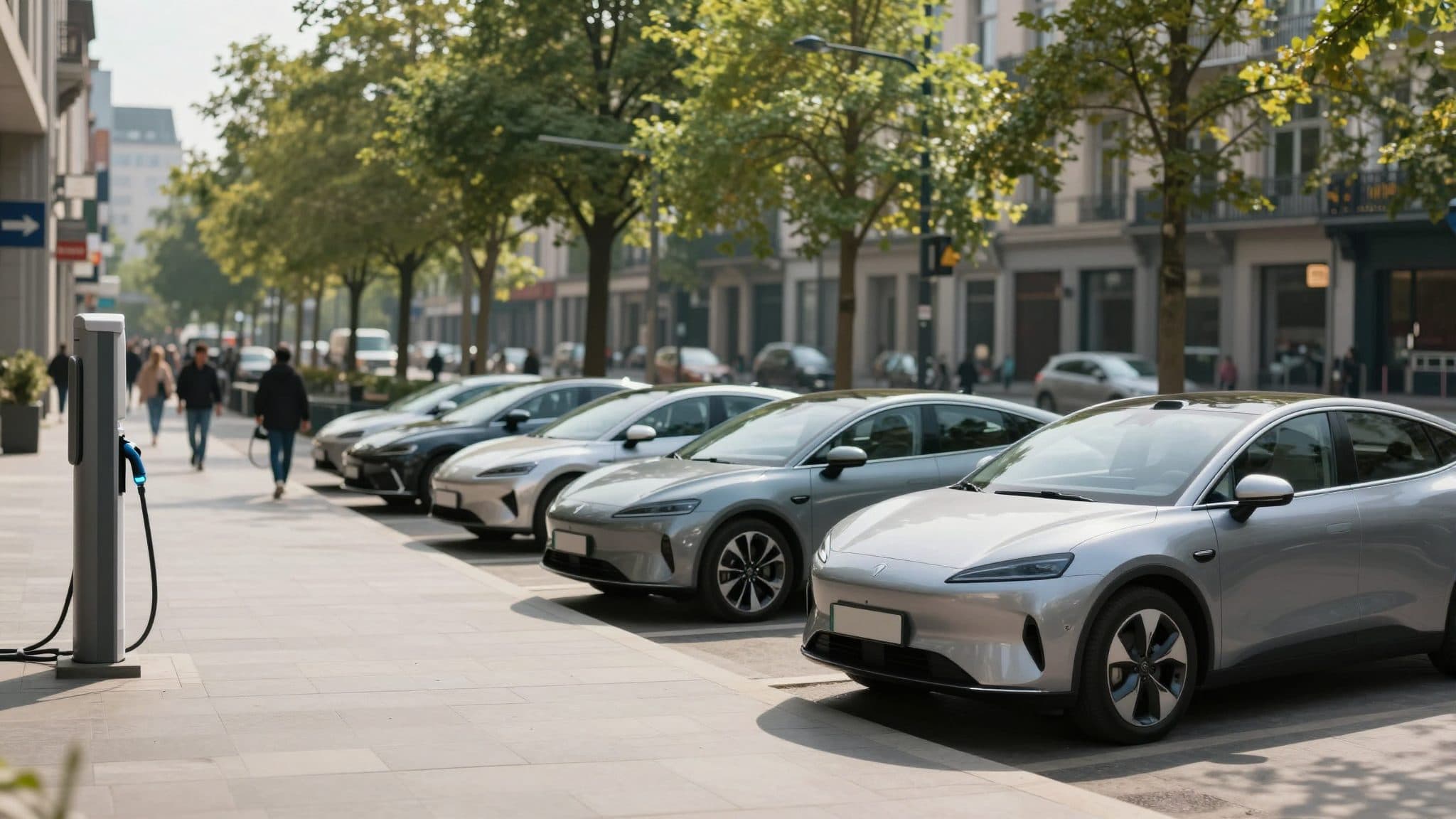
AI-generated image (z-image via Kie.ai)
Summary
New passenger car registrations in the EU rose by 13.6 percent in June to almost 1.148 million vehicles. At the same time, fully electric models increased by more than 60 percent, while classic combustion engines lost ground.
Brussels, 23 July 2026
New passenger car registrations in the European Union rose by 13.6 percent year-on-year in June 2026 to almost 1.148 million vehicles, the European industry association ACEA announced on Thursday in Brussels.
The European car market gained significant ground in June. According to the industry association ACEA, new passenger car registrations in the EU rose by 13.6 percent to almost 1.148 million vehicles. This continued the sector's recovery, even though growth varied considerably among the individual member states.
Growth was particularly strong in Austria. In the Alpine country, new registrations increased by 22.9 percent in June to 34,256 vehicles, significantly above the EU average. In Germany, new passenger car registrations rose by 15.7 percent. In France, the increase was lower at 11.4 percent, and in Italy at 10.6 percent. In Spain, new registrations rose at a notably more moderate 7.8 percent.
Growth varies considerably among member states
Across the entire first half of 2026, new passenger car registrations in the EU grew by 5.7 percent to around 5.897 million vehicles. The increase across the entire EU thus reached 5.7 percent compared to the same period of the previous year. On a year-on-year basis, this shows a clear revival of the market after the weaker phases of previous years.
Volkswagen remained the clear market leader across the EU. The group's sales rose by 7.3 percent to 291,366 cars. The German company thus further expanded its leading position, even though its growth was below the market average.
Behind Volkswagen rank Stellantis and Renault. Stellantis, the parent company of Fiat, Peugeot and Opel, posted a 7.1 percent increase as number two. Third-placed Renault grew by 3.6 percent. Both major European manufacturing groups were thus able to grow, but partly remained below the market average.
VW remains market leader – Stellantis and Renault follow at a distance
The picture among German premium manufacturers was mixed. The BMW Group achieved growth of 16.1 percent. Mercedes-Benz rose by 4.8 percent. BMW was thus able to benefit significantly more from market growth than its Stuttgart rival.
Once again, electric cars were the driver of the development. While sales of pure combustion-engine vehicles fell, fully electric battery vehicles (BEVs) grew by more than 60 percent to 270,557 units. According to ACEA data, the market share of pure battery cars climbed from 15.6 to 20.7 percent.
Electric cars as economic engine
The US electric car pioneer Tesla from the USA also recovered from its sales slump of the previous year and achieved a market share of 2.1 percent from January to June. The company thus remained a niche player in Europe, but visibly regained ground after a difficult year.
Chinese providers made further leaps in the meantime, but remained modest in Europe. The market shares of Chinese providers in the first six months were 2.7 percent for Geely (Volvo, Polestar) and 2.2 percent each for SAIC Motor (brand MG) and BYD, still modest. The position of Chinese manufacturers has thus improved without them already dominating the European market.
Chinese manufacturers slowly catching up
BYD was particularly frequently in the headlines during the reporting period. With a market share of 2.2 percent after the first six months, the group still does not belong to the leading providers in Europe. The gap to the established European manufacturers remains significant.
Overall, new passenger car registrations grew by 15 percent year-on-year in the first half of 2026 to 164,529 vehicles in an unspecified partial evaluation. This figure relates to a partial segment of the market, such as an individual country or a vehicle category, mentioned in the ACEA report. Growth in this segment was thus even stronger than the EU average.
The share of pure electric cars in the overall new car market has risen significantly within a year. While the BEV share still amounted to 15.6 percent in the same period of the previous year, it was already 20.7 percent in the first half of 2026. The European market is thus gradually approaching the political targets set in Brussels and the national capitals for electromobility.
The market development in June also underlines the ongoing competition between traditional manufacturers, the new electric providers from the USA and China, as well as the emerging Chinese volume manufacturers. Volkswagen remains the undisputed number one, but the group increasingly has to assert itself against providers such as BYD, Tesla and the premium competitors.
For the coming months, market observers expect a continued revival, provided the economic framework conditions remain stable. The trend toward battery-electric vehicles is likely to continue, while classic combustion engines will continue to lose market share.
Outlook: Trend toward e-cars continues
In the first half of 2026, new passenger car registrations in the EU also developed positively overall. With an increase of 5.7 percent to around 5.897 million vehicles, the market is above the level of the same period of the previous year. The momentum in June suggests that the upward trend could continue in the second half of the year.
Volkswagen, Stellantis and Renault continue to dominate the market, even though their growth is partly lagging behind the industry average. The German manufacturers BMW and Volkswagen were able to maintain or expand their positions, while Mercedes-Benz lagged behind the market average.
Chinese brands such as BYD, Geely and SAIC remain niche players in Europe for the time being, but are steadily gaining importance. Overall, a car market in transition is emerging, shaped by electromobility, new competitors and a broad recovery.
ACEA interprets the half-year figures as confirmation of a gradual normalization following the turbulence of previous years. At the same time, the association points to the still challenging competitive environment, particularly with regard to the growing presence of Chinese manufacturers in Europe.
Questions & Answers
Which brand is currently number one on the EU car market?
Volkswagen remains the clear market leader across the EU and increased its sales in June by 7.3 percent to 291,346 cars.
How did electric cars develop in June 2026?
Fully electric battery vehicles (BEVs) rose by more than 60 percent to 270,557 units, their market share climbing from 15.6 to 20.7 percent.
What role do Chinese manufacturers such as BYD play in Europe?
Chinese providers are growing, but in Europe they remain modest with 2.7 percent for Geely and 2.2 percent each for SAIC (MG) and BYD in the first six months of 2026.
EU Car Market June 2026: E-Cars Booming, China Catching Up | allfacts360