EU introduces flat €3 fee on small parcels imported from… | allfacts360
EU introduces flat €3 fee on small parcels imported from third countries
Brussels, 01 July 2026
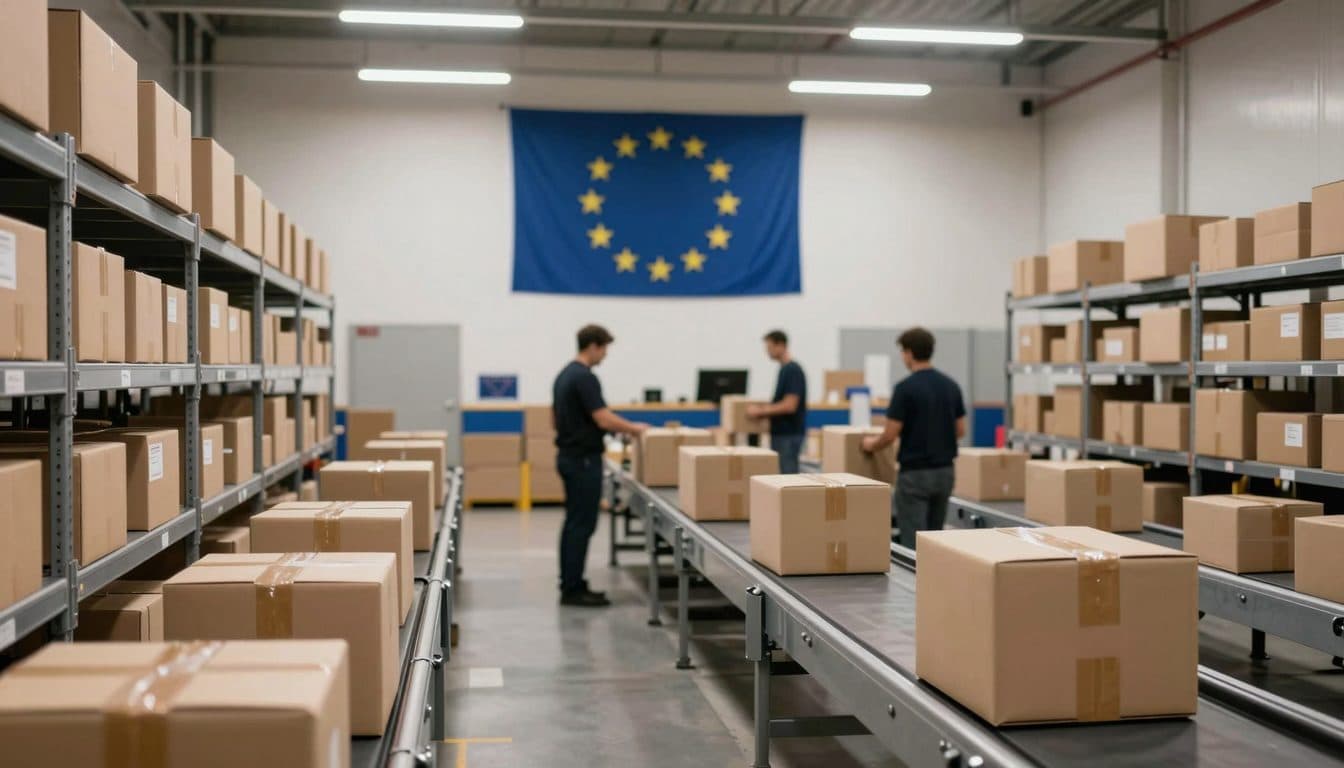
AI-generated image (z-image via Kie.ai)
Summary
The European Union has been collecting since Wednesday, 1 July 2026, a flat fee of three euros per category of goods on each parcel with a value of 150 euros…
Brussels, 01 July 2026
The European Union has been collecting since Wednesday, 1 July 2026, a flat fee of three euros per category of goods on each parcel with a value of 150 euros or less shipped from a third country, in order to brake the flood of small packages that has quadrupled in just a few years.
What has changed since the previous version
Updated 1 July 2026: the new flat fee of three euros comes into force this Wednesday across the entire European Union on e-commerce shipments with a value of 150 euros or less originating from third countries.
The fee applies per category of goods ("tariff heading") contained in a single parcel, not per package: for three t-shirts with a value of 30 euros, three euros in duties are due; if a cheap toy is also included in the shipment, an additional three euros is added, for a total of six euros. "Die Steuer gilt aber nicht pro Paket, sondern hängt vom Inhalt ab : Die Zölle werden auf jede der einzelnen Warenkategorien ("Zollpositionen") erhoben, die in einem Paket enthalten sind", the regulatory text states.
Around 90% of all e-commerce imports with a value of 150 euros or less come from China, according to European Commission figures; the fee also hits shipments from the United States and the United Kingdom. According to the Council of the EU, the measure concerns 93% of e-commerce deliveries to the EU.
Scope: 93% of e-commerce deliveries affected
The European Commission justifies the new fee by the need to stem a wave of parcels that has quadrupled in three years: 5.9 billion low-value parcels arrived in 2025 without customs charges, compared with 1.39 billion in 2022. In 2024, 4.6 billion parcels – or 12 million per day, and even up to 16 million according to other estimates – had already reached the European market.
The stated objective is twofold: protect European businesses from unfair competition that exploited the exemption and guarantee "ein fairer Wettbewerb", in the Commission's words. "Wir haben in den letzen Jahren gesehen, dass diese EU-Zollfreigrenze ausgenutzt wurde", Brussels points out, where it is also noted that certain orders are split into several small parcels to avoid duties and controls.
For consumers, the procedure remains largely unchanged: in most cases, the postal service or carrier handles customs clearance and advances the costs; it is then up to the seller to have incorporated these costs into the price or to bill them separately. In principle, the consumer must check in the general terms and conditions of sale whether the flat fee has already been included in the price or whether customs clearance remains their responsibility. On delivery, in the case of clearance at home, Deutsche Post charges, for example, a service fee of 7.50 euros, in addition to taxes and duties already paid.
Reactions from trade and consumers
Several economists and trade representatives expect that some of the additional costs will be passed on to buyers. Lars Hofacker, of the EHI retail research institute, considers it likely that "die zusätzlichen Kosten zumindest teilweise an die Kundinnen und Kunden weitergegeben" werden, "denn gerade bei sehr niedrigpreisigen Artikeln ist der Spielraum begrenzt". "Wir sehen bereits, dass die Preise auf den Plattformen steigen, die Kosten landen also überwiegend bei den Verbraucher:innen", he adds.
Conversely, Roman Koidl, managing director of the Berlin-based customs service provider eClear, forecasts a two-thirds drop in the volume of small parcels: "Die Entscheidung der EU wird die Menge von über 5 Milliarden Kleinpaketen pro Jahr um zwei Drittel einbrechen lassen." He also expects "eine drastische Reduzierung des Sortiments auf die Top-Seller", with many sellers having to withdraw in the short term, and a lasting change in what is on offer.
On the major platforms side, observers note that the main operators have already started to adapt. "Die Unternehmen haben bereits begonnen, ihre Logistik nach Europa zu holen und fallen durch Einfuhren per Container nicht mehr in den Anwendungsbereich der Abgabe", according to a senior EU official. According to Samina Sultan, of the German Economic Institute (IW), "die großen E-Commerce-Plattformen aus China – vor allem Shein und Temu – [haben] sich schon teils auf die neue Regelung eingestellt" by building warehouses and distribution centres in Europe, which may translate into new investment on European soil.
Adaptations by the major Asian platforms
Shein has, for example, already opened a 740,000-square-metre robotic warehouse in Poland, allowing the platform to switch part of its deliveries to intra-European shipments not subject to the new flat fee. DHL, the German parcel leader, for its part estimates that 85% to 90% of parcels from non-European countries already go through two pre-clearance systems and arrive directly at the recipient; for the remaining 10% to 15%, the carrier bears the cost and then claims the amount from the end customer.
Samina Sultan, however, tempers the optimism of the major platforms: "es wird eben wahrscheinlich so sein, dass man vor allen Dingen kleinere Unternehmen im Ausland trifft, die nicht die Möglichkeit haben, solche Logistikanpassungen vorzunehmen", she says, thinking of artisans and small producers operating on thin margins. The Deutsche Umwelthilfe (DUH) shares this observation: its managing director, Barbara Metz, considers the measure merely "ein kleiner Schritt in die richtige Richtung", while stressing that 60% of the products contained in these parcels would not meet European health and safety standards, according to Stiftung Warentest.
Consumer protection associations are also calling for vigilance. Andrea Steinbach, a legal expert at the Verbraucherzentrale Rheinland-Pfalz, recalls that "Alle Preise müssen inklusive Steuer und Gebühren ausgewiesen werden" and that a consumer must be able to clearly identify the total price before purchase. She draws attention to the fact that a web address ending in ".de" or ".fr" does not necessarily mean that the goods are stored or shipped from the EU; an unusually long delivery time can be an indication that the order comes from a third country and that it will now be subject to the new fee.
Logistics and customs challenges
Carriers and logistics providers, for their part, fear operational frictions in the short term. A spokesperson for BPEX, which groups among others FedEx, UPS, Hermes, DPD and GLS, warns: "Dies kann dazu führen, dass Zollfreigaben länger dauern, als es bisher der Fall ist, und somit Verzögerungen in der Abfertigung entstehen können." The sector therefore calls on consumers to place orders early enough to absorb any additional delays.
The Chambers of Commerce and European retailers, for their part, welcome above all the end of a long-standing distortion: the 150-euro exemption dated back to the 1950s, a time when China was still a developing country. According to one analysis, German retail loses around 2.5 billion euros per year to the benefit of the major Chinese platforms; in Austria, the Handelsverband puts the shortfall at up to 4.5 billion euros and recalls that about half of national e-commerce spending is done with foreign online retailers, including Amazon and Zalando. On Chinese platforms such as Temu, Shein or AliExpress, around 10% – or 1.3 billion euros – of Austrian online spending would be done there, according to the same source.
The flat fee of three euros per category of goods is designed as a transitional solution: it is to apply until the entry into service of a reformed, better-equipped and centralised EU customs authority, expected by mid-2028. At that date, the 150-euro exemption will be definitively abolished. Non-commercial small parcels with a value of 45 euros or less sent from a third country will, however, remain duty-free, in accordance with the gifts regime.
Several Member States had tried national approaches. In Austria, the government had considered a two-euro fee on parcels, which the Commission considered likely to compete with the European fee; the Austrian authorities indicated that they would adjust their own fee if the EU actually collected the three euros. France and Italy were also considering similar schemes; the European Commission expressed reservations about these national initiatives, which it considers poorly compatible with the single internal market.
Outlook: towards a centralised customs system in 2028
For the future, eClear and several partners are calling for the generalisation of the digital product passport: a set of electronic data detailing the composition of materials, the origin, the repairability and the recyclability of items. "Für eine nachhaltige Marktentwicklung im Handel mit China und anderen Importländern benötigen wir dringend den digitalisierten Artikelpass", Roman Koidl argues, recalling that "solche Datenbanken existieren längst" elsewhere in industry.
Asked about the entry into force of the fee, the Chinese portals Shein and Temu, through which a large share of low-priced goods destined for Europe transit, did not respond to the German press agency's requests. According to analyst Alien Mulyk, of bevh, the impact on very low-priced Asian imports will nevertheless remain limited: "die Abgabe wird Billigimporten aus Asien 'wenig anhaben' [...], allerdings werden die Preise auch uneinholbar niedrig bleiben, wenn asiatische Anbieter die neue Abgabe aufschlagen."
On the supply chain, the European Commission acknowledges,