EU Parliament allows "Veggie Burger" – but bans "tofu cutlet" and "seitan steak"
Strasbourg, 16 June 2026
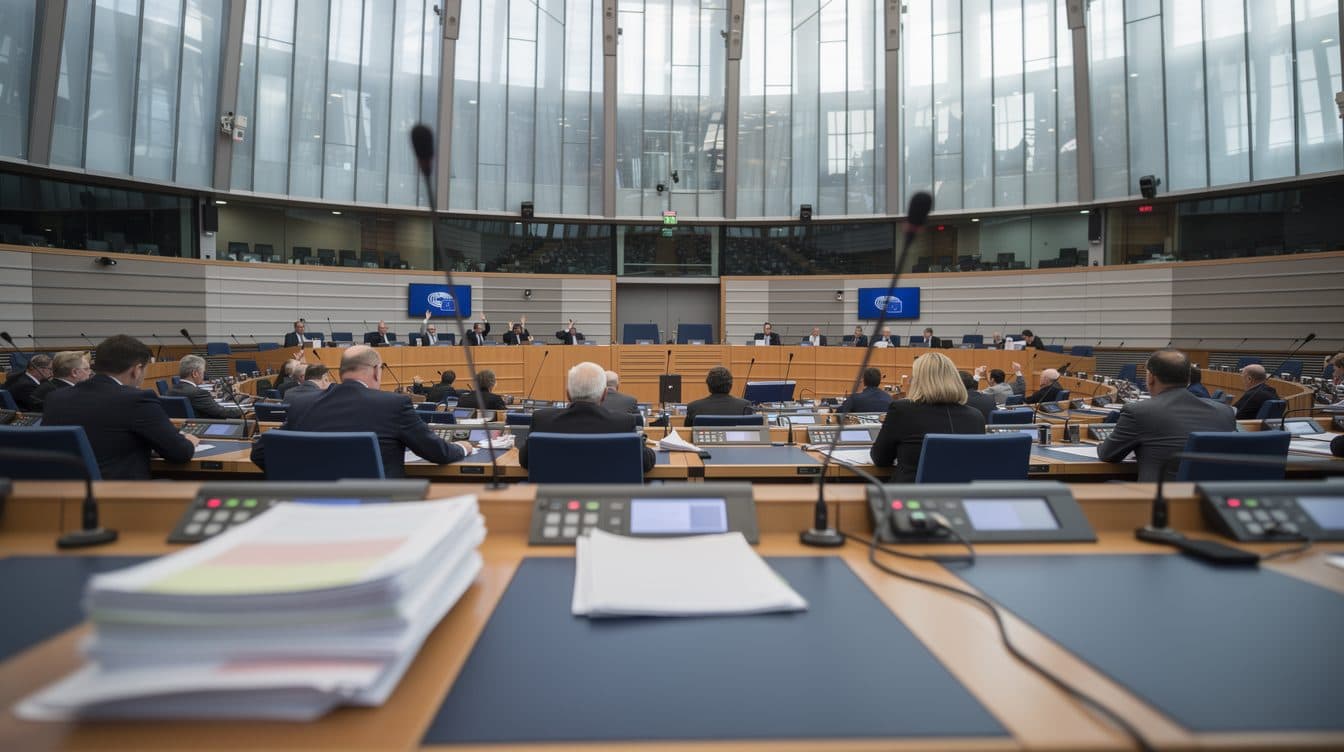
AI-generated image (flux-2/pro-text-to-image via Kie.ai)
Summary
The EU Parliament has adopted, by a large majority, a regulation that continues to permit names such as "Veggie Burger" but henceforth prohibits terms such as "seitan steak", "vegan chicken", or "tofu cutlet" for meat substitute products. Meat is defined as "the parts of animals suitable for consumption"; the regulation applies provisionally until the end of 2027.
Strasbourg, 16 June 2026
In Strasbourg, the European Parliament adopted a legislative proposal with 560 votes in favour, 75 against, and 25 abstentions, which continues to allow the name "Veggie Burger" but will in future ban designations such as "seitan steak", "vegan chicken", or "tofu cutlet" for vegetarian and vegan products.
Background: From protest to compromise
With this decision, the MEPs are responding to a proposal from the EU Commission of December 2024, which had been drawn up in reaction to protests by farmers in Brussels and several EU member states. At the time, a far-reaching ban on designations such as "tofu sausage", "soy escalope", or "Veggie Burger" was on the table. The version now adopted is considerably milder and explicitly exempts key terms in everyday usage from the ban.
Specifically, according to Parliament's intention, terms such as "steak", "escalope/schnitzel", "burger", and "sausage" may only be used for animal products insofar as they refer to a specific cut of meat. Meat is defined in the text as "the parts of animals suitable for consumption" – for example, shoulder, steak, or bacon. Designations for individual cuts such as poultry, beef, ribs, liver, cutlet, or bacon are likewise reserved for meat terms.
For vegetarian and vegan products, this means that names such as "seitan steak", "vegan chicken", "tofu cutlet", or "meatless meatloaf" ("fleischloser Leberkäse") will no longer be permitted in future. The term "Veggie Burger", however, remains allowed, as does a range of other common product names that are already established in the market. Observers see this as a compromise between the demands of agricultural associations and the interests of manufacturers of meat substitute products.
What is allowed, what is banned?
The leader of the EU Greens delegation, Thomas Waitz, welcomed the agreement: "Der Burger selbst soll nicht verboten werden", he emphasised. However, animal terms such as beef, veal, or pork may no longer be used for vegan alternatives. Waitz described the proposal as "ein etwas mehr der Vernunft zugeneigter Vorschlag" and spoke of an avoidance of the "größten Unsinnigkeiten".
Criticism came from Austria, where the SPÖ and the Greens described the debate over meat substitute products as a sham debate. The responsible SPÖ EU MEP Günther Sidl said at a press meeting on Tuesday that what mattered to him was not the name of the product, but that "klar ersichtlich ist, was drinnen ist". He sees "vorgelagerte Scheindebatten", the "Versuch, die Fleischindustrie zu schützen", and attempts to "gesellschaftliche Veränderungen so lange wie möglich hinauszuziehen".
Reactions from Austria and Germany
Austrian Agriculture Minister Norbert Totschnig (ÖVP), by contrast, expressed satisfaction with the compromise. "Vegetarische Hühnerkeulen gibt es nicht", he had said in welcoming the compromise. At the same time, he conceded: "Wir hätten uns gewünscht, dass diesbezüglich gar keine Neuregelung kommt." Thus, the ÖVP position ultimately remained on its original line, but the outcome is being presented as a viable compromise.
The discussions over Veggie Burgers and similar products are not, however, concluded with the parliamentary vote. The regulation applies provisionally until the end of 2027 and forms part of the ongoing reform of the Common Agricultural Policy (CAP). Further consultations are to follow during this period, in which the EU Commission may table new proposals.
Timeline: In force until end of 2027
A decision was also taken in Strasbourg on how to handle the adjective "fair" with regard to agricultural products. According to Parliament, the agreement also clarifies the use of such terms and lists the criteria for permitting such labelling. This is intended to prevent the term "fair" from being used without limit and without verifiable requirements.
The CSU member of the Bundestag also appeared relaxed in conversation with the Deutsche Presse-Agentur. Consumers have long been sufficiently informed: "Die Verbraucher sind schlau und mündig. Sie wissen längst, dass im Veggie-Schnitzel kein Fleisch ist", the CSU politician said. From her perspective, no new regulation is needed at all; the market already ensures clarity through the list of ingredients.
What does this mean for consumers and manufacturers?
In light of the parliamentary majority, the decision is seen as a signal that the European Parliament is seeking a pragmatic middle path. While agricultural associations see parts of their demands met, the central term "Veggie Burger" remains in place for manufacturers of meat substitute products. Observers see this as an indication that in future, debates over naming will take a back seat to questions of labelling and recipe composition.
The final version of the regulation must now be coordinated with the Council of the EU in the further legislative process. Only after this vote will the new requirements formally enter into force. Until then, the principles adopted now may still be altered or refined.
In the coming months, the debate over name protection and consumer deception is likely to continue. The European Commission has announced that it will review the effectiveness of the new rules by the end of 2027 and tighten them if necessary. The issue thus remains on the political agenda – even if the term "Veggie Burger" is secure for the time being.
Outlook: Further debate in the course of the CAP reform
Consumer advocates assess the compromise largely positively. They see in the new definition of meat a clear basis for taking action against misleading advertising, without simultaneously banning established product names. What remains important, however, is that ingredient lists and nutritional information continue to be clearly legible on packaging.
Manufacturers of plant-based alternatives also reacted cautiously optimistically. Although some product names will have to be adjusted, the central term "Veggie Burger" remains in place. Many companies had speculated at length in recent months about possible renaming if terms such as "Schnitzel", "Steak", or "Wurst" were to be removed entirely.
Overall, the decision shows that the EU Parliament is seeking a balance between agriculture, consumer protection, and the food industry. A complete adoption of the originally discussed far-reaching bans would evidently no longer have commanded a majority within the factions. The current compromise takes this into account and at the same time leaves room for further adjustments in the coming years.
In Brussels, the decision is also being noted closely with regard to the upcoming CAP reform. Agricultural associations announced that they intend to raise the issue again in the further negotiations. Plant-based manufacturer associations are meanwhile preparing a position paper in which they call for a clear and permanent regulation for terms such as "Veggie Burger".
Until a final agreement is reached with the Council, the current legal situation remains in force. For consumers, little changes in everyday life for the time being: "Veggie Burger", "Tofu-Schnitzel", and similar designations may continue to be used, even though the precise rules of the game will be readjusted once the new regulation enters into force.
Questions & Answers
Who adopted the new regulation in the EU Parliament?
The members of the European Parliament adopted the corresponding legislative proposal on Tuesday in Strasbourg with 560 votes in favour, 75 against, and 25 abstentions.
Which product names will be banned in future?
Designations such as "Seitan-Steak", "veganes Huhn", "Tofu-Kotelett", or "fleischloser Leberkäse" should no longer be permitted for vegetarian and vegan products, because meat is defined as "die zum Verzehr geeigneten Teile von Tieren".
What does the decision mean for the term "Veggie Burger"?
The term "Veggie Burger" remains expressly permitted, as the leader of the Greens EU delegation, Thomas Waitz, emphasised: "Der Burger selbst soll nicht verboten werden."
EU Parliament: Veggie burger allowed, tofu cutlet banned | allfacts360