European Parliament votes in favor of review procedure against the AfD's European party family ESN
Strasbourg, 07 July 2026
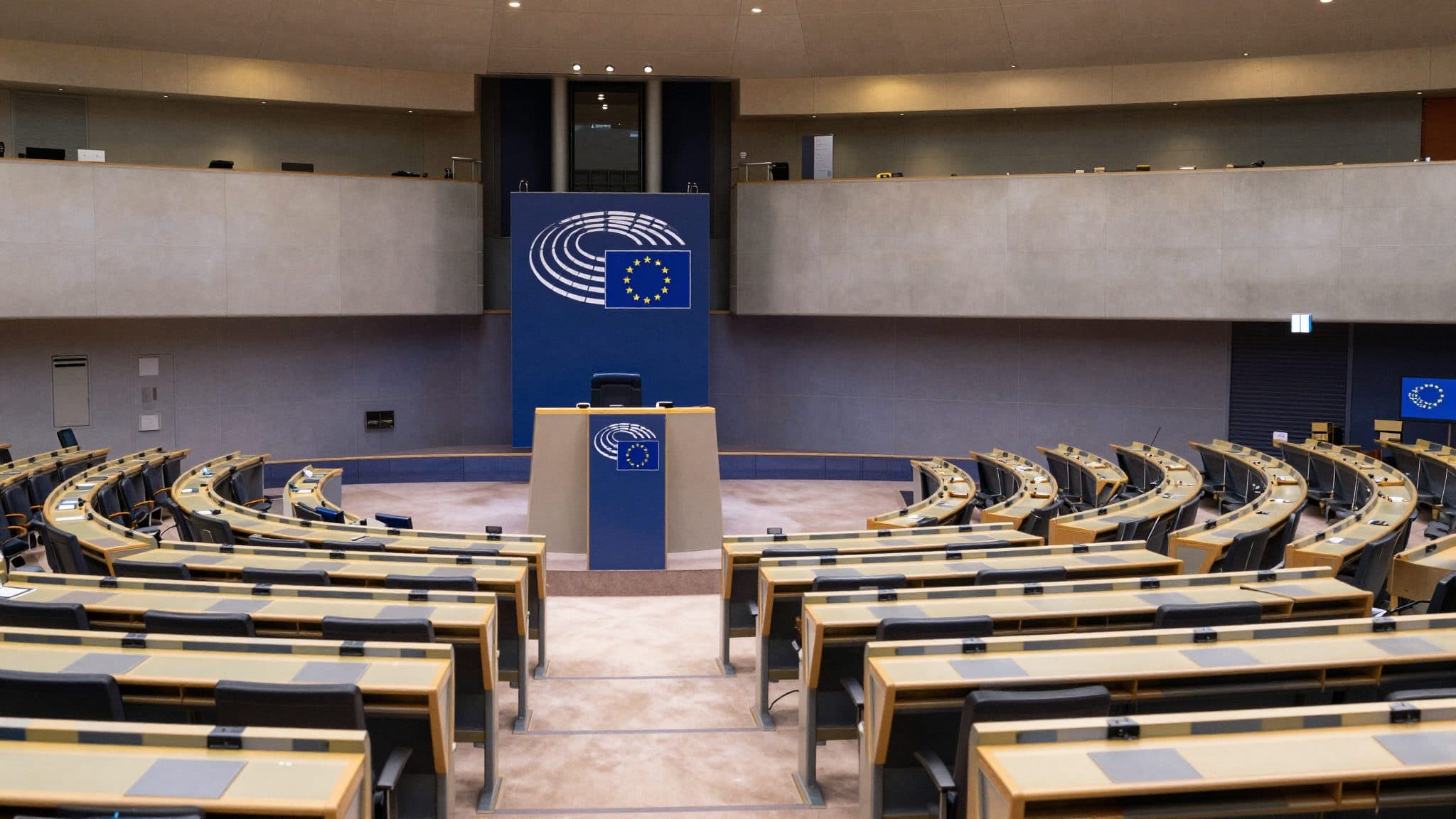
AI-generated image (z-image via Kie.ai)
Summary
The European Parliament has, with a clear majority, initiated a review procedure against the right-wing populist party family ESN (Europe of Sovereign Nations), which also includes the AfD. The aim is for the supervisory authority to clarify whether the ESN violates EU fundamental values and could lose its annual funding of around two million euros.
Strasbourg, 07 July 2026
The European Parliament on Tuesday launched, with a broad majority, a review procedure against the right-wing populist party family ESN (Europe of Sovereign Nations), of which the AfD is a member.
Vote with a clear majority
In the vote in Strasbourg, 414 members of parliament voted in favor of initiating the procedure, while 224 voted against. The parliament thereby tasked the Authority for European Political Parties and Foundations (APPF) with examining whether the ESN violates the values of the EU treaties. The motion was placed on the agenda because 247 of the 720 parliamentarians had signed the corresponding request; 181 signatures were required.
The procedure is expressly not directed against the ESN group in the European Parliament, but against the European party family as an organization based in Berlin. Party families are associations of national parties such as the PES, which includes the SPD, or the conservative EPP. They are not identical to the parliamentary groups. In the event of a serious violation, the ESN could be stripped of its registration as a European party, which would entail the loss of EU funding.
What is at stake: EU funding
EU funding for the ESN party family currently amounts to just under two million euros per year. The supervisory authority is now to examine whether the ESN violates EU fundamental values such as human dignity, democracy, and the rule of law. Should the authority reach this conclusion, funding for election campaigns and party congresses could be withdrawn. EU funds are tied to compliance with the values enshrined in the EU treaties: human dignity, freedom, democracy, equality, the rule of law, and the protection of minorities.
The basis for the vote is a dossier of more than 250 pages compiled by the supervisory authority, which was sent to the parliament, the EU Commission, and the Council of Member States at the end of May. It refers, among other things, to social media posts in which ESN politicians agitate against migrants, homosexuals, or Israeli citizens. The supervisory authority emphasized that the transmission of the dossier does not yet constitute a result of the review. A decision is not expected before December at the earliest.
Reactions and political background
The procedure was supported by Social Democrats, Liberals, Greens, and the Left, as well as by members of the European People's Party (EPP), including Niclas Herbst, chairman of the CDU/CSU group in the European Parliament. The procedure is necessary to ensure clarity on whether the interests of European taxpayers are adequately safeguarded, Herbst explained. The procedure is based on Article 2 of the EU Treaty, according to which the EU is founded on freedom, democracy, and human rights and respects the rights of minorities.
The ESN rejected the allegations in an initial response and criticized the move as politically motivated. Political disagreements belong at the ballot box, not in administrative proceedings, according to a statement from the party family. AfD MEP René Aust spoke of a desperate, undemocratic step.
The ESN was founded in 2024 with the involvement of the AfD, after the latter had unsuccessfully sought to join the Patriots for Europe group. Jordan Bardella and Marine Le Pen's Rassemblement National had rejected this with regard to the AfD's tone during the 2024 European election campaign. With 27 members, the ESN group is the smallest grouping in the European Parliament. Other members include the Bulgarian party Vazrazhdane, Éric Zemmour's French party Reconquête, the Czech SPD from Andrej Babiš's governing coalition, and the Polish Nowa Nadzieja.
How the procedure will proceed
The multi-stage review procedure initially gives the ESN the opportunity to comment on the allegations and to remedy any violations through changes to its statutes, program, or leadership. An independent panel of experts then prepares an assessment before the supervisory authority decides. The ESN has the right to position itself before the APPF during the course of the proceedings.
For the AfD, the supervisory authority's dossier also includes a ruling by the Cologne Administrative Court. In February, the court had provisionally prohibited the Federal Office for the Protection of the Constitution (BfV) from classifying the AfD as a confirmed right-wing extremist endeavor. However, the judges saw indications that AfD demands violate constitutionally guaranteed human dignity and listed numerous derogatory statements by AfD politicians, including about migrants.
From the ranks of the CDU, reference was made to a previous example: the EU once provided financial support to the British Ukip party of Nigel Farage, which subsequently used these funds against the EU. At the end of June, the ESN adopted a declaration in Berlin reaffirming its commitment to democracy, freedom, and the rule of law. The Bulgarian party Vazrazhdane had caused a stir in the Bulgarian parliament about a year earlier when the EU allowed the introduction of the euro in Bulgaria.
Beyond the possible withdrawal of funding for election campaigns and party congresses, a ban on the organization is expressly not on the table. The supervisory authority pointed out that the transmission of the dossier is not yet a result and that the ongoing proceedings serve to bring clarity. Until a decision is made, the ESN remains registered and eligible for funding as things stand.
It remains to be seen how the ESN will position itself in the proceedings. The president of the European party family is the Bulgarian MEP Stanislav Stoyanov. Observers interpret the broad parliamentary majority as a signal that the European Parliament intends to consistently examine compliance with its own fundamental values, including in relation to small groups.
Questions & Answers
What is the ESN and what role does the AfD play in it?
The ESN (Europe of Sovereign Nations) is a European party family based in Berlin, founded in 2024 with the involvement of the AfD, whose group in the EU Parliament comprises 27 members. Its president is the Bulgarian MEP Stanislav Stoyanov.
Why has the European Parliament initiated a review procedure against the ESN?
The European Parliament tasked the supervisory authority for European parties with the review because a 250-page dossier contains indications that ESN politicians have agitated on social media against migrants, homosexuals, or Israeli citizens and may thereby have violated EU fundamental values.
What consequences can the procedure have for the ESN?
If the supervisory authority determines that the ESN violates EU fundamental values such as human dignity, democracy, and the rule of law, its registration as a European party can be revoked and its annual funding of just under two million euros can be cut; a ban on the organization, however, is expressly not the subject of the proceedings.
ESN review procedure: European Parliament votes to | allfacts360