Father leaves exhausted seven-year-old alone on Mount Fuji
Tokyo, August 23, 2026
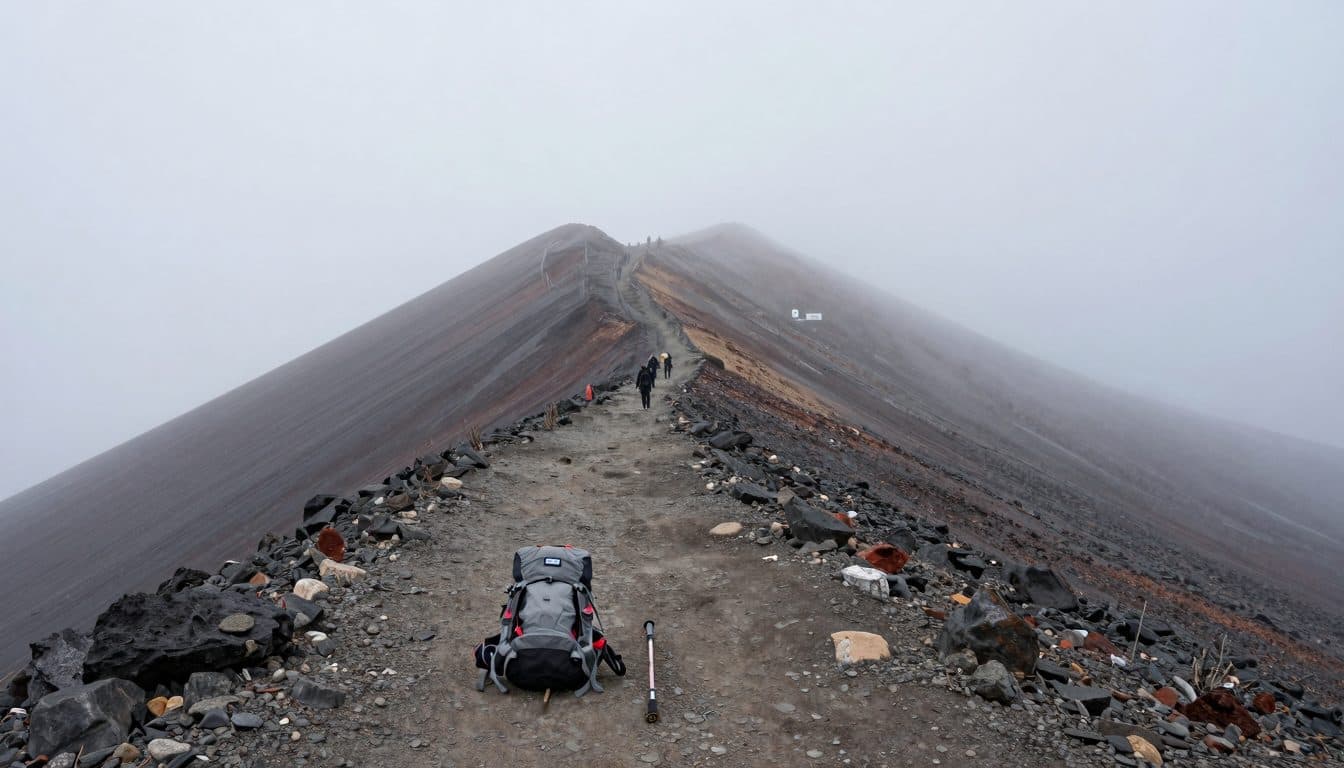
AI-generated image (z-image via Kie.ai)
Summary
During a family hike on Mount Fuji, a father left his seven-year-old son alone at the sixth station at an altitude of more than 2,000 meters after the child was exhausted and refused to walk any further. Police are investigating a violation of duty of care and issued a warning; according to authorities, the man expressed remorse.
Tokyo, August 23, 2026
During a hike on Mount Fuji, a father left his seven-year-old son alone at the sixth station at an altitude of more than 2,000 meters after the child repeatedly complained of exhaustion and refused to continue.
What happened at the sixth station
According to Japanese police, the incident occurred at the so-called sixth station of Mount Fuji at an altitude of more than 2,000 meters. The child had repeatedly complained of fatigue during the ascent and ultimately refused to take another step, as the investigation revealed.
Instead of aborting the climb or calling for help, the father separated from his son and continued the mountain tour alone. According to the authorities, the seven-year-old was temporarily left unsupervised in the high-altitude section of the mountain.
During the summer climbing season, Mount Fuji is a heavily frequented hiking destination. The sixth station lies well above the tree line, where weather changes and dropping temperatures pose additional risks even in summer.
After the management of the mountain hut or hiking guides noticed the child left alone, police were notified. Emergency services took care of the boy and brought him to safety. No indications of health damage were initially reported.
Reaction of the authorities
Police warned the father for violating his duty of care and issued a formal warning. According to officials, he expressed remorse to officers about his behavior.
The case is reminiscent of earlier discussions in Japan about safety on Mount Fuji. During the short official summer climbing season, the mountain attracts an estimated hundreds of thousands of hikers, including families with children.
Authorities and rescue services regularly point out that even experienced hikers should factor in the physical limits of younger companions. Several tourist guides recommend turning back in time at signs of exhaustion.
Background: Safety on Mount Fuji
The exact sequence of the mountain tour, the duration of the separation, and possible further investigative steps are still being examined, according to police. The case was picked up by TV Asahi and Japan Today, among others.
The authorities released no information about the identity of the father or the child. Investigators also initially provided no further details on the starting point of the hike, the planned destination, or the presence of other family members.
Authorities announced they would use the incident as an opportunity to renew awareness efforts targeting parents and hiking groups. Hiking guides and mountain hut operators are instructed to specifically point out the risks of high-altitude stages to families.
The official climbing season on Mount Fuji typically lasts only a few weeks in summer and is considered one of the shortest worldwide. During this time, authorities register numerous incidents each year, ranging from mild exhaustion to medical emergencies.
Police further stated that, according to the current state of affairs, no criminal consequences beyond the formal warning were planned, provided there were no indications of endangerment of the child's welfare. The investigation is ongoing.
The incident raises questions about parental responsibility on mountain tours with small children. Hiking associations in Japan recommend not taking children under ten onto routes above the fifth station and, if necessary, opting for alternative viewpoints instead.
Medical experts note that the thin air at altitudes above 2,000 meters can impair oxygen supply and lead to fatigue, dizziness, and circulatory problems in children more quickly than in adults.
Authorities urged hikers to inform themselves before the ascent about the respective stations, weather conditions, and the physical prerequisites of all participants. At any sign of exhaustion, they should always turn back and request help via the mountain huts.
At 3,776 meters, Mount Fuji is Japan's highest mountain and a globally recognized symbol. Japanese authorities have been promoting a respectful and safe approach to the mountain for years; as a World Cultural Heritage site, it attracts millions of visitors annually.
Public reaction in Japan was largely critical, according to Japanese media reports. On social networks, the father's behavior was harshly condemned, and calls were made for significantly stricter punishment.
Hiking guides pointed out that families with small children should pay particular attention to adjusted breaks, sufficient fluids, and warm clothing. They also recommended carrying a headlamp and a basic first-aid kit.
Police announced that the incident would be included in their statistics on hiking accidents on Mount Fuji and that future prevention campaigns would be more strongly focused on families with children.
After the warning, the father was instructed by the authorities to adhere to the rules on supervisory duty during mountain tours in the future. Repeated violations could, according to police, lead to more extensive investigations.
Overall, in the assessment of experts, the incident makes clear that even on popular and comparatively well-developed mountains like Mount Fuji, the safety of children requires careful planning and constant supervision by adults.
Questions & Answers
What exactly happened on Mount Fuji?
A father left his seven-year-old son alone at the sixth station at an altitude of more than 2,000 meters after the child was exhausted and refused to walk any further, and continued his hike.
How did the police react?
Japanese police recorded the incident, took care of the boy, and issued a formal warning against the father for violating his duty of care.
Why is the sixth station particularly risky?
The sixth station lies above the tree line at more than 2,000 meters, where weather changes and thin air pose additional dangers to hikers and especially to children even in summer.
Mount Fuji: Father leaves child alone – Police warn | allfacts360