Iran War: US Deploys Fighter Jets - Fear of Escalation Grows | allfacts360
Fear of Further Escalation in Iran War: US Deploys Fighter Jets and Prepares Larger Operations
Washington/Tehran, July 20, 2026
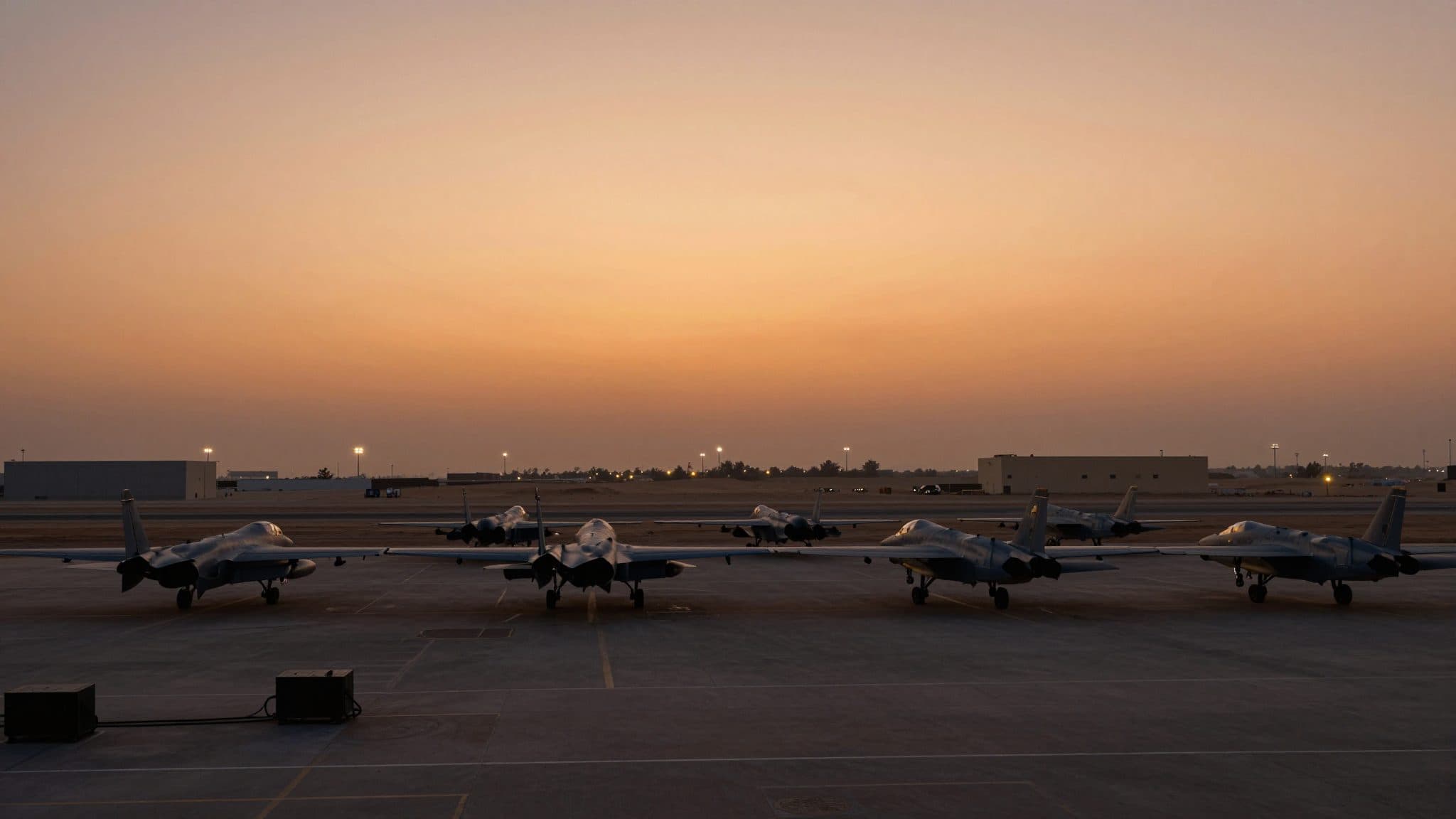
AI-generated image (z-image via Kie.ai)
Summary
The US is deploying additional fighter jets and tanker planes to the region and, according to reports, is considering expanding attacks on Iran. At the same time, fear of attacks on the capital is growing in Tehran, while the number of fallen US soldiers rises to 17.
Washington/Tehran, July 20, 2026
In the Iran war, the US is deploying additional fighter jets and tanker planes to the Middle East and, according to multiple US media reports, is preparing to expand military operations, while the number of fallen American soldiers rises to 17.
Military Buildup in the Region
Tensions between the United States and Iran have further intensified according to multiple US media reports. As reported by the "Wall Street Journal" among others, more fighter jets are currently being deployed to the region, including F-16 fighter jets from the US Air Base Spangdahlem in the Eifel region as well as several tanker aircraft. In addition, F-35 fighter jets would be sent from the US-used base RAF Lakenheath in Great Britain, the reports continued.
According to information from the "Washington Post" and the "New York Times," which cited unnamed US officials, the US government is reviewing several options for expanding military operations. The options include intensifying air strikes, deploying ground troops to occupy Iranian islands near the Strait of Hormuz, and bombing an Iranian nuclear facility known as "Pickaxe Mountain."
Options for Expanding the Attacks
The "Washington Post" quoted an unnamed US official saying that the US was preparing for a more comprehensive war. The US military must prepare for a "punitive action." The "New York Times" also reported this, citing US officials. According to this, Trump tends toward expanding operations against Iran, according to the "Wall Street Journal."
US President Donald Trump justified the latest US attacks with the death of several US soldiers. The attacks on Iran had been carried out "in honor" of the soldiers, he said on July 15, 2026. The attacks had been carried out "in honor" of the "great patriots" who were on deployment, "so that Iran cannot get nuclear weapons," he told journalists after returning from the World Cup final. The officially known number of US soldiers fallen in the Iran war thus rises to 17. The total number of American casualties since the start of the war has thus risen to 17.
Trump's Justification and the Death Toll
Trump also commented on the situation of the Iranian armed forces. "Militarily, they have lost almost everything," he said. "They have only very little left." "We hit them (the Iranians) very hard again tonight," Trump said. "They still have a few drones." The "Wall Street Journal" recently reported, citing US officials, that Trump tends toward expanding operations against Iran.
Meanwhile, concern is growing among the population of the Iranian capital Tehran about attacks on the mega-city itself should the war escalate further. According to Iranian news agencies, explosions were reported in the north of the country, in the southeastern province of Sistan-Baluchestan, in Bushehr province, in several port cities, and in the Sirik area near the Strait of Hormuz. The incident occurred eight nautical miles (almost 15 kilometers) northwest of the Omani town of Kumzar.
Situation in the Strait of Hormuz
In the Strait of Hormuz, a ship caught fire, according to information from the British maritime security authority (UKMTO). Air defenses are repelling "hostile drones" from Iran, the country's army said. "We control the strait; they control nothing." US Secretary of State Rubio said the United States would "continue to do what is necessary to protect global shipping."
The fear of escalation also affects the international energy market. On board seven loaded Qatari LNG tankers in mid-July, an estimated 570,000 tons were being transported. A total of LNG tankers with a combined capacity of nearly 1.9 million tons are currently in the region. "Oil prices will remain high," according to the assessment by Frank Bethmann from the ZDF business desk.
Impact on Energy Prices
ZDF correspondent David Sauer assessed the situation with regard to US strategy: "The intention is to keep the pressure on Iran." At the same time, military officers and officials warned of a possible overstretching of the armed forces. "We don't have enough to safely sustain operations, and I don't believe the White House is aware of that," the newspaper quoted the official as saying.
The Iranian side is meanwhile threatening retaliation. As long as US aggression in the region continues, the strait is safe neither for the transport of petrochemical products nor for "a single drop of oil and gas," according to Tehran. Other states, however, must contribute their share "through equipment or financial resources." Trump responded with a terse "We'll see what happens."
Political Reactions in the US
In the US, political resistance to expanding the attacks is meanwhile growing. Democratic lawmakers criticized the justification of the latest attacks as being "in honor" of the fallen soldiers. The debate over the appropriate scale of the US military presence in the region is likely to intensify further in the coming days. The total number of American casualties since the start of the war rose to 17, as US media reported over the weekend.
This news was broadcast on July 20, 2026 on the Deutschlandfunk program. As the forces of the US and Iran attack each other through another night, the fear of an even more comprehensive war is growing. The total number of American casualties since the start of the war thus rose to 17. ROUNDUP 2: Fear of Expansion of Iran War Grows (Update: Alarm in Bahrain).
Alarm was also triggered in Bahrain after increased sightings of drones and missiles in the region. The situation at the Strait of Hormuz, one of the world's most important sea lanes for oil transport, thus remains highly unstable. International observers fear that a further escalation could have immediate effects on global energy and financial markets.
Trump had recently emphasized that the attacks on Iran had been carried out "in honor" of the fallen soldiers. Regarding the future, however, he remained tight-lipped. "We'll see what happens," he said. This uncertainty intensifies the uncertainty about the further course of the conflict, which, according to experts such as the Iran expert who described the situation as a "rapid intensification," is taking on increasingly dangerous dimensions.
The coming days will show whether the US will actually launch a large-scale ground offensive or whether diplomatic channels will be revived. Until then, the situation in the Middle East remains tense, with potential consequences far beyond the region. "Oil prices will remain high," according to the assessment by Frank Bethmann from the ZDF business desk, summarizing the economic consequences that consumers worldwide are likely to feel.
Questions & Answers
What military options is the US considering in the Iran war?
According to reports by the "Washington Post" and the "New York Times," the US is considering intensifying air strikes, deploying ground troops to occupy Iranian islands near the Strait of Hormuz, and bombing an Iranian nuclear facility called "Pickaxe Mountain."
How many US soldiers have fallen in the Iran war so far?
The officially known number of US soldiers fallen in the Iran war has risen to 17, as US media reported citing the Pentagon.
Why did Trump order the latest attacks on Iran?
Trump justified the latest US attacks with the death of several US soldiers. The attacks were carried out "in honor" of the fallen soldiers and the "great patriots," "so that Iran cannot get nuclear weapons."