France and United Kingdom Seek to Secure Strait of Hormuz Together with Oman
Paris, July 4, 2026
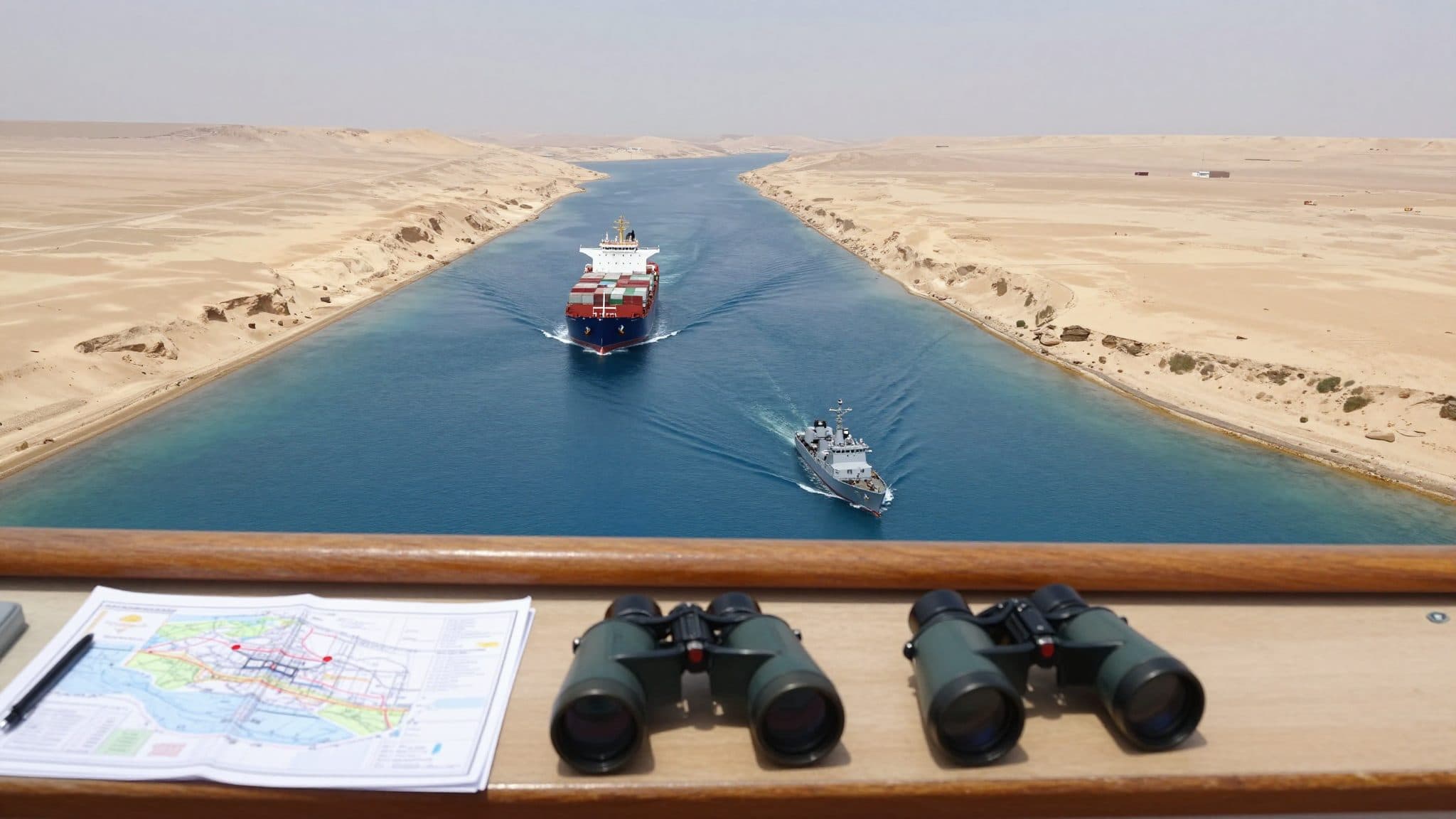
AI-generated image (z-image via Kie.ai)
Summary
France and the United Kingdom have announced that they intend to secure shipping in the Strait of Hormuz together with Oman, while Iran continues to reject…
Paris, July 4, 2026
France and the United Kingdom have announced that they intend to secure shipping in the Strait of Hormuz together with Oman, while Iran continues to reject international involvement in mine clearance.
Joint statement from Paris and London
France and the United Kingdom released a joint statement late in the evening, reaffirming their willingness to cooperate with the Sultanate of Oman in securing shipping in the Strait of Hormuz. "The Sultanate of Oman has agreed to work with France and the United Kingdom to ensure the safety of shipping in its territorial waters," Paris and London said in a joint statement in the evening. According to the statement, the threat to commercial shipping in one of the world's most important sea lanes is to be jointly contained.
The backdrop to the announcement is an attack on a ship in Omani coastal waters, which has once again laid bare the vulnerability of international trade routes. According to sources in the capitals involved, the zone where the incident took place could in future be secured by naval units from Paris and London. Responsibility for protecting shipping is thus shifting in part to a coalition of European states and Oman.
Macron speaks of a positive development
French President Emmanuel Macron described it as a "positive development" following "constructive talks" with the Sultan of Oman earlier this week, on the basis of which France is adjusting the deployment of its navy in the region. At the same time, the aircraft carrier "Charles de Gaulle" will return to its home port in Toulon, while French mine-countermeasure forces and their escort will remain on standby in the area to act together with partners. French President Macron said mine-countermeasure forces and their escort are standing by on site.
Readiness for a broader multinational mission
The joint statement continued: "France and the United Kingdom are also prepared to deploy a broader multinational military mission to support freedom of navigation in the Strait of Hormuz." Both countries are thereby signaling that, if necessary, they could also take on responsibility beyond Omani territorial waters. The wording also leaves room for an expansion of the mission should the security situation deteriorate further.
Iran rejects international assistance
Iran had previously firmly rejected any international involvement in mine clearance in the Strait of Hormuz and accused Paris of "provocations." Tehran justified its stance with an existing agreement with the United States: the agreement with the US placed responsibility solely with the Iranian navy, Tehran explained. Iran is thereby claiming control over the strait largely for its own navy.
The Strait of Hormuz is one of the most important routes for global oil and goods traffic. Ship traffic through the strait has recently picked up again, but remains well below pre-war levels, according to data available to the dpa news agency. The region therefore remains a sensitive point of the world economy, where any disruption can have an immediate impact on energy prices and supply chains.
Significance of the strait for world trade
The governments in Paris and London stressed that cooperation with Oman is limited to the sultanate's territorial waters and that its sovereignty will be respected. Through the bilateral arrangement with Muscat, the two European states also sidestep the diplomatic blockade with Tehran that currently makes direct coordination with Iran impossible. This construction allows France and the United Kingdom to deploy their own capacities in the region without formally encroaching on Iranian jurisdiction.
It remains unclear how Tehran will respond to the new mission. The accusation of "provocations" shows that tensions between France and Iran are already high. Should Iranian authorities view the presence of European warships in the region as interference, the conflict between the Iranian navy and the European task forces could intensify. At the same time, the announcement increases pressure on Tehran to come up with its own measures to secure shipping.
With the United Kingdom, a second European NATO state is now participating in securing the strait. The mission thus gains additional political weight and expanded operational capabilities, given that London has both its own naval units and logistical experience in the region. For international commercial shipping, the coalition of France, the United Kingdom, and Oman represents at least an intermediate step on the way to greater stability.
The news was broadcast on 04.07.2026 on the Deutschlandfunk program and is based on a report from the dpa news desk. It comes at a time when several European states are recalibrating their maritime capabilities and increasingly relying on bilateral cooperation in the Gulf region. The outcome of this experiment could also determine how similar blockades and threats in strategically important sea lanes are handled in the future.
Observers view the declaration from Paris and London as an attempt to achieve maximum deterrent effect with limited means. Even the mere announcement that mine-countermeasure forces and escort vessels are on site increases the capacity for action of international shipping. Whether this will be enough to prevent future incidents such as the recent attack in Omani waters, however, remains to be seen.
Outlook for the coming weeks
Regardless, the initiative underlines the growing European ambition to have a say in security policy matters beyond the continent itself. The Strait of Hormuz has been regarded for decades as a symbol of the vulnerability of globalized supply chains, and every new mission touches a nerve that affects energy markets, insurance premiums, and diplomatic relations alike. The coming weeks will show whether the mission actually takes effect and whether it delivers the hoped-for stabilizing impact.
The next steps now lie with the naval staffs in Paris and London, which must work out the operational implementation together with Oman. This includes determining the operational areas, coordinating the mine-countermeasure forces, and deciding what rights foreign vessels will have in Omani territorial waters. Communication with Iran, which continues to see its own navy as responsible, is also likely to play a central role.
Overall, the situation in the Strait of Hormuz remains tense. The European-Omani cooperation is a political signal, but no substitute for a comprehensive resolution of the conflict. If it succeeds in securing shipping through combined efforts while avoiding an escalation with Iran, that would be an important success for international diplomacy. Otherwise, a further escalation looms, with effects felt well beyond the region.
A direct response from Tehran to the new mission has yet to come. There has also been no initial reaction from the United States to the move by its European allies. It therefore remains to be seen how the existing bilateral agreement between Washington and Tehran is compatible with the new three-party coalition.
Questions & Answers
What have France and the United Kingdom announced in the Strait of Hormuz?
They have agreed with Oman to cooperate on securing shipping in the strait. Both countries also declared their readiness to take part in a broader multinational military mission.
Why is Iran resisting international mine-clearance efforts?
Tehran cites an agreement with the United States that places responsibility solely with the Iranian navy. From Iran's perspective, foreign involvement would therefore amount to a provocation.
What triggered the new security cooperation?
A recent attack on a ship in the Omani coastal zone had highlighted the vulnerability of trade routes. Subsequently, the Sultanate of Oman agreed to cooperate with Paris and London.
France and United Kingdom Seek to Secure Strait of… | allfacts360