German coalition plans to tighten sick note rules: end of telephone procedure and mandatory sick note from day one
Berlin, July 2, 2026
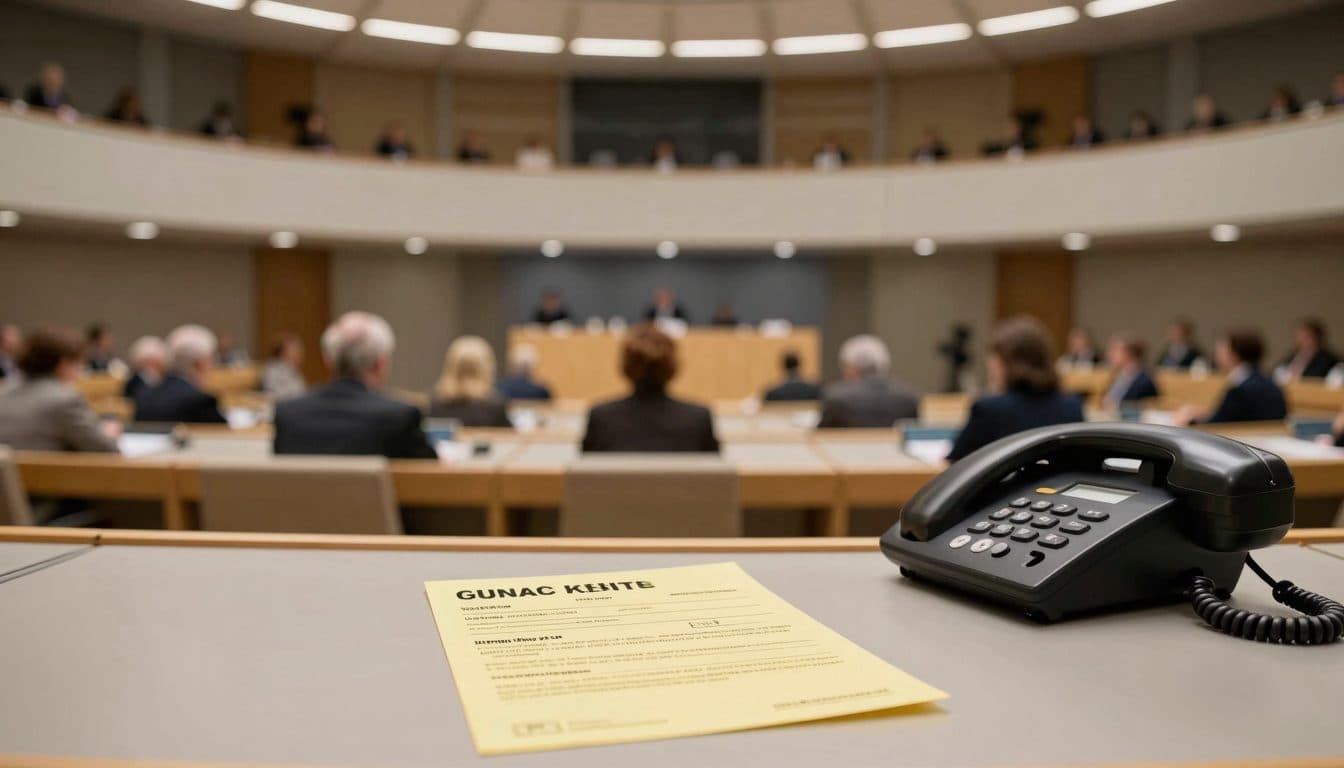
AI-generated image (z-image via Kie.ai)
Summary
The coalition of CDU, CSU and SPD agreed to eliminate the possibility of obtaining a sick note by phone and to require employees to submit the certificate from the first day of illness. Chancellor Friedrich Merz justified the measure by pointing to rising absenteeism and the loss of competitiveness, while family doctors and unions criticized the reform.
Berlin, July 2, 2026
The governing coalition of CDU, CSU and SPD decided on Wednesday night to eliminate the possibility of receiving sick notes by phone and to require workers to submit the medical certificate (Arbeitsunfähigkeitsbescheinigung) from the first day of illness, Chancellor Friedrich Merz announced at a press conference in Berlin on Thursday.
The details of the new sick note
The measure is part of a broader reform package of 34 points that the black-red coalition — made up of the Union (CDU/CSU) and the SPD — is negotiating to revive the German economy after months of stagnation. According to Merz, the new rules will require employees to submit the medical certificate from the first day of incapacity. "Wir führen eine verpflichtende Vorlage der AU-Bescheinigung ab dem ersten Tag der Erkrankung ein", the chancellor said at the conference, where he described the decision as a "harte Entscheidung".
Merz defended the reform by noting that Germany cannot afford the competitive burden posed by long workplace absences: "Wir können uns diesen Wettbewerbsnachteil durch lange Abwesenheiten in den Unternehmen nicht mehr leisten". The head of government also referred to the "exorbitant gestiegenen Krankenständen nach dem Ende der Coronapandemie" to justify the regulatory change.
Until now, the sick note was only mandatory from the fourth day of illness, although employers could already require it from the first day. The current rule requires submission of the certificate from the fourth calendar day. With the reform, that threshold is moved forward to the first day, although Merz clarified that companies will be able to establish exceptions through individual agreements, company agreements or collective bargaining agreements: "Die Betriebe können davon abweichen".
The chancellor added that companies will be able to allow exceptions to the new sick note rule at the company level, although he did not provide further details on this point.
Criticism from the medical sector
Another central element of the reform is the elimination of phone sick notes, introduced as an exceptional measure during the coronavirus pandemic to ease congestion at practices. Since the end of 2023, this option has allowed patients to obtain a sick note without visiting the practice in person, provided they are known to the center and do not present severe symptoms. The Betriebskrankenkassen health insurers put the share of notes issued by phone at just 0.85 percent: "Nach Angaben der Betriebskrankenkassen liegt der Anteil telefonischer Krankschreibungen bei nur 0,85 Prozent".
The reform also provides for harsher penalties for doctors who improperly issue a sick note, under Section 278 of the German Criminal Code. Penalties may go beyond the 24 months and three extensions previously envisaged, and the full regulation will apply on a limited basis until the end of 2030. The package also includes changes to overtime, income tax on the highest wages, and bonuses for work on Sundays and public holidays.
Reactions from employers and unions
The reaction from the medical sector was swift. The board of the KBV (Kassenärztliche Bundesvereinigung) described the reform as "eine Zumutung, die an Unverschämtheit grenze". Its president, Blumenthal-Beier, warned the Redaktionsnetzwerk Deutschland that "die damit einhergehende Bürokratie werde nicht zu bewältigen sein" and called the decisions "absolut katastrophal". The president of the Hausärztinnen- und Hausärzteverband Baden-Württemberg, Susanne Bublitz, also flatly rejected the measure: "Wir lehnen beide Maßnahmen entschieden ab". In her view, "die telefonische Krankschreibung habe sich in der Vergangenheit bewährt", because it protects vulnerable patients from unnecessary contagion in waiting rooms, and she added that the new appointments generated are "medizinisch schlicht nicht notwendig".
Manfred Imbert, vice president of the Hausärztinnen- und Hausärzteverband Nordrhein, acknowledged that "angesichts der hohen Zahl an Krankmeldungen ist es nachvollziehbar, dass die Politik einen Filter vorschieben will", but warned that the additional burden "wird schwer zu schaffen sein" at practices already at their limit, especially given the planned retirement of one in three doctors. For his part, Oliver Hildenbrand, Baden-Württemberg's Health Minister and a member of the Greens, rebuked the coalition that "die allermeisten Menschen bei uns im Land handeln verantwortungsvoll. Sie pauschal unter Generalverdacht zu stellen, ist weder gerecht noch zielführend".
From the business side, the employers' association UBW (Verband der Unternehmer Baden-Württemberg) welcomed the elimination of phone sick notes, although it warned that mandatory submission from day one could overwhelm the health system: "Wenn nun bei jeder Migräne oder einem eintägigen Unwohlsein ein Arzt aufgesucht werden muss, ist die Überlastung der ärztlichen Versorgung programmiert". Its spokesperson also recalled that "der Krankenstand in den Unternehmen in Deutschland ist im internationalen Vergleich faktisch sehr hoch". Johann Pöttering, general director of the metalworking employers' association Metall NRW, backed the reform: "Die Bundesregierung erkennt erstmals an, dass die im internationalen Vergleich wirklich überdurchschnittlich hohen Krankentage in Deutschland ein wirkliches Problem für die Wettbewerbsfähigkeit des Standorts sind".
Context: absenteeism figures in Germany
The unions, on the other hand, flatly rejected the reform. Maike Schollenberger, regional head of the ver.di union, accused politicians and employers of a "tiefes Misstrauen gegenüber den arbeitenden Menschen im Land" and described the measures as a "classic own goal": "Statt weniger Krankmeldungen wird es mehr und vor allem längere geben". The Sozialverband VdK denounced the fact that "die Regierung unterstelle den Menschen wieder einmal, den Sozialstaat zum Blaumachen auszunutzen". Iris Kläsener, an employee from Ahlen, considered that "las personas realmente enfermas no siempre pueden llegar de inmediato a una consulta". Hamza Ayata, a care sector worker, recalled that "no todos los resfriados tienen que terminar en una sala de espera". Labor law specialist Arndt Kempgens warned that "wer nichts unternimmt, riskiert eine Abmahnung, im Extremfall eine Kündigung" if the worker does not notify their sick leave in the morning.
Baden-Württemberg recorded the lowest number of sick days per worker in all of Germany in 2025, with an average of 16.6 calendar days, according to an analysis by the insurer DAK based on data from around 263,000 insured members. The study also showed a 4.5 percent drop in the state's absenteeism rate. Mohammed Kasha, a retail worker, backed the reform on the grounds that there is a risk of abuse in the current system, although he acknowledged that the general assessment among employees is mixed.
The coalition is confident that the stricter new rules will curb the rise in absenteeism and improve competitiveness. Critics from the health and labor spheres argue, however, that the heightened bureaucracy will overwhelm already strained family practices and will not reduce the actual length of sick leaves, which in many cases depend on objective clinical conditions. Merz, in any case, concluded his press conference by stating that this is "ein guter Tag für Deutschland" — and hinted that further decisions could come in the coming months.
During the day, ZDF and Deutschlandfunk broadcast the details of the agreement and the press conference. The implementation of the full reform package negotiated by the coalition is still ongoing, while the association of family doctors announced further reactions in the coming weeks.
Questions & Answers
What changes to sick notes did the CDU, CSU and SPD coalition approve?
The agreement eliminates the possibility of obtaining a sick note by phone and requires employees to submit the medical certificate from the first day of illness, although with possible exceptions through agreements.
Why did Chancellor Friedrich Merz justify the reform?
Merz argued that absenteeism has surged since the pandemic and that long workplace absences are a drag on Germany's economic competitiveness.
What criticism did the new rules receive?
Family doctor associations and the Sozialverband VdK rejected the measure as unjustified and as generating an unmanageable bureaucracy for already overwhelmed practices.
Germany: sick leave from day one and end of phone sick notes | allfacts360