Austria Health Reform 2026: Agreement with states | allfacts360
Government and states agree on key points of health and administrative reform after 13-hour negotiation
Vienna, 2 July 2026
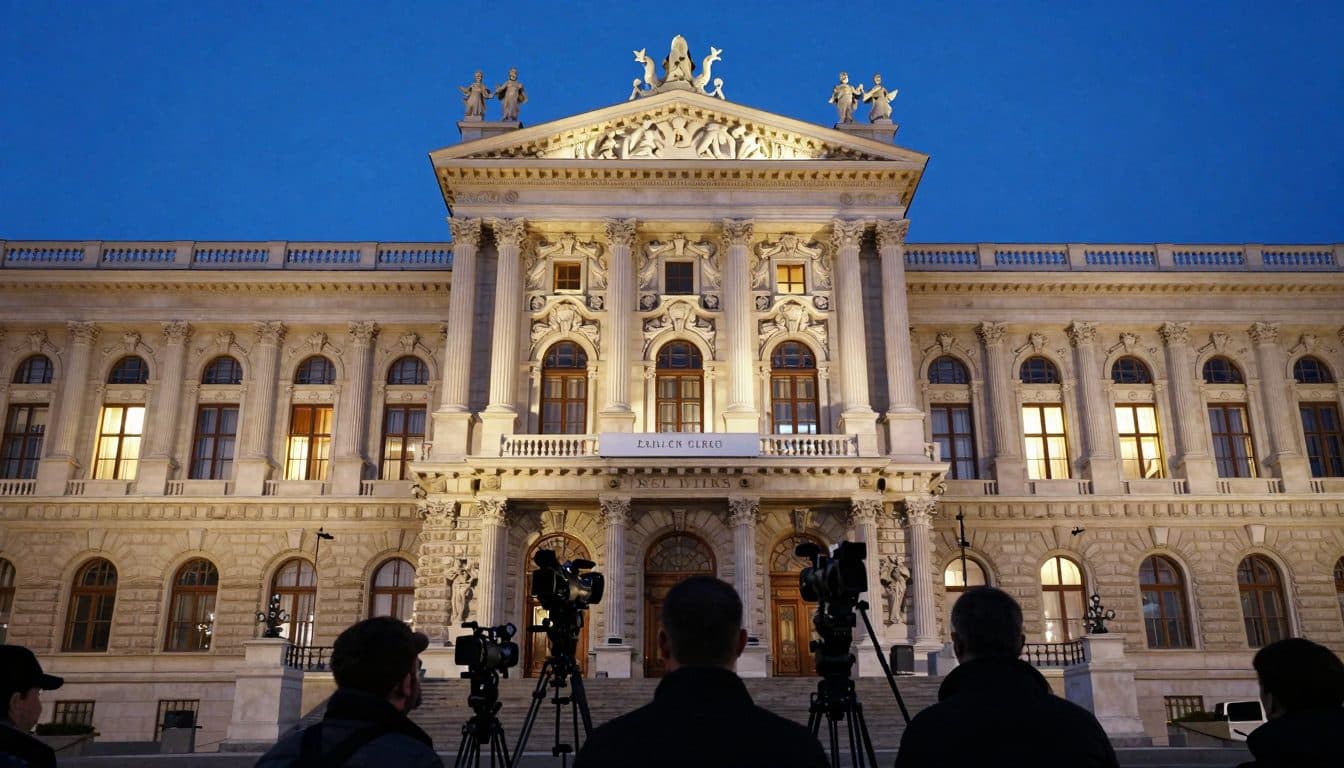
AI-generated image (z-image via Kie.ai)
Summary
After more than 13 hours of negotiations, the federal government, states, and municipalities in Vienna agreed on key points of a comprehensive reform in the areas of health, education, energy, and administration. Federal Chancellor Christian Stocker spoke of major steps, while ÖGK chairman Andreas Huss described the outcome in the ORF as "nicht den großen Wurf".
Vienna, 2 July 2026
Federal Chancellor Christian Stocker (ÖVP) reached agreement on Wednesday evening with representatives of the states, cities, and municipalities, after more than 13 hours of negotiations, on political key points for reforms in the areas of health, education, energy, and administration.
Agreement after marathon negotiation
The agreement was announced in the night to Wednesday at a press conference held by the government leadership with representatives of the states and municipalities at the Federal Chancellery in Vienna. Stocker spoke of a historic step: „Die Regierung spricht von einer ‚historischen Chance‘ und kündigt zahlreiche Veränderungen in den Bereichen Gesundheit, Bildung, Energie und Verwaltung an, die den Alltag vieler Menschen betreffen sollen." In terms of content, the package includes, among other things, a new health financing agency, the expansion of primary care units, a cap of 22 children per kindergarten group, and measures to reduce grid costs in the electricity sector.
At the center of the health reform is the planned health financing agency, in which funds from the federal government, the states, and social insurance are to be used "from a single source" for new integrated care models. Stocker explained the concept as follows: „Ein kleines Modell, aber man kann, wenn es funktioniert, das ausrollen." At the same time, he acknowledged that they were not yet at the end with regard to "Finanzierung aus einer Hand": „Dass hier noch mehr möglich ist, ist richtig."
Financing agency as a starting point
Health Minister Korinna Schumann (SPÖ) pointed out that in the health sector, instead of the originally pursued "Finanzierung aus einer Hand," there would at least be a "gemeinsame Finanzierung" for the planned new specialist medical centers: „Diese Reform ist kein Sparprogramm, sondern eine Investition in unser öffentliches Gesundheitssystem", she emphasized. She assured that the closure of existing hospital sites was "in keiner Weise gedacht".
The goal for the expansion of primary care units (PVE) remains ambitious. There are currently around 120 such centers in Austria, and this number is to rise to 150 by the end of the year. By 2030, a doubling to 300 is planned, and by 2040 the number is to increase to 600 – including, for the first time, centers for dental medicine as well as additional offerings for pediatric and gynecological care. The health hotline 1450 is also to be further strengthened as a central first point of contact, with a new e-health agency planned in parallel.
Expansion of primary care by 2040
ÖGK chairman Andreas Huss defended the reform on Wednesday evening on the ORF "ZiB 2" against criticism. „Tatsächlich ist das nicht der große Wurf, den sich viele erwartet haben", said the employee representative. At the same time, he argued that the reform nevertheless brought substantial improvements: „Jede Gesundheitsreform verdient den Namen Reform nur dann, wenn für die Menschen etwas gemacht wird – wenn sich Wartezeiten verkürzen und die Qualität verbessert wird", the ÖGK chief made clear.
Huss also spoke out in favor of a conceptual shift: away from the classic "Spital" toward a flexible "Gesundheitsstandort". „Diese Strategie der ‚Ambulantisierung‘ sei die logische Antwort auf den medizinischen Fortschritt", he explained. He also rejected the argument that the Austrian health system was too expensive and inefficient by international comparison, referring in this context to a "Mär".
On how to handle the much-discussed "Finanzierung aus einer Hand", NEOS chairwoman Beate Meinl-Reisinger formulated a notable compromise: „Im Gesundheitsbereich soll es statt der angestrebten ‚Finanzierung aus einer Hand‘ zumindest bei geplanten neuen Fachärztezentren zu ‚einer Finanzierung aus einer gemeinsamen Hand‘ kommen." Vienna's Mayor Michael Ludwig (SPÖ) spoke of a "Weichenstellung", even if there was still "weiter Weg" ahead.
In the education sector, the negotiating partners agreed that federal and state schools would continue to exist. After 125 hours of negotiations between the federal government and the states on education, a cap of a maximum of 22 children per kindergarten group is to apply in the future for children between the ages of three and six. The Greens, however, sharply criticized the results: „Ein Jahr verhandelt, und am Ende sind nur die Ankündigungsweltmeister am Werk", criticized parliamentary group leader Leonore Gewessler.
Criticism from opposition and business
The FPÖ was also dissatisfied. Health spokesperson Gerhard Kaniak declared that the presented "Gesundheitsreform" did not deserve the name "Reform": „Von der angekündigten Planung und Finanzierung aus einer Hand ist man meilenweit entfernt." He warned of more impersonal medicine and a weakening of care in rural areas. The Industriellenvereinigung, for its part, praised positive accents in education, energy, and administration, but saw the need for reform in the health sector as unfulfilled.
The results met with approval at the Austrian Association of Cities. President Michael Ludwig emphasized: „Es waren sehr konstruktive Gespräche, jetzt geht es um die legistische Umsetzung." Secretary General Thomas Weninger spoke of "wichtigen Schritten in Richtung Effizienzsteigerung und Verwaltungsklarheit". The Austrian Federal Economic Chamber also expressed a positive view: WKÖ President Martha Schultz stated that the reform partnership had "notwendige Lösungswege für Österreichs zentralen Zukunftsfragen auf den Tisch gelegt".
In the energy sector, an expansion of the constitution to include the new competency heading "Energiewirtschaft" was announced. Through a more efficient expansion of the electricity grid, grid costs are to be reduced by around 4.1 billion euros by 2040. This is also intended to facilitate the administrative side of the transformation toward renewable energies.
Energy, administration, and education
In the administrative area, former ÖVP politician Erwin Pröll pointed out that, of the 13 agreed points in the constitutional and administrative area, many projects had already been completed, while for a further part the legislative implementation was still pending. In this area, too, extensive follow-up steps are therefore necessary in order to translate the political agreement into concrete measures.
Chancellor Stocker expressed confidence in a statement at the Federal Chancellery on Thursday that, despite the existing reservations, the agreement was a viable starting point: „Es hat nicht so lange gedauert, weil es an Konstruktivität, an Reformwillen gemangelt hätte. Ganz im Gegenteil: Weil das vorhanden war, hat es so lange gedauert, weil man in die Details gegangen ist, weil man sich um Lösungen bemüht hat", Stocker said in an interview with the APA.
Next steps by the end of the year
At the same time, Stocker acknowledged that there had not yet been a final agreement on the question of disentangling competencies in the health sector. „Da hat es noch keine abschließende Einigung gegeben, aber ich würde nicht ausschließen, dass wir hier auch noch einen Schritt vorangehen können", said the Chancellor. The legislative implementation of the political agreement is to be completed by the end of the year: "so wie wir es angekündigt haben".
ÖGK chief Huss drew a cautiously optimistic interim balance on Thursday: „Bis zum Jahresende werden wir bei 150 Zentren stehen", he announced. He also stressed that the success of the reform would have to be measured against concrete parameters: "kürzeren Wartezeiten, besserer Patientenlenkung – vorrangig über ein österreichweit einheitlich ausgerollte Gesundheitshotline 1450, angeschlossener Telemedizin und Terminservice sowie einer stärkeren öffentlichen Gesundheitsversorgung".
The opposition, meanwhile, called for improvements. The Greens spoke of "Trippelschritten", while the FPÖ saw the course being set in the wrong direction. This means the political debate over the reform has only just begun – the coming months will show whether the current key points will actually translate into concrete laws and tangible improvements for patients.
Overall, the agreement illustrates the tension between political ambitions for shaping policy and Austria's complex federal structures. In the coming months, the federal government, states, and municipalities must translate the political pledges into legislative measures – a process that, as Stocker himself acknowledged, "relativ lange dauern" before the reform actually takes hold in the reality of care.
Questions & Answers
What did the federal government, states, and municipalities agree on in the health reform?
They agreed on key points that include, among other things, a new health financing agency, the expansion of primary care units to 600 by 2040, and joint financing for new specialist medical centers.
Why does ÖGK chairman Andreas Huss criticize the reform?
Huss acknowledges that it is "nicht der große Wurf" and criticizes above all that the originally announced "Finanzierung aus einer Hand" was not implemented.