Greenpeace warns: Tanker off Oman losing significantly more oil than initially assumed
Muscat, August 15, 2026
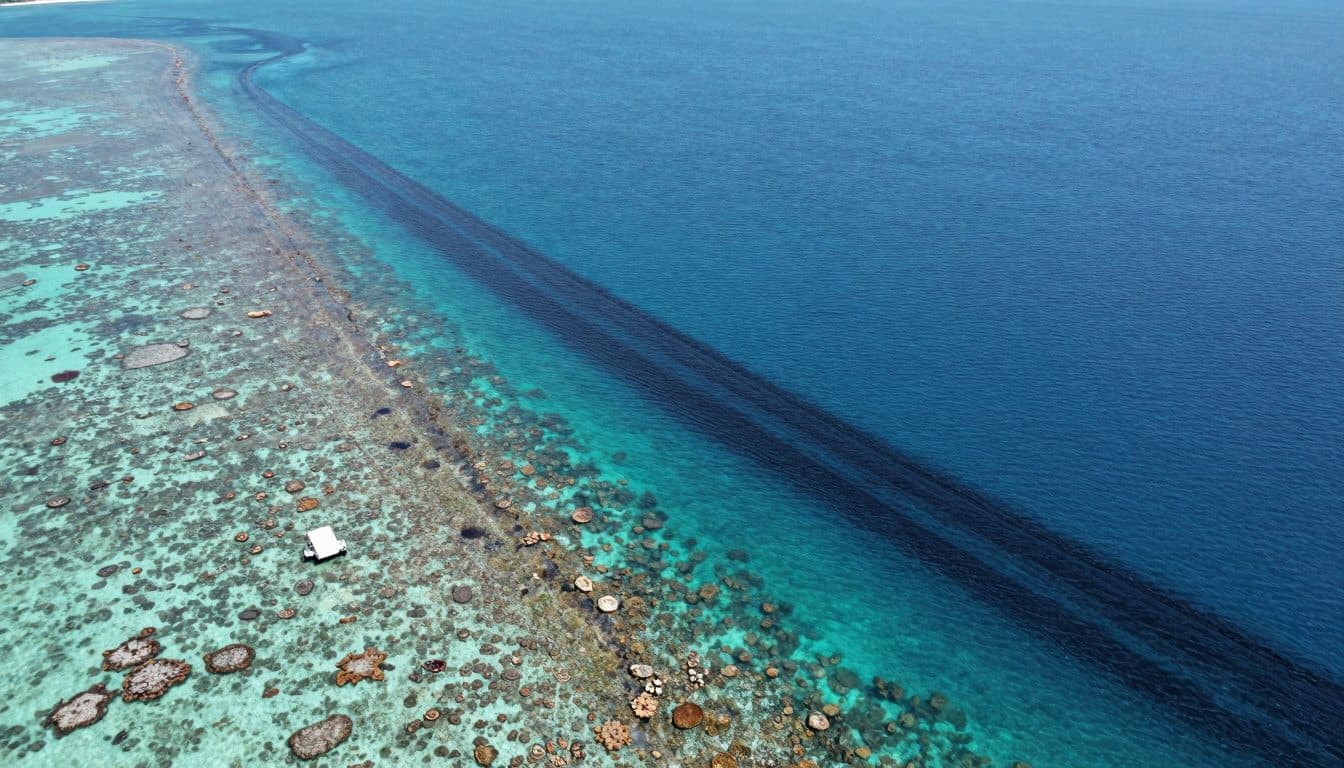
AI-generated image (z-image via Kie.ai)
Summary
Off the coast of Oman, a tanker belonging to a shadow fleet has, according to new findings, leaked significantly more oil than initially assumed. The environmental organization Greenpeace is warning of an impending environmental catastrophe for the country and its population.
Muscat, August 15, 2026
Off the coast of Oman, a tanker with unclear ownership has, according to new findings, leaked significantly more oil than initially assumed, as the environmental organization Greenpeace reports.
What is new since August 14, 2026
Update from August 15, 2026: The environmental organization Greenpeace is raising the alarm and warning that a tanker off the coast of Oman has leaked significantly more oil than originally assumed.
According to the organization, the new danger comes from a ship that is part of the so-called shadow fleet — a fleet of tankers with often unclear ownership structures that frequently sail under flags of convenience and whose insurance and maintenance status is difficult to verify.
Background: The shadow fleet
Greenpeace expert Nina Noelle, responsible for international crisis response, said on German television: "Denn hier kann es jetzt wirklich sein, dass Oman und seine Bevölkerung schlussendlich auf den Konsequenzen und auf dieser dramatischen Verschmutzung sitzen bleiben."
What is new since August 14, 2026
Since the last update, Greenpeace has significantly escalated its warning: The estimates of the amount of oil spilled have been revised upward. Where previously a manageable quantity was mentioned, the organization now assumes a substantially greater environmental impact.
Role of Greenpeace and other actors
In addition, Greenpeace has publicly disclosed that the organization has been warning for years about accidents involving tankers with unclear ownership. From the environmentalists' perspective, the current incident off Oman is proof that these risks have not been sufficiently considered to date.
It is also new that the debate over accountability is being conducted more sharply. The question of who is ultimately liable for the consequences of such pollution is particularly difficult to answer in the case of ships with obscured ownership structures.
Consequences for the region
Background: The shadow fleet
The so-called shadow fleet consists predominantly of older tankers that are frequently registered under the flags of states with weak regulatory oversight. They are primarily used to circumvent sanctions — for instance, in connection with Russian oil exports.
What to expect next
According to research by international media, Russia plays a central role in building up this fleet. Other states with restrictive regulation also use similar structures. The exact number of ships affected is unclear; estimates run into the hundreds.
The International Maritime Organization (IMO) has pointed out the risks of this shadow fleet on several occasions in recent years and has called for stricter controls. However, a binding international regulation does not yet exist.
Role of Greenpeace and other actors
Greenpeace is among the organizations warning loudest about the risks of the shadow fleet. The environmentalists are calling for complete traceability of ownership and an international liability regime.
The British security firm Ambrey, which analyzes maritime risks, is also closely monitoring the situation off Oman. Ambrey has repeatedly pointed out suspicious movements of tankers in the Indian Ocean in the past.
The International Maritime Organization (IMO), as a UN specialized agency, is responsible for regulating international shipping; however, its recommendations are not always legally binding.
Consequences for the region
If Greenpeace's warning is confirmed, Oman faces significant ecological and economic damage. The coastal regions are sensitive ecosystems with species-rich coral reefs and important fishing grounds.
Oman's economy depends to a considerable extent on fishing and tourism. A large-scale oil spill could severely impact both sectors.
Furthermore, the incident could reignite the international debate over the regulation of the shadow fleet. Environmental organizations and some governments have been pushing for stricter rules for years.
What to expect next
In the coming days, further information on the actual amount of oil spilled is expected. The question of which authorities are coordinating the salvage and damage containment also remains open.
International observers expect the incident to be taken up at the next sessions of the International Maritime Organization (IMO). Whether concrete decisions will emerge from this remains to be seen.
Questions & Answers
What role does Russia play in the shadow fleet?
According to research by international media, Russia plays a central role in building up the shadow fleet, which is used, among other things, to circumvent sanctions in the oil trade.
Tanker off Oman: Greenpeace warns of oil catastrophe | allfacts360