Houthis attack Saudi Arabian tankers in Red Sea – oil price rises above 100 dollars
Berlin, July 23, 2026
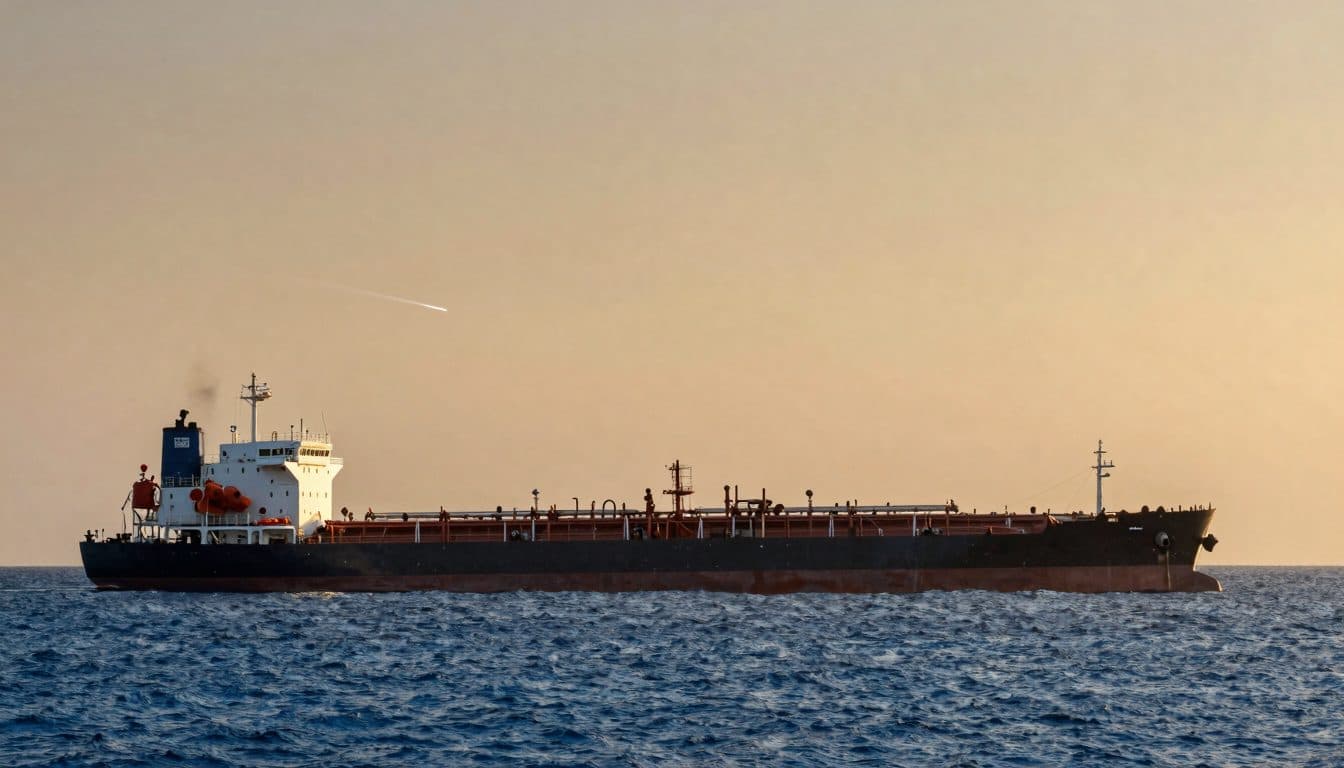
AI-generated image (z-image via Kie.ai)
Summary
The Iran-backed Houthi militia has attacked two Saudi Arabian oil tankers in the Red Sea, including the "Encelia." The attack pushed the Brent oil price above 100 US dollars per barrel, while the US continued its strikes on Iran.
Berlin, July 23, 2026
The Iran-backed Houthi militia attacked two Saudi Arabian oil tankers in the Red Sea on Wednesday and Thursday, further intensifying the conflict in the Middle East.
Attacks on "Encelia" and "Layla"
The Houthi rebels claimed responsibility for attacks on the tankers "Encelia" and "Layla," stating that the ships had violated a "blockade" declared by the militia. According to Reuters, two Chinese supertankers carrying a total cargo of four million barrels of Saudi oil attempted to leave the Red Sea via Bab al-Mandab on Thursday. Fires broke out on both ships, and approximately ten vessels were reportedly forced to turn back.
The British maritime security authority (UKMTO) stated that, according to the captain, the tanker was struck by an unknown projectile approximately 130 kilometers southwest of the Saudi coastal town of Al-Shukaik, which triggered a fire. There were no injuries. An official of the Saudi Arabian traffic authority TGA told the official news agency Spa that the fire broke out at the bow of the "Encelia" and the crew was safe. While the Houthis reported two freighters hit, the Saudi traffic authority TGA has so far only confirmed the attack on the "Encelia," without naming the perpetrators.
Geography of the conflict: Bab al-Mandab
Saudi Arabia declared that the attack violated international law and the principle of safe passage for commercial vessels. The Saudi-led military coalition announced at the beginning of the week that it would respond decisively to Houthi attacks on shipping in the Red Sea. A military response from Riyadh to the latest attacks had not occurred at the time of reporting.
With their weapons arsenal, they can also attack ships in the Bab al-Mandab strait from there, which, together with the Strait of Hormuz, is among the most important shipping routes worldwide. The Houthis control mainly the north of the country in Yemen and large parts of the western coast on the Red Sea. The 27-kilometer-wide Bab al-Mandab strait ("Gate of Tears" or "Gate of Lamentations") off Yemen's coast forms, together with the Strait of Hormuz, which Iran has blockaded, the second chokepoint for global oil trade.
Background: Escalation in the Iran war
The attacks come against the backdrop of an escalation of the Iran war. Due to the dispute over the Strait of Hormuz, which is important for global trade in energy sources such as oil and liquid gas, the Iran war has escalated again since the beginning of the month. The Iranian Revolutionary Guards declared on Thursday that they had stopped three tankers in the Strait of Hormuz. The Iranian Revolutionary Guards also spoke of an explosion on a mined route south of the Strait of Hormuz, which caused a tanker to catch fire and two others to turn around; there is no independent confirmation.
Because of the blockade of the Strait of Hormuz in the Iran war, Saudi Arabia exports a large portion of its oil via a pipeline from the vast oil fields in the east to the port of Yanbu on the Red Sea in the west of the Arabian Peninsula. From there, the tankers sail with their cargo through Bab al-Mandab toward Asia. Following the recent attacks in the Iran war, the oil price for the North Sea Brent grade rose above 100 US dollars per barrel (159 liters) on Thursday. In the afternoon, oil for delivery in September cost 100.28 US dollars. That was 6.60 percent more than the previous day.
Proxy war between Riyadh and Tehran
The Houthis had announced a "blockade" for Saudi ships on Monday – roughly one week after a new confrontation with the neighboring Sunni kingdom, which has been waging war against the militia for more than ten years. A "ban on shipping" would apply to Saudi Arabia from now on, said Houthi military spokesman Yahya Sari. However, he left open in which waters the ban would apply.
The conflict is regarded by observers as a proxy war between the world's largest crude oil exporter, Saudi Arabia, and Iran. With Iran's help, the Houthi militia in Yemen seized part of the country in the 2014 civil war and continues to receive weapons. As justification, the Shiite rebels stated that the ship had violated the "blockade" they had declared. Missiles, cruise missiles, and drones had been used.
Trump threatens retaliation
US President Donald Trump responded to the attacks with sharp threats. Should they do this again, the United States will hold Iran accountable, as the Houthis act as proxies of Iran, Trump wrote on his platform Truth Social. He announced "severe military punishment against Iran and of course also against the Houthis themselves." At the same time, Trump expressed disappointment with the militia, which had recently behaved "very responsibly." The Republican had previously announced that the United States would now destroy a bridge or a power plant in the Islamic Republic every time Iran fires on a ship in the Strait of Hormuz.
Parallel to the Houthi attack, US military strikes against Iran continued. Overnight, the US military had launched another wave of attacks against targets in Iran. It was the twelfth consecutive night in which the US attacked the Islamic Republic. The US military again attacked military targets in Iran, as the responsible regional command Centcom announced. The targets included missile and drone storage facilities, coastal surveillance installations, and the country's air defense. The five-hour operation ended at 10:30 PM US East Coast time (6:00 AM local time in Iran), the US command Centcom responsible for the region announced via the platform X.
The attacks were intended to prevent future attacks on commercial vessels and civilian seafarers, Washington said. US Secretary of State Marco Rubio says the Houthis were "drawn into this situation" by Iran. He expressed the hope that the situation would soon de-escalate. US media have been reporting for days about evidence of a possible escalation of the war – such as the deployment of additional fighter jets and soldiers to the region. According to reports, more than 150 medics have arrived in recent days at the Landstuhl Regional Medical Center in Rhineland-Palatinate, the most important military hospital for US soldiers wounded in the Middle East.
Reactions in the financial markets
The market reaction to the escalating violence was clear. Crude oil rose by 6.4 percent during trading to 100.08 dollars. The price of US oil of the West Texas Intermediate (WTI) grade for delivery in September rose by 4.08 percent to 91.38 dollars. The oil price is still well below the yearly high of around 126 dollars, which was reached at the end of April with the start of the Iran war by the US and Israel. At that time, the start of the Iran war had pushed the price sharply upward; by the beginning of July it had fallen to around 70 dollars.
Analysts warned of further consequences. If this route becomes impassable, the disruption of oil supply becomes more serious, and we are again talking about a situation with no way out, said Helima Croft, commodities strategist at RBC. The investment bank Goldman Sachs sees the possibility that Brent could rise above 120 dollars in the fourth quarter if the disruptions in the Strait of Hormuz persist. Four ships have already left the route and are taking the way around the Cape of Good Hope, which extends the journey by an additional month.
International reactions and outlook
The Gulf Cooperation Council sharply condemned the "hostile declarations" of the Houthis on Thursday and called on the UN Security Council to deter Iran from further attacks on the Gulf states. The majority of shipowners and shipping companies could be forced to stop sending their ships through the Bab al-Mandab Strait. This is a sign of the reckless conduct of the Houthis. We are facing massive chaos in supply chains, warned the maritime consultant Haitham Shaaban from Beirut on Qatari television Al-Arabi. The expert, who advises international shipping organizations, predicted that the Houthis could trigger more severe supply disruptions through their attacks.
In recent years, the Houthis have massively disrupted world trade several times with attacks in the Red Sea – in connection with the Gaza war. Between March and May 2025, the US carried out a two-month bombing campaign against the Houthis. The House of Representatives in Washington meanwhile approved, with an unusually close vote, the annually adopted US defense strategy, which provides record budget funds of 1.15 trillion dollars for the Pentagon for 2027. Only 216 members of Congress voted in favor of the law, which is traditionally passed by consensus between Republicans and Democrats; 212 voted against. Senate approval is still pending.
Questions & Answers
Which tankers were attacked in the Red Sea?
The Houthi militia claimed attacks on the Saudi tankers "Encelia" and "Layla." The Saudi traffic authority TGA officially confirmed only the hit on the "Encelia," without naming the attackers.
Why is the Bab al-Mandab strait strategically so important?
The 27-kilometer-wide Bab al-Mandab strait connects the Red Sea with the Gulf of Aden and is part of the sea route from Asia via the Suez Canal to Europe. Together with the Strait of Hormuz, it forms one of the most important chokepoints for global oil trade.
How has the oil price developed after the attacks?
Following the recent attacks, the price
Houthi attack on tankers in the Red Sea: oil price above | allfacts360