Heatwave in the US: Trump sticks to his speech, parades and anniversary celebrations canceled
Washington, July 4, 2026
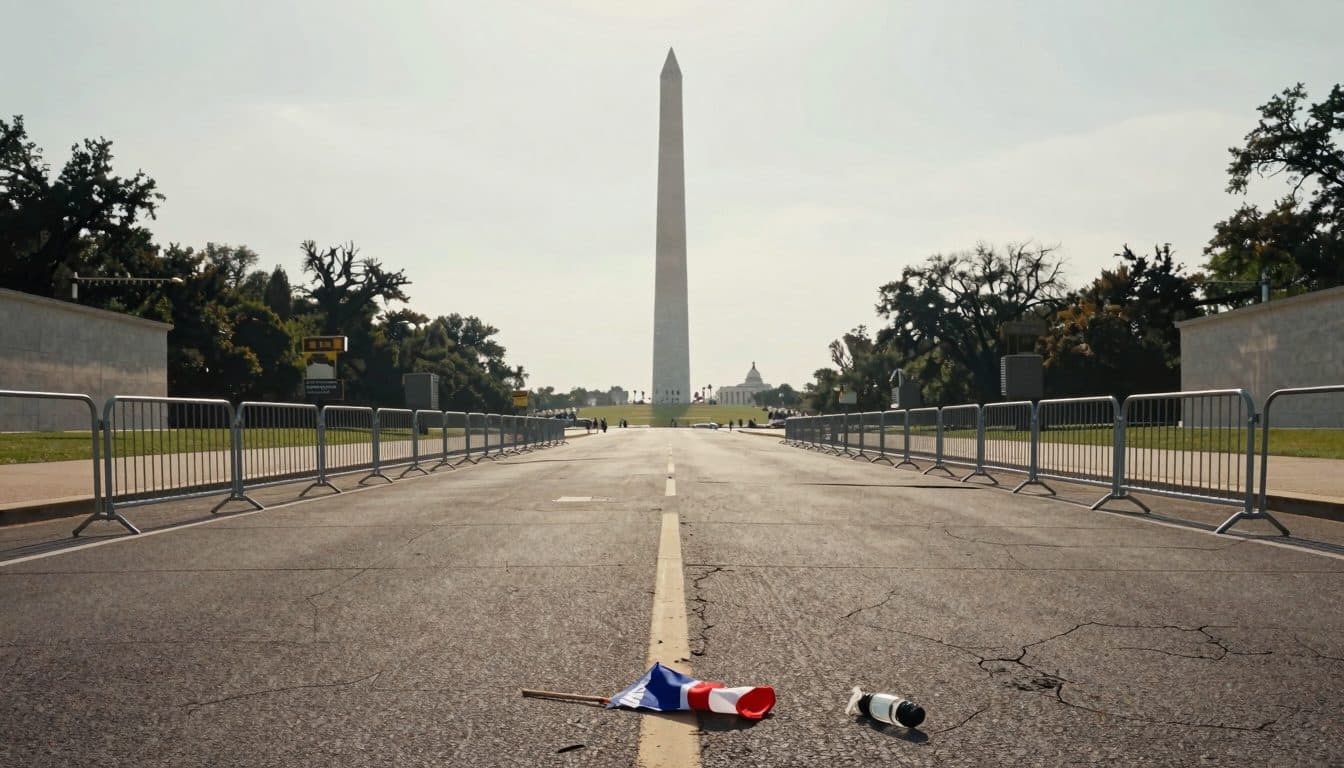
AI-generated image (z-image via Kie.ai)
Summary
Due to an extreme heatwave in the eastern United States, parts of the celebrations marking the 250th anniversary of the Declaration of Independence have been canceled. US President Donald Trump says he intends to deliver his speech scheduled for the evening despite temperatures exceeding 38 degrees Celsius.
Washington, July 4, 2026
A severe heatwave brought parts of the celebrations marking the 250th anniversary of the Declaration of Independence of the United States in Washington and other cities to a standstill on Saturday, while US President Donald Trump held firm on his speech scheduled for the evening.
Cancellations and collapsed visitors
The annual Independence Day parade in Washington, planned for Saturday, was canceled due to "extreme heat," as the organizers announced. As the AFP news agency reported, several people had already collapsed on the National Mall — the grassy area between the Capitol and the Washington Monument — on Friday. The "Great American State Fair" event was subsequently closed temporarily.
Temperatures of more than 38 degrees Celsius are forecast for Saturday in Washington. Combined with high humidity, the perceived temperature could reach up to 43 degrees. According to the National Weather Service, heat warnings were in place over the weekend for more than 185 million people — more than half of the US population. Peak heat-index values could reach up to 46 degrees Celsius in parts of the country, with several cities set to record new temperature highs.
Impacts across the country
Outside Washington as well, events had to be canceled or scaled back. In Philadelphia, authorities canceled a major parade after the thermometer had already climbed to around 39 degrees Celsius on Thursday. In New York, roughly 17,000 households were without power late Friday afternoon.
Trump sticks to anniversary speech
In light of these conditions, Trump announced he would not be deterred from delivering his speech scheduled for the evening. "He wants to 'give a really long speech, just to show that I can do anything,'" he had announced earlier in the week. His appearance was planned for 9:45 p.m. US Eastern Time (Sunday, 3:45 a.m. CEST). The president had made a notably visible presence in recent days around the celebrations marking the 250th anniversary of the Declaration of Independence.
In substance, Trump struck a sharply polarizing tone in his pre-anniversary appearances. "You can be a communist or a patriot," the Republican said. "Our rights" had been given by God, "who created us." He continued: "No other country has done more good for this world than the United States of America."
Cause: a heat dome
The cause of the heatwave in the US is a so-called heat dome. In this phenomenon, a large high-pressure system stalls over a region and acts like a lid, trapping hot air near the ground. A similar weather pattern, in reverse, also produced the long, icy winter in Berlin in early 2026. At that time, a low-pressure system lingered over central and eastern Europe for an extended period, forming a cold dome. The eastern US is now experiencing what western Europe went through a week ago.
Most recently, the phenomenon drove temperatures in Austria and large parts of Europe to above 40 degrees Celsius in some areas. PJM, the largest US grid operator — which supplies 67 million people in regions including the capital area — called on customers in emergency programs to curb their consumption.
Study: Climate change makes extreme heat more likely
A study published Friday by the international research group World Weather Attribution concludes that a heatwave like this would have been "virtually impossible" without climate change. "For the 250th birthday of the United States, our study provides a stark reality check," said study author Theodore Keeping of Imperial College London.
The combination of heat-driven cancellations, a speech set to go ahead despite warnings, and a clear scientific assessment turns the nation's anniversary into a date charged with both political and climatic significance. While meteorologists warn of the risks posed by the extreme temperatures, event organizers have been forced into a series of program changes.
Authorities warn and respond
Authorities urged the public to avoid spending time outdoors, drink sufficient fluids, and pay particular attention to protecting elderly and medically vulnerable individuals. Hospitals in the region prepared for an increased number of heat-related patients, according to local media. Cooling rooms were set up in public buildings.
Despite the health risks, many Americans stuck to their plans to spend the day along the banks of the Potomac, on picnic blankets, or in parks. Sellers of water bottles and sunscreen reported a sharp spike in demand. Local utilities said power grids in several states were operating at peak load.
Observers see the discrepancy between political staging and meteorological reality as emblematic of how climate change is handled in the United States. While study author Keeping uses the anniversary as an occasion for scientific framing, Republican politicians emphasized the exceptional character of the celebrations regardless of weather considerations.
The Washington city government announced it would reassess the situation hourly and postpone further events if conditions worsened. The organizers of the "Great American State Fair" also flagged a possible reopening later in the evening, provided temperatures dropped and visitor welfare could be ensured.
Although weather services had flagged the day early on, the actual impacts had already become clearly visible on Friday. Aid workers at the edge of the National Mall had to care for several people showing signs of heatstroke. Some were taken to nearby hospitals.
The debate over the role of climate change in such extreme weather events is being further fueled by the anniversary celebrations. Researchers point out that heat domes have been occurring more frequently and intensely worldwide in recent years. The World Weather Attribution study fits into a series of analyses that establish a clear link between global warming and such extreme events.
Questions & Answers
Why was the Independence Day parade in Washington canceled?
Organizers canceled the parade scheduled for Saturday due to "extreme heat"; several people had collapsed on the National Mall beforehand, and temperatures of more than 38 degrees Celsius were expected.
Is US President Donald Trump still going ahead with his speech?
Yes. Trump announced he would not be deterred from delivering his speech scheduled for the evening; he wants to "give a really long speech, just to show that I can do anything."
What does the science say about this heatwave?
A study by the research group World Weather Attribution concludes that a heatwave like this would have been "virtually impossible" without climate change; study author Theodore Keeping spoke of a "stark reality check" on the 250th anniversary.
US heatwave: Trump speech, parade canceled, 250th | allfacts360