
Braunau am Inn, July 22, 2026
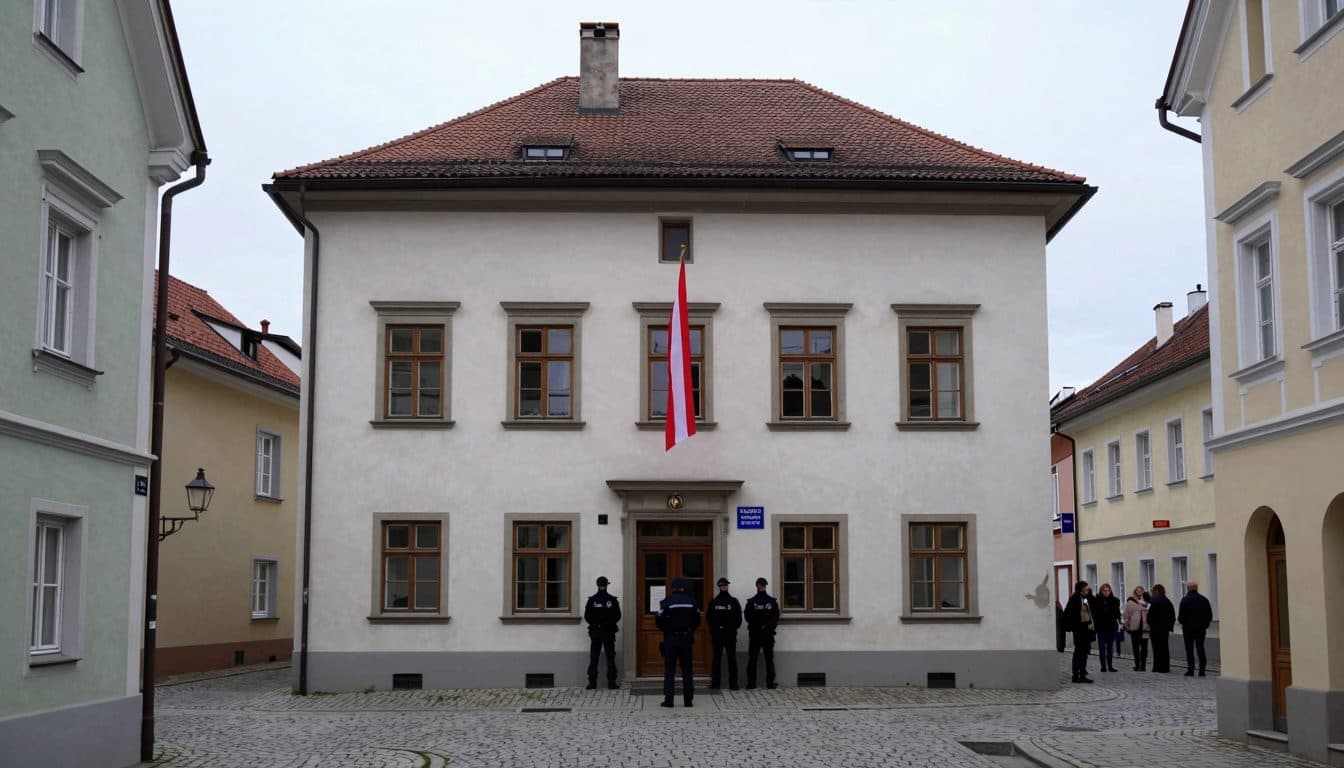
The birthplace of Adolf Hitler in Braunau am Inn has been converted into a police station after years of renovation and will be officially opened on Wednesday.
Hitler was born in the building on April 20, 1889. Following a legal dispute, the property was expropriated in 2017. In recent weeks, the police have gradually moved into the building; on Wednesday, the new center will be ceremonially opened – in the hope of stripping it of its appeal as a "brown" pilgrimage site.
The renovation took several years and cost around 20 million euros. The site, including outbuildings and courtyard, covers approximately 3,000 square meters. Officers from the district police command and the police inspection will now serve here.
Costs and Dimensions of the Renovation
After lengthy debates, the Republic of Austria opted for an official use. With this new use, the Republic of Austria wants to prevent the building on the border with Bavaria from continuing to serve as a draw for neo-Nazis.
An expert commission spoke out against demolition and against a museum, and in favor of a redesign without high recognition value. The renovation and conversion into an executive branch base were carried out not least on the advice of this expert commission, which expressly recommended "a socio-charitable or official-administrative use."
The Recommendation of the Expert Commission
The architects oriented the exterior design to how the house is believed to have looked in the 18th century. This is intended to preserve the historical context without the building being recognizable as a pilgrimage site.
Local residents are divided in their reactions to the plan to "neutralize" the site in this way. Some experts had wished for a confrontational engagement with the Nazi past and its crimes at this location. Even now, there remains the desire for at least a multilingual information board near the building to provide education.
Divided Reactions Among the Population
At present, only a memorial stone erected in 1989 in front of the house – from the quarry of the Mauthausen concentration camp – commemorates the terror of the Nazi years: "Für Frieden Freiheit und Demokratie – Nie wieder Faschismus – Millionen Tote mahnen".
The building is under video surveillance. Out of fear of Nazi memorabilia collectors, the construction site was monitored, the construction debris was shredded on site and mixed with other material.
Security Measures and Incidents
Now Austrian police officers are moving into the house. Until 2011, the building housed, among other things, a workshop for people with disabilities. It was privately owned for a long time. The owner did not consent to a necessary renovation to meet new requirements. Following a legal dispute, the property was expropriated in 2017.
For years, Hitler's birthplace in Braunau am Inn was a pilgrimage site for neo-Nazis. In 2021, a then 57-year-old from Berlin is said to have laid a wreath in front of the birthplace. One incident was recorded, for example, on April 20, 2024, when two German couples allegedly placed flowers in the window niches and posed for photos. A woman is said to have performed the Hitler salute.
Comparison with the Munich Hitler Apartment
Hitler's family, however, moved to different quarters in Braunau after just a few months. The building itself was the focus of right-wing extremist attention for decades, even though Hitler lived there only a few weeks.
Hitler's nine-room apartment at Prinzregentenplatz in Munich also belongs to a police inspection – and has done so for many decades. The Austrian authorities have thus chosen a path similar to that already taken in the Bavarian state capital.
Historical Background
The historical significance of the house extends far beyond its present purpose: On November 9, 1923, Hitler carried out a putsch ("March on the Feldherrnhalle"), but without success. On January 30, 1933, Hitler was appointed Reich Chancellor and dismantled all democratic structures in Germany within a very short time. At the beginning of the First World War, Hitler (right) volunteered as a soldier for the German Army. During the subsequent imprisonment, he wrote his book "Mein Kampf." Eva Braun, the woman whom the dictator married shortly before their joint suicide.
In 1939, he unleashed the Second World War, in which at least 60 million people died. In their racial madness, the Nazis killed around six million Jews as well as people from other groups and minorities in the Holocaust. Hitler had taken his own life in the Führerbunker in April 1945, shortly before the end of the war. Two years after Germany's capitulation, Soviet troops blew up the Führerbunker.
The opening on July 22, 2026 marks the provisional conclusion of a decades-long discourse on how to properly deal with this burdened site. The chosen solution – police station instead of museum, demolition or memorial – reflects the balancing act between historical responsibility and practical everyday usability.