
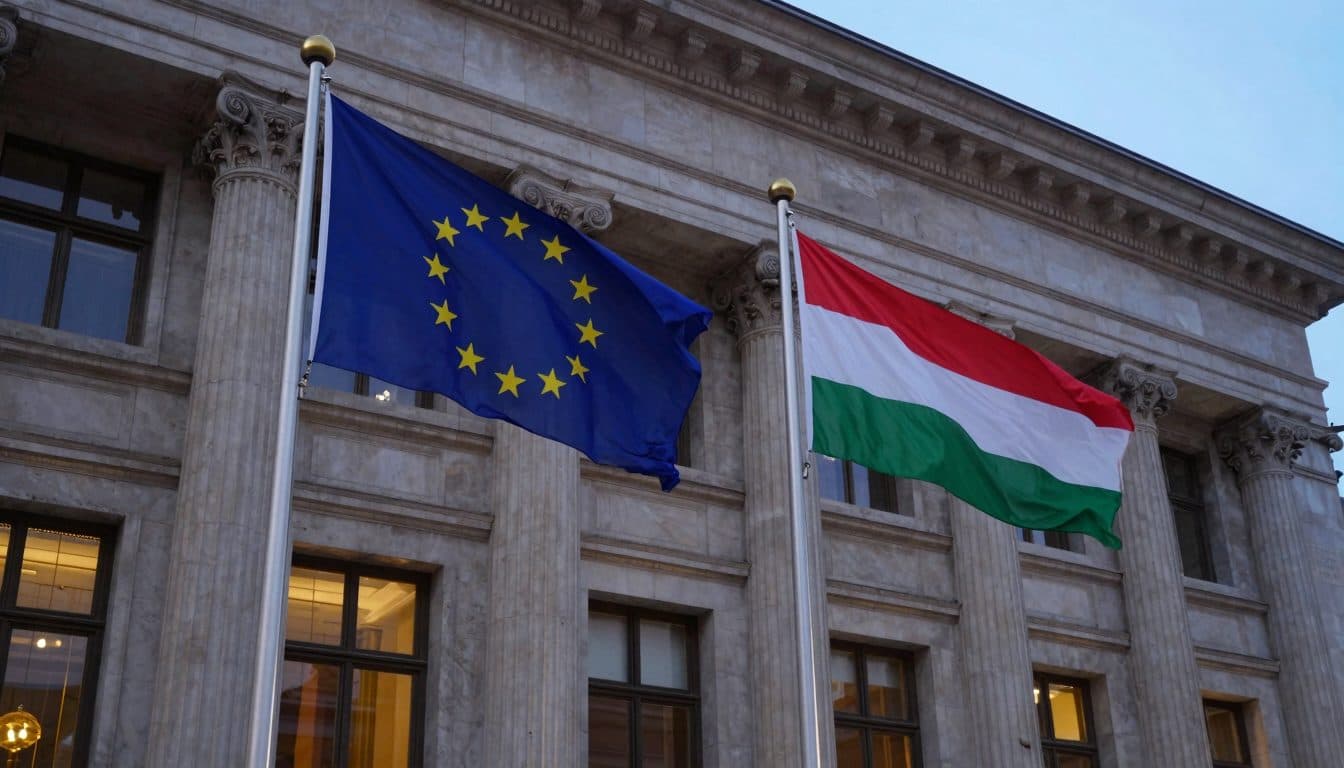
Brussels, 10 July 2026
Hungary joined the European Public Prosecutor's Office as its 25th member state on 10 July 2026, and EU finance ministers simultaneously released around ten billion euros from the European Union's recovery fund for the country.
With its accession to the European Public Prosecutor's Office (EPPO), Hungary is taking a far-reaching step toward rapprochement with the European rule-of-law architecture. The EU Commission confirmed the accession on Friday in Brussels. The decision enters into force 20 days after its publication in the EU Official Journal. Hungary thus becomes the 25th state to participate in the EU Public Prosecutor's Office; of the 27 EU member states, only two are not involved.
The Hungarian government had submitted its application for accession in May 2026, shortly after the change of government in Budapest. With its accession, Hungary recognises the jurisdiction of the European Public Prosecutor's Office for investigations into fraud and other offences against the financial interests of the EU. The EPPO was established in 2021 as an independent public prosecutor's office of the EU and, according to its own figures, was handling more than 3,600 cases by the end of 2025.
Background: Blocked billions and rule-of-law violations
EU Commission President Ursula von der Leyen expressly welcomed the step. Hungary's accession was "a welcome step in the fight against fraud and corruption," she said. With the Commission decision, the Regulation on the European Public Prosecutor's Office becomes fully part of the EU acquis. The Commission President also pointed to a protective function for citizens: "The Hungarian population will now have a safeguard to ensure that EU funds work in their interest."
In parallel with the accession decision, EU finance ministers cleared the way for the disbursement of around ten billion euros to Hungary from the EU recovery fund "NextGenerationEU". Of this, around 6.5 billion euros are grants and around 3.5 billion euros are loans. The plan sets out national reform and investment programmes under the EU recovery plan "NextGenerationEU". The funds had previously been blocked because the EU had frozen around 17 billion euros for Hungary due to numerous rule-of-law violations under the previous government of Viktor Orbán.
With the release of the funds and the accession to the EPPO, the new Hungarian government under Peter Magyar is marking a clear departure from the course of the previous government. The previous government under Viktor Orbán had opposed accession to the European Public Prosecutor's Office for years and had been repeatedly criticised for the erosion of rule-of-law standards. With the change of government in May 2026, Budapest had also submitted an application to join the EPPO.
Tasks and powers of the European Public Prosecutor's Office
The European Public Prosecutor's Office is an independent judicial authority of the EU based in Luxembourg. It investigates and prosecutes crimes that damage the EU budget, including fraud, corruption and cross-border VAT evasion. With Hungary's accession, the number of participating member states rises to 25; only Denmark and Ireland do not currently participate. Accession is also mandatory for future EU members.
The release of the funds is tied to the implementation of specific reform and investment steps that Hungary has set out in its national recovery plan. The EU Commission reviews progress at regular intervals and can withhold disbursements in the event of breaches of the agreed milestones. With the accession to the EPPO, the EU Commission also gains an additional instrument to monitor the proper use of the funds.
Accession to the European Public Prosecutor's Office means in concrete terms that Hungarian prosecutors will in future cooperate directly with the EPPO and can hand over cases in which EU funds in Hungary may have been misused to the European authority. This removes the previous hurdle of national authorities being able to block or delay such investigations. The EPPO can independently conduct investigations, carry out searches and bring charges in the participating member states.
Impact on the Hungarian judiciary
The release of the ten billion euros is, in the view of the EU Commission, a signal to other member states that compliance with rule-of-law standards and cooperation with European judicial authorities are prerequisites for access to EU funds. The previous government under Viktor Orbán had repeatedly refused to tie EU funds to rule-of-law conditions and had been confronted with the activation of the rule-of-law mechanism of the EU budget as a result.
With the accession to the EPPO and the release of the funds, the political dynamic within the EU is also changing. Hungary, which under the previous government had repeatedly acted as a blocker in EU decisions, is returning under the new government to the ranks of cooperating member states. Observers see the step as confirmation that the EU possesses an effective instrument for disciplining member states by linking the rule of law to financial resources.
The EU Commission had swiftly reviewed Hungary's accession application after its submission in May 2026. A prerequisite was, among other things, that the Hungarian judiciary possesses the necessary powers and guarantees for independent cooperation with the EPPO. With the formal accession decision, this procedure is now concluded. The accession applies retroactively to the date of publication in the EU Official Journal, so that ongoing EPPO investigations can in future also cover facts in Hungary.
Conditions for the disbursement of the funds
The release of the funds takes place in tranches tied to the fulfilment of the reform objectives agreed in the recovery plan. Hungary has committed, among other things, to investments in green and digital transformation, in the modernisation of public administration and in the expansion of the healthcare system. The EU Commission will closely monitor implementation in the coming years and publish regular reports.
With the accession to the European Public Prosecutor's Office and the release of the ten billion euros, a multi-year phase of confrontation between Budapest and Brussels comes to an end. The new Hungarian government under Peter Magyar is thereby sending a clear signal of Hungary's return to the circle of EU states that are committed to the rule of law and to cooperation with European institutions.
The EU Commission also sees the accession as confirmation of its course of treating the rule of law as a central pillar of European integration. The linking of EU funds to rule-of-law reforms has been the subject of repeated controversy in recent years, but is, in the Commission's view, a necessary instrument for safeguarding the credibility of the EU.
Significance for future EU enlargement
Hungary's accession to the EPPO is also a signal to the remaining non-participating states Denmark and Ireland. Both countries have so far decided against participation for different reasons; Denmark was already excluded before the EPPO was established, and Ireland does not participate for domestic political reasons. The EU Commission had repeatedly stressed that accession would be mandatory for future EU members.