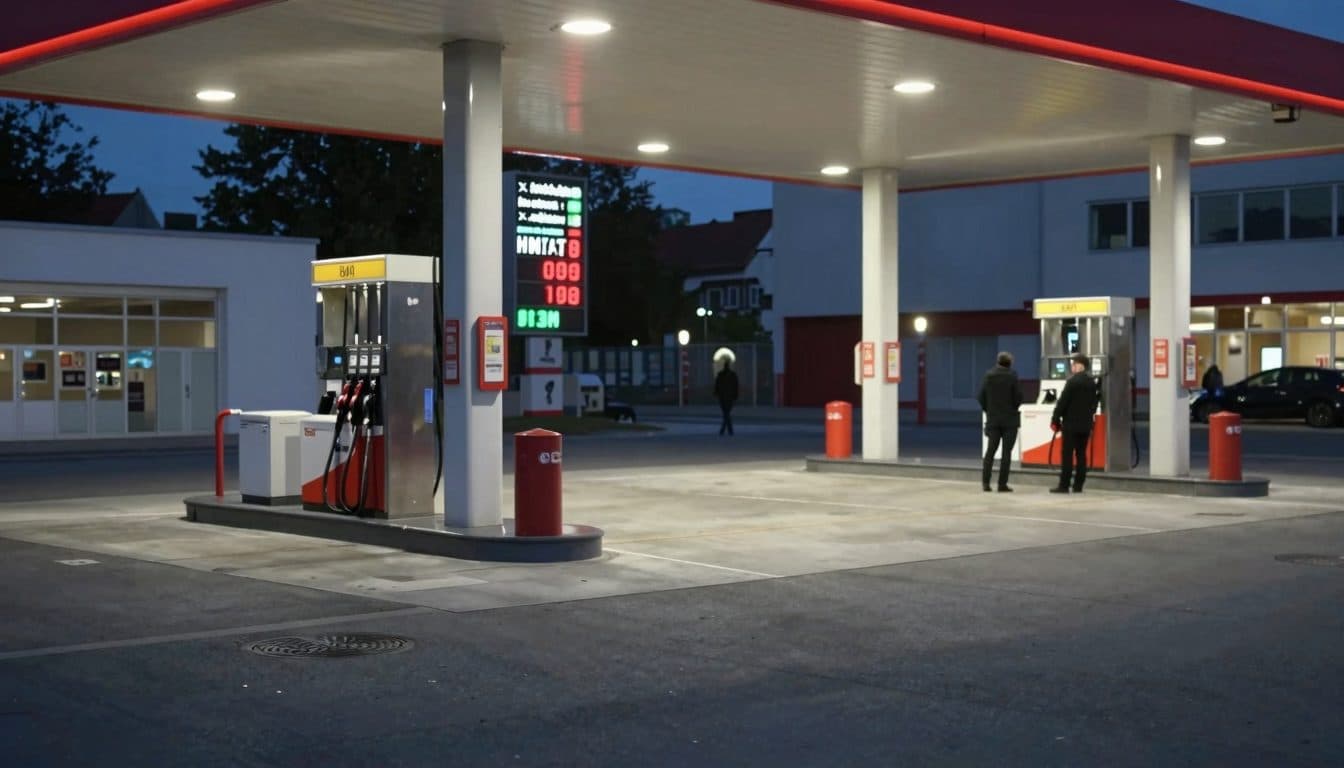
The inflation rate in Austria fell to 3.2 percent in June 2026 according to a flash estimate by Statistics Austria, down from 3.7 percent in May. The main driver was weaker price growth for fuel and heating oil. Core inflation stood at 3.3 percent, remaining above the ECB's target.
Vienna, 01 July 2026
The inflation rate in Austria fell to 3.2 percent in June 2026 according to an initial flash estimate by Statistics Austria, after having stood at 3.7 percent in May.
Driver energy: fuel and heating oil ease
This reduced the inflation rate compared to the previous month by 0.5 percentage points. Statistics Austria Director General Manuela Lenk explained that the decline was primarily due to the fact that fuel and heating oil had a significantly less price-driving effect in June than they had in May.
Energy prices overall rose only 5.4 percent compared to the previous year, after having increased by 9.8 percent in May. This noticeably eased one of the most important inflation drivers of the past months.
Services remain the biggest price driver
At the same time, prices for services remain the largest driver of inflation. They became 4.4 percent more expensive compared to the same month of the previous year, as in May, and thus continued to represent the most significant price factor.
Price pressure also eased for food, tobacco and alcohol: this category of goods became 1.5 percent more expensive in June, after 2.2 percent in May. Prices for industrial goods rose below average by 1.1 percent.
Core inflation, which excludes volatile components such as energy and food, stood at 3.3 percent in June. Inflation in Austria therefore remains 1.2 percentage points above the target value of two percent pursued by the European Central Bank.
Tax cut on staple foods takes effect
Momentum economist Paul Steinmaßl assessed the decline as a relevant contribution to relieving households: "Gerade angesichts der zuletzt wieder steigenden Inflation ist das ein relevanter Beitrag zur Entlastung, die Regierung muss eine jede Maßnahme im Werkzeugkoffer gegen die Teuerung ergreifen." Austria is not going its own way when it comes to reducing the food tax.
Since the beginning of July, a reduced value-added tax rate of 4.9 percent instead of the previous ten percent has applied in Austria to selected staple foods. This moves Austria closer to the EU states with lower food taxes. According to Momentum's calculation, this measure will reduce the inflation rate over the coming twelve months by just under 0.2 percentage points.
The Momentum Institute pointed out, however, that the tax cut comes "sehr spät," as food prices had recently not been a significant inflation driver anyway. According to the institute, the cost of food in Austria rose by 18 percent from 2022 to 2025, while consumer prices overall rose by only 15 percent.
International comparison: how other EU states are intervening
Other European countries had already acted earlier: Sweden temporarily reduced the tax rate on food from twelve to six percent, Latvia reduced it for bread, milk, eggs and poultry from 21 to 12 percent. Spain and Poland temporarily set it to zero percent for staple foods, Cyprus has extended the zero rate on certain foods several times since 2023. In Slovenia, the tax rate for staple foods is set to be reduced from 9.5 to five percent shortly. The highest value-added tax on food in the EU is levied by Denmark at 25 percent.
An additional effect on fuel prices results from the mineral oil tax (MÖSt) reduced since the beginning of July. The reduction is only 0.8 cent per liter, compared to the previous 1.7 cent per liter. Even the originally targeted reduction in fuel costs of a total of ten cents per liter planned for April had been estimated by economists to have a dampening effect of only about 0.2 percentage points.
To counter-finance the tax cut, a national parcel tax for online retailers is planned, which is to take effect in October. Since the beginning of July, a three-euro import tax has also been due on small parcels from third countries with a goods value of less than 150 euros. According to the Council of the EU, this regulation applies to 93 percent of all e-commerce deliveries into the EU.
Outlook and final data
Statistics Austria announced that the final index level and further results for June would be published on 17 July 2026. Until then, the reported inflation rate is a preliminary flash estimate.
Regardless of the decline, inflation in Austria remains at a clearly elevated level at the mid-point of 2026. The burden is distributed unevenly: the bottom income quintile spends 18 percent of household income on food, while the top income quintile spends only twelve percent. Price reductions on staple foods therefore benefit lower-income households in particular.
Burden on households is uneven
Overall, the development shows that price momentum in Austria lost some of its dynamism in June. With regard to the coming months, however, it remains to be seen whether weaker energy price growth and the tax cut on staple foods can push inflation durably toward the ECB target of two percent.
Questions & Answers
Who published the current inflation figure for Austria?
The flash estimate for June 2026 was published by Statistics Austria. Director General Manuela Lenk explained that fuel and heating oil in particular account for the decline in inflation.
How does core inflation differ from the general inflation rate?
Core inflation measures inflation excluding volatile components such as energy and food. It stood at 3.3 percent in Austria in June 2026 and was thus still 1.2 percentage points above the ECB target of two percent.
What fiscal measure is intended to push inflation down further?
Since the beginning of July, a reduced value-added tax rate of 4.9 percent instead of the previous ten percent has applied to selected staple foods. According to the Momentum Institute's calculation, this reduction lowers the inflation rate over the next twelve months by just under 0.2 percentage points.
Inflation Austria June 2026: 3.2 percent, energy cheaper | allfacts360