Intel surprises with strong quarter: Revenue jumps by a quarter, stock rises significantly in after-hours trading
Santa Clara, July 25, 2026
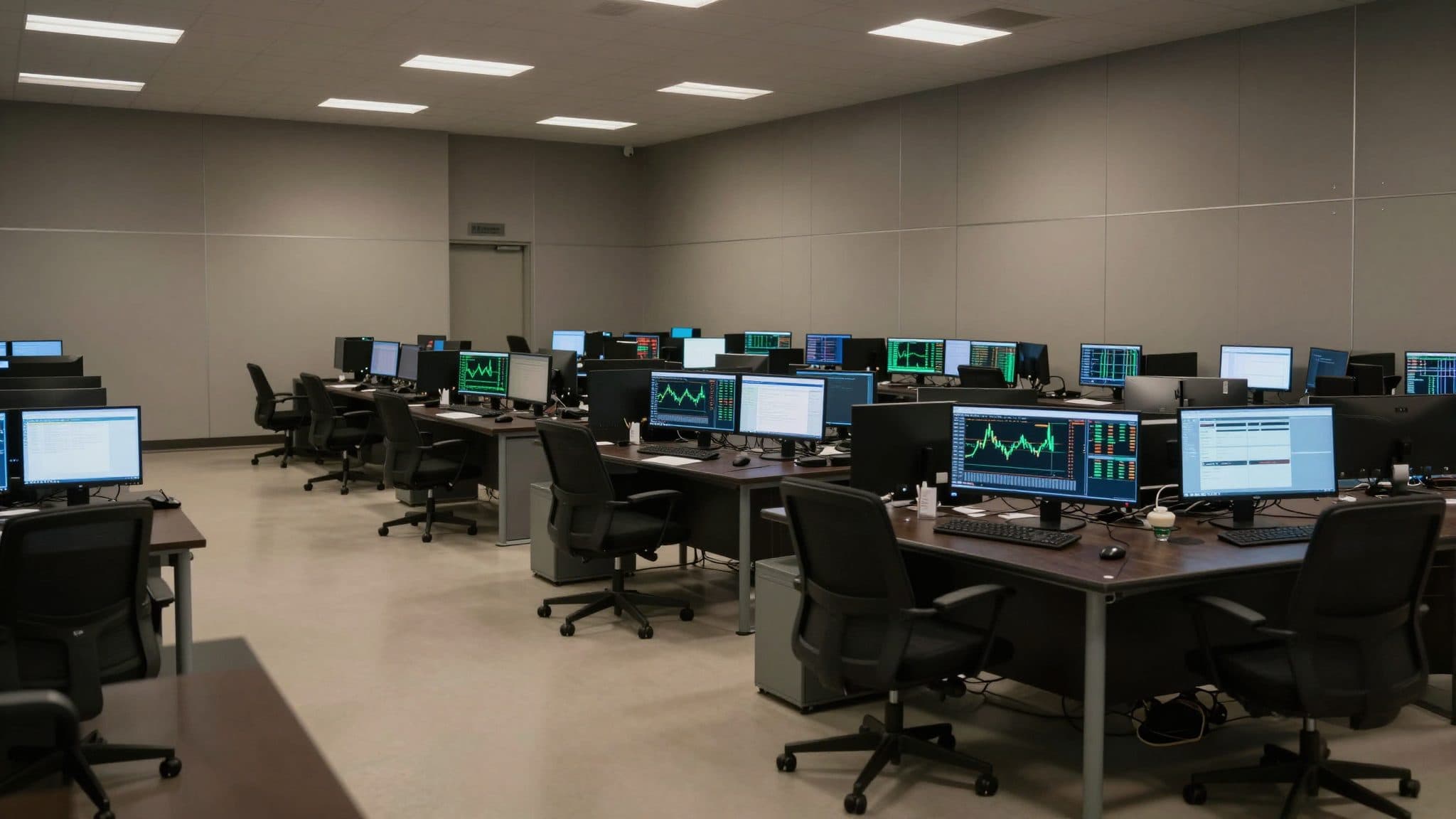
AI-generated image (z-image via Kie.ai)
Summary
Chipmaker Intel delivered a positive surprise in the second quarter of 2026 with revenue of 16.1 billion US dollars and adjusted earnings per share well above forecasts. The stock reacted in after-hours trading with price gains between four and twelve percent.
Santa Clara, July 25, 2026
US chipmaker Intel posted revenue of 16.1 billion US dollars in the second quarter of 2026, beating Wall Street expectations; at the same time, adjusted earnings per share rose to 42 US cents and the company's own stock posted notable gains in after-hours trading.
Quarterly figures exceed expectations
Chipmaker Intel convinced investors with a surprisingly strong second quarter of 2026. As the company announced on Thursday evening (local time), revenue climbed 25 percent year-on-year to around 16.1 billion US dollars (approximately 14.15 billion euros). Analysts had on average expected revenues of just 14.4 billion dollars. Adjusted earnings per share reached 42 US cents, twice as high as Wall Street had expected on average.
The predominantly positive quarterly figures immediately fed through to the share price: in after-hours trading, Intel stock moved between four and twelve percent higher and fluctuated significantly. Traders cited the magnitude of the surprise as well as the question of whether the operational upturn can offset the previously accumulated paper loss of around eleven billion US dollars. The high loss was essentially a balance-sheet effect.
Excluding this writedown, Intel reports a net income of 2.2 billion US dollars in the so-called non-GAAP figures. Of total revenue, 1.8 billion US dollars remained as operating profit before taxes, meaning the group is operating profitably again even without external financial injections. As recently as the first quarter of 2026, Intel had spent more than four billion US dollars on restructuring; in the second quarter, that figure dropped to just 1.6 billion US dollars.
Data center and AI business as growth driver
The driver was again the business with data center and AI chips. The Data Center and AI (DCAI) segment grew 59 percent year-on-year to just under 6.3 billion US dollars, carried primarily by sales of Xeon server processors. The segment's gross margin climbed significantly according to the company; a year earlier it had stood at a meager 27.5 percent. Company chief Lip-Bu Tan spoke of the unit's biggest growth in more than 15 years.
The traditional PC business also performed robustly. The Client Computing and Physical AI Group (CCPG), which bundles mainly the Core processors for notebooks and desktops, increased its revenue by 31 percent to just under 5.8 billion US dollars. With almost 2.5 billion US dollars in operating profit, the DCAI segment narrowly overtook the end-customer business. By comparison, in the second quarter of the previous year the two segments together had still posted red figures.
Intel Foundry reduces losses
The manufacturing subsidiary Intel Foundry, where Intel produces its own chips and increasingly serves external customers, is meanwhile gradually reducing its own losses. About 95 percent of manufacturing revenue comes from Intel's own processor divisions; the remainder likely stems largely from the further processing of chips – so-called advanced packaging – for external customers. Intel had already shifted production capacity from notebook and desktop processors to Xeon server models.
The background to the recovery is a comprehensive cost-cutting program under group chief Lip-Bu Tan, who has been in office since early 2025. The manager had, among other things, abandoned plans to build a factory in Magdeburg and is increasingly focusing on cost reductions and the high-margin server and AI business. Last year the Intel stock had fallen to around 44 US dollars; in the meantime it had risen to around 130 US dollars, accompanied by speculation about a possible stake by the US government.
Outlook and market reaction
In the now-started third quarter, Intel expects, according to its own figures, revenue of 15.8 to 16.8 billion US dollars and an average gross margin of 41 percent. That would see the group roughly maintain the level of the second quarter and cement the operational turnaround. Observers see this as an indication that Intel has not completely lost touch with the AI boom around rivals AMD and Nvidia, even though its market share in AI accelerators remains limited.
With regard to valuation, analysts point to the renewed confidence in operational substance. The market was rewarding the fact that Intel had surprised on both the revenue and the margin side, it was said. However, it remains to be seen whether the high momentum in the data center business will hold or whether special effects – such as brought-forward orders from large cloud providers – have distorted the picture.
Competitive environment and risks
Competitive pressure from AMD and Nvidia also remains palpable. While AMD has recently gained market share in the server segment, Nvidia largely dominates the market for AI accelerators. Intel's strategy of growing with Xeon processors and Foundry manufacturing therefore relies on economies of scale and a broader customer base. The coming quarters will show whether the group can defend this position.
Order intake in the data center area had recently improved noticeably, Lip-Bu Tan explained. The group had also made progress with the 18A manufacturing technology, which is intended for both its own and external chips. Should Intel further increase yield in manufacturing, the Foundry segment could at least reach the break-even point in the medium term and thus further improve the group's mix.
On the cost side, management announced that restructuring expenses would be reduced further in the second half of 2026. After the 1.6 billion US dollars in the second quarter, the special charges should, according to the company, fall below one billion US dollars in the coming quarters. The already high non-GAAP margin would thus stabilize further.
For investors, the key question is whether the current upward trend is sustainable. The recently strongly grown revenues in the AI and server business as well as the returning profitability speak, according to market observers, for a floor-forming process at the long-established chip pioneer. Risks remain, however, the economic development, demand for PC processors, and geopolitical tensions that can affect semiconductor supply chains.
Significance for investors
Overall, the quarter paints the picture of a group that is regaining its footing after a deep crisis. The combination of cost discipline, high-margin server business, and a gradual recovery of its own manufacturing has put Intel in a position to exceed both its own margin targets and market expectations.
With the leap above the 16 billion US dollar quarterly revenue mark, Intel is also approaching the level of earlier boom phases. If the group continues on its chosen course, it could in the medium term be perceived as a reliable beneficiary of the AI boom – a role that recently had been attributed mainly to Nvidia and AMD.
Observers are now turning their attention to the upcoming conferences and investor events. There, management is expected to provide further details on the 18A manufacturing roadmap, Foundry utilization, and demand for Xeon processors. Until then, the Intel stock remains a barometer for how quickly established chip companies can find their way into the AI-driven structural transformation.
Questions & Answers
How high was Intel's revenue in the second quarter of 2026?
Intel generated revenue of around 16.1 billion US dollars in the second quarter of 2026, an increase of 25 percent compared to the same quarter of the previous year and well above analyst expectations of 14.4 billion dollars.
Which segment grew the most at Intel?
The Data Center and AI (DCAI) segment grew 59 percent year-on-year to just under 6.3 billion US dollars, driven primarily by sales of Xeon server processors.
How did the Intel stock react to the quarterly figures?
In after-hours trading, the Intel stock moved between four and twelve percent higher and fluctuated significantly, as investors digested the unexpectedly strong results.