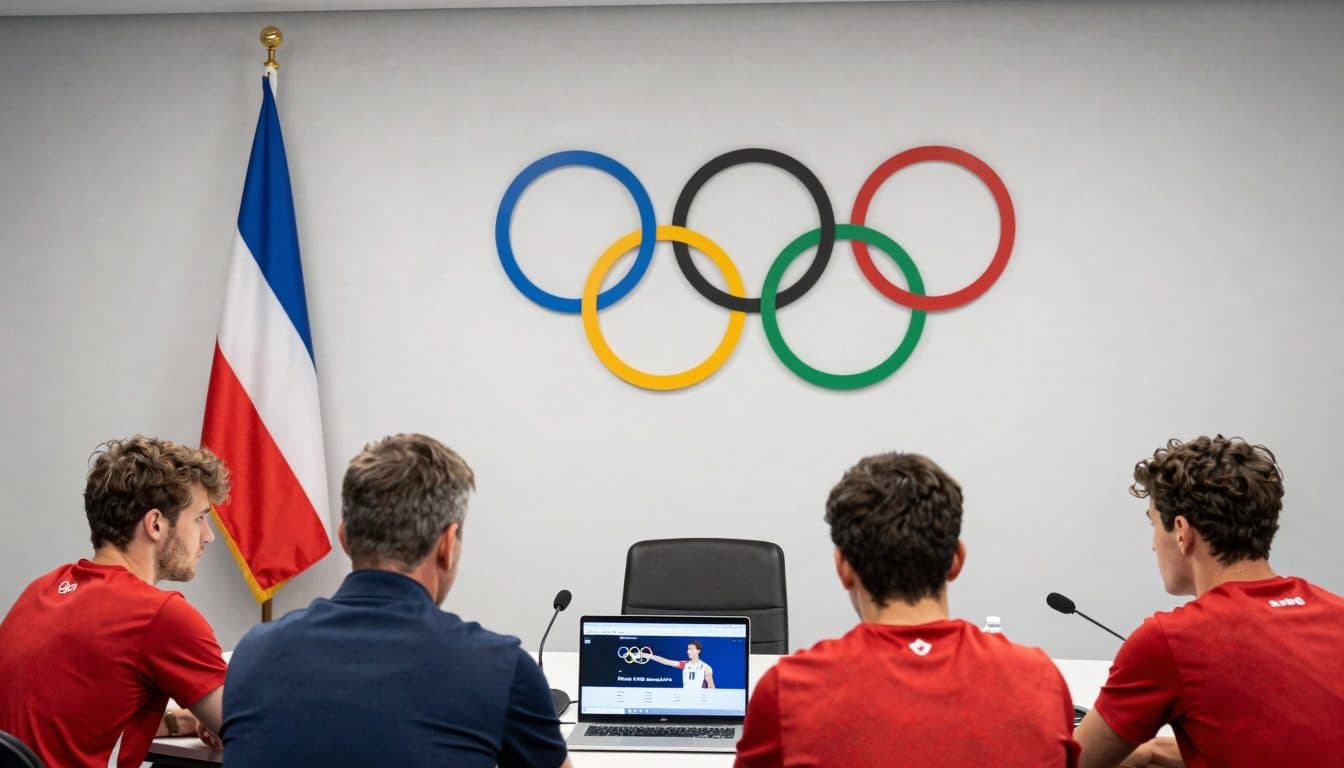
IOC Approves $10,000 Subsidy for All Olympic Participants
Lausanne, June 25, 2026
AI-generated image (z-image via Kie.ai)
Summary
The International Olympic Committee has approved a subsidy of 10,000 US dollars for each Olympic participant. Per four-year period, the IOC is providing around 140 million dollars for this purpose, disbursed through the National Olympic Committees.
Lausanne, June 25, 2026
The International Olympic Committee (IOC) decided on Wednesday, on the margins of a special summit in Lausanne, to pay each Olympic participant a subsidy of 10,000 US dollars (around 8,800 euros) going forward.
With this decision, the IOC ends a decades-long policy of rejecting prize money at the Olympic Games. As the rings organization announced on Wednesday, all Games participants will receive the bonus in the future. According to the IOC Athletes' Commission, the decision was preceded by months of negotiations with the IOC's finance department.
After one edition each of the Summer and Winter Games, approximately 14,000 athletes are entitled to apply for the subsidy, according to the umbrella organization. Per four-year period, the IOC is providing a total of 140 million dollars (around 123 million euros) for this purpose. Unclaimed subsidies will remain in the IOC fund and benefit future generations of athletes.
Financing and Disbursement Process
Disbursement takes place through the National Olympic Committees (NOCs). These must verify that the athletes have received the full amount. The athletes must apply for the subsidy via the "Athlete365" platform. According to IOC President Kirsty Coventry, it will take around six months for all applications to be processed.
All participants of the Winter Games in Milan and Cortina d'Ampezzo are already entitled to the money. Athletes who competed at the Winter Games in Milan and Cortina d'Ampezzo in February can already apply for this special bonus. The new regulation thus applies retroactively for the entire current Olympic cycle.
Differentiation from Previous Victory Bonuses
The amount of the bonus differs significantly from the victory bonuses of past editions. There was a winner's bonus of the equivalent of 250,000 euros – but only for gold medalists. The new regulation sets a different emphasis: it explicitly rewards participation and not just success.
It is also clear that the new IOC subsidy of 10,000 dollars is intended to be offered to sports millionaires from football, tennis, and other sports as well. Thus, without exception, all athletes receive the same amount – regardless of their respective sport, their income, or their market value.
Reactions from the Athletes' Commission
Pau Gasol, the chair of the IOC Athletes' Commission, pointed out that each athlete could also donate or decline the bonus. This option is also open to highly paid football professionals, tennis millionaires, or skiing stars. Gasol said: "Sie sind berechtigt, dieses Geld zu empfangen. Sie entscheiden, wie sie damit umgehen. Wir wollen, dass auch sie gewürdigt werden".
The former basketball star from Spain, himself once a top earner in the NBA, spoke of a historic step. "Das ist ein fantastischer Moment, ein historischer Moment für alle Olympioniken", said Gasol. "Nicht nur Medaillengewinner, nicht nur Sportler aus bestimmten Ländern". This would strengthen the entire movement, he emphasized.
Background: Discussion About Athlete Compensation
At the same time, Gasol gave the athletes a pragmatic piece of advice: "Sie sollten das mit Bedacht nutzen". The decision of how the money is used, donated, or returned lies entirely with the recipients. "Das ist ein Sieg für jeden von uns und wird unsere Bewegung weiter stärken", emphasized the Spanish ex-basketball player.
The initiative is also a response to a changed discussion landscape in international top-level sport. Recently, the controversial "Enhanced Games," in which participants are also allowed to use doping, reignited the discussion about athlete compensation with its first edition in Las Vegas. Against this backdrop, the IOC sought ways to structurally anchor appreciation for clean top-level sport.
The bonus is now anchored directly in the IOC's funding structure. The funds flow through the NOCs, which must also verify correct disbursement. This is intended to ensure that the full amount actually reaches the athletes and is not reduced by intermediaries.
The decision also sends a signal to countries with weaker sports infrastructure. In many countries, an Olympic career is barely financially viable; a universal bonus of 10,000 dollars can provide noticeable relief there. Critics could object that this amount remains symbolic for top stars from football leagues or professional tennis – but Gasol explicitly pointed out that this group should also receive the subsidy.
Outlook on Upcoming Games
At the same time, the mechanism ensures that the IOC does not spend money twice. Per cycle, 140 million dollars are available – with around 14,000 eligible recipients, this arithmetically results in the announced amount. Unclaimed funds flow into an IOC fund and are intended to benefit future generations of athletes.
The concrete implementation starts via the digital portal "Athlete365," through which all participating athletes can submit their application. According to Coventry, a processing time of around six months is to be expected. The first disbursements are therefore expected to arrive in accounts in late summer or early autumn 2026.
With the pilot project at the Winter Games in Milan and Cortina d'Ampezzo in February 2026, the regulation is being applied immediately. The bonus is also planned for the upcoming Summer Games. Pau Gasol and the IOC Athletes' Commission see this as the start of a more comprehensive reform of financial appreciation in Olympic sport.
Overall, the decision underscores a change of course: away from purely chasing medals toward a broader recognition of the Olympic movement. The coming years will show whether the regulation endures – and whether similar models become established, for example at continental championships or other multinational competitions.
For the athletes themselves, the bonus means above all one thing: planning security. The amount of 10,000 dollars can cover a significant portion of living expenses during preparation in low-income countries. In the major leagues, on the other hand, it carries less weight – but remains as a symbolic gesture from the IOC toward all participants.
In the end, it is above all a political signal: the IOC is responding to the growing discussion about fair pay in top-level sport and is positioning itself against models such as the "Enhanced Games." The bonus is an expression of an Olympic idea that emphasizes participation and dignity for all athletes – regardless of rank, origin, or income.
Questions & Answers
How high is the new IOC subsidy and who receives it?
The IOC will pay 10,000 US dollars (around 8,800 euros) to each participant of the Olympic Games going forward. Around 14,000 athletes per four-year period are entitled to apply, including those from the Winter Games in Milan and Cortina d'Ampezzo.
Who announced the decision and how was it justified?
The decision was made on Wednesday on the margins of a special IOC summit in Lausanne. Pau Gasol, chair of the IOC Athletes' Commission, spoke of a historic moment that should not favor only medal winners or athletes from certain countries.
How and when will the subsidy be disbursed?
The athletes apply for the subsidy via the "Athlete365" platform. According to IOC President Kirsty Coventry, processing takes around six months; disbursement is handled through the National Olympic Committees, which must verify receipt of the full amount.
IOC Subsidy of $10,000: All Olympic Participants to Receive | allfacts360