Iran's Revolutionary Court upholds one-year prison sentence against Palme d'Or-winning director Jafar Panahi
Tehran, 08 June 2026
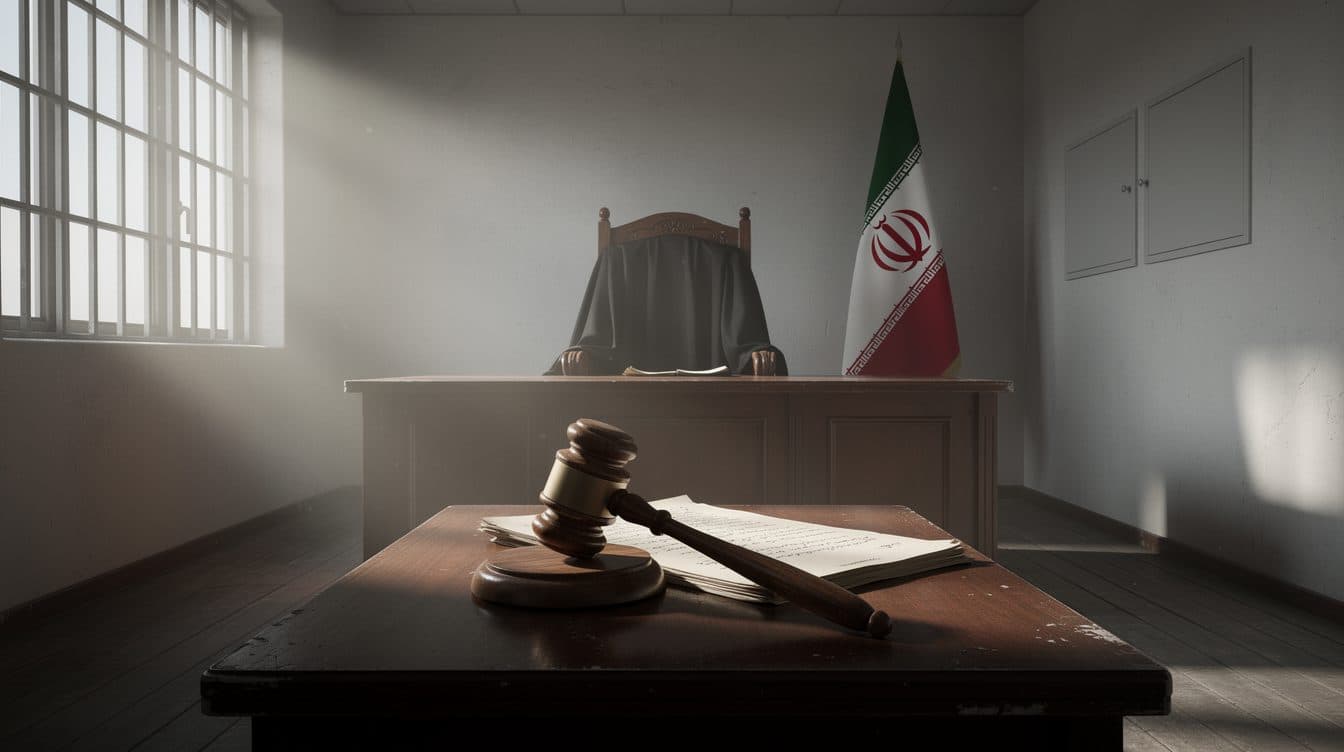
AI-generated image (flux-2/pro-text-to-image via Kie.ai)
Summary
Iran's Revolutionary Court in Tehran has confirmed a one-year prison sentence against award-winning Iranian filmmaker Jafar Panahi, rejecting his appeal against a December 2025 in absentia conviction. The ruling, announced by his lawyer Mostafa Nili, keeps in place a two-year travel ban and a ban on membership in political and social groups, deepening concerns over artistic freedom in the country.
Tehran, 08 June 2026
A Revolutionary Court in Tehran has confirmed the one-year prison sentence against the Iranian filmmaker Jafar Panahi, rejecting the director's appeal and keeping in place a two-year travel ban, his lawyer said on Monday.
Background of the Case
Panahi's lawyer, Mostafa Nili, told the online portal Emtedad that the appeal against the verdict was rejected by the Revolutionary Court in Tehran, ending hopes for a revision of the case. The court, sitting under presiding judge Iman Afshari, upheld the original conviction, Nili said, according to reports carried by the Austrian Press Agency (APA).
Panahi was convicted of "propaganda against the system" and of supporting the protest movement known as "Woman, Life, Freedom," in particular the wave of demonstrations that swept Iran in 2022. According to his defence team, the prosecution also pointed to his support for several dissidents and political prisoners as part of the case against him.
The court cited Panahi's secretly filmed movie "It Was Just an Accident" — released internationally under the French title and known in German as "Ein einfacher Unfall" — as central evidence in the proceedings. The film tells the story of a group of Iranians who suspect a stranger of having been their former jailer, a narrative widely read as an allegory of state repression.
The Film at the Centre of the Trial
"It Was Just an Accident" was awarded the Palme d'Or at the Cannes Film Festival in May 2025, Panahi's first appearance at the French coastal event in fifteen years. The film was also nominated for the Golden Globes and the Oscars, drawing renewed international attention to the director's longstanding conflict with the Iranian authorities.
In December 2025, Panahi was sentenced in absentia to one year in prison for "propaganda against the state," together with a two-year travel ban. Despite the looming threat of imprisonment, the director returned to Iran on 30 March during a period of war, in a move widely interpreted as an attempt to challenge the charges from within the country's judicial system.
A History of Detention
Panahi has been regarded for years as a prominent critic of the Islamic system and has been arrested multiple times. He was previously imprisoned in Iran in 2010 for just under three months, and again in 2022 and 2023 for a total of approximately seven months. Iranian authorities have also imposed long-running professional and travel restrictions on the director, limiting his ability to work and to leave the country.
Judge Iman Afshari, who presided over the appeal hearing, is known for harsh verdicts against government critics. The European Union has imposed sanctions on the judge over his role in prosecuting dissidents, a designation that underscores the politically charged nature of the proceedings against Panahi.
The Judge and the Sanctions
Nili also confirmed that the two-year travel ban and the ban on any membership in political and social groups remain in place as part of the sentence. The combination of the prison term, the travel restrictions and the political-activity ban effectively curtails Panahi's professional and personal life for the foreseeable future.
The "Woman, Life, Freedom" movement emerged in 2022 following the violent death in custody of the young Kurdish woman Mahsa Amini, whose case triggered months of nationwide protests. Panahi's public engagement with the movement — both through his art and through statements of solidarity with the demonstrators — is at the core of the prosecution's case against him.
The 'Woman, Life, Freedom' Movement
The indictment argued that Panahi was convicted primarily for secretly filming a government-critical film, an offence that, in the authorities' reading, amounted to propaganda against the state. Filming and distributing a feature-length work without official permission has long been treated as a serious violation of Iran's strict cultural and censorship rules.
Panahi's case has drawn condemnation from film professionals and human-rights organisations, who view the verdict as part of a broader crackdown on artistic expression in Iran. The international recognition showered on "It Was Just an Accident," including the Palme d'Or and an Oscar nomination, has done little to shield the director from prosecution on his return to Tehran.
International Reaction
At the Cannes Film Festival, the director's appearance on the Croisette marked a rare moment of public celebration after years of legal restrictions, with industry figures hailing the film as a moral and political milestone. The appeal ruling now casts a shadow over that recognition, leaving the question of whether Panahi will serve his sentence unresolved.
The lawyer's announcement was reported by APA on 8 June 2026. The rejection of the appeal closes one chapter of Panahi's legal battle but is expected to prompt further international attention, including from governments and cultural institutions that have followed the director's case for more than a decade.
Panahi's body of work, much of it produced under clandestine conditions, has long been read as a quiet indictment of state power in Iran. With the appeal rejected, his future as a working filmmaker inside the country appears uncertain, even as international festivals and awards bodies continue to recognise his contribution to world cinema.
Questions & Answers
Who is Jafar Panahi and why is he on trial?
Jafar Panahi is an award-winning Iranian filmmaker who was convicted of "propaganda against the system" for secretly filming the government-critical movie "It Was Just an Accident" and for supporting the "Woman, Life, Freedom" protest movement. A Revolutionary Court in Tehran confirmed the one-year prison sentence after rejecting his appeal.
What role did the film 'It Was Just an Accident' play in the verdict?
According to the indictment, the court treated Panahi's secret filming of "It Was Just an Accident" as central evidence of "propaganda against the state." The film, which won the Palme d'Or at Cannes in 2025 and was nominated for an Oscar, depicts Iranians who suspect a stranger of being their former jailer.
What restrictions accompany Panahi's prison sentence?
In addition to the one-year prison term, Panahi remains subject to a two-year travel ban and a ban on any membership in political and social groups, his lawyer Mostafa Nili confirmed. Iranian authorities have also imposed long-running professional restrictions on the director.