Iran threatens Ukraine: Attack on freighter in the Caspian | allfacts360
Iran threatens Ukraine: Attack on freighter in the Caspian Sea
Berlin, 26 July 2026
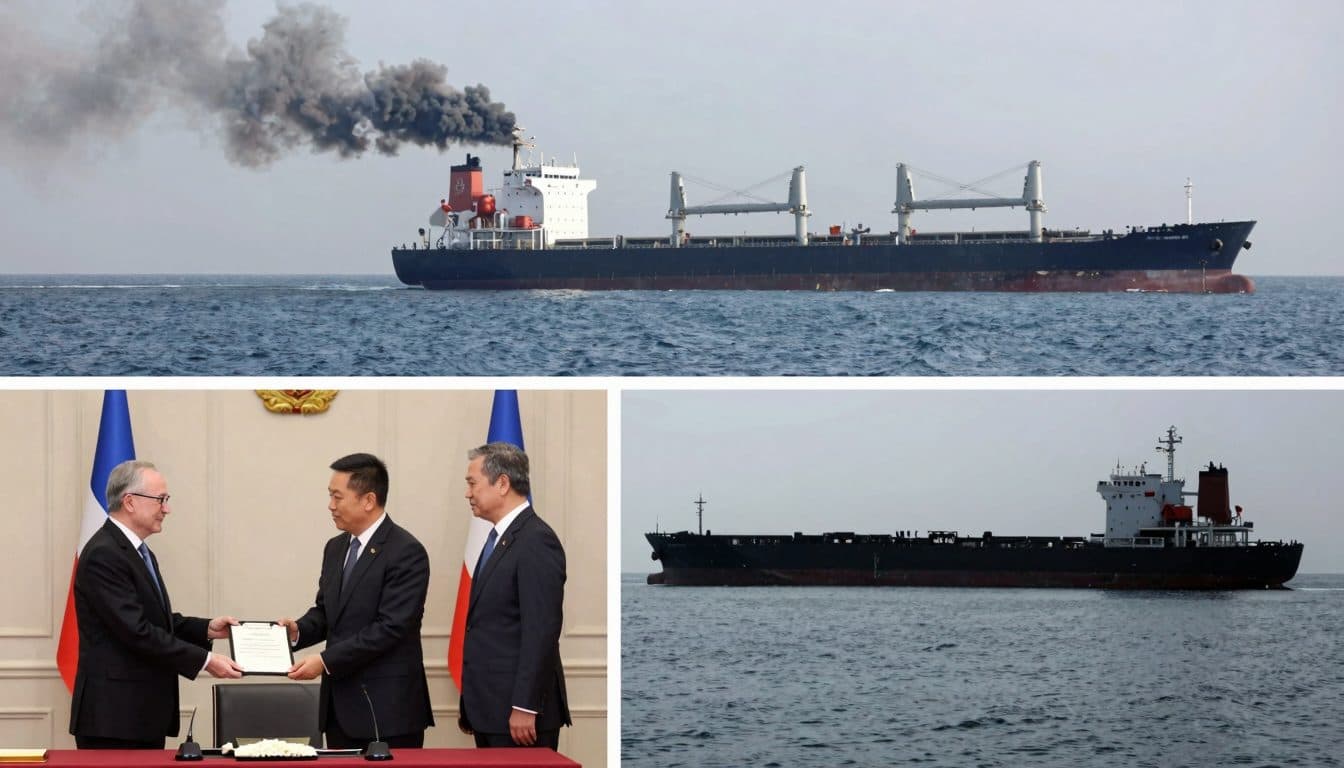
AI-generated image (z-image via Kie.ai)
Summary
Iranian Foreign Minister Araghchi has sharply condemned the Ukrainian attack on an Iranian merchant ship in the Caspian Sea and threatened Ukraine with consequences. One sailor was killed; Tehran also accuses Kyiv of having acted on Israel's orders.
Berlin, 26 July 2026
Iranian Foreign Minister Araghchi has condemned the Ukrainian attack on an Iranian merchant ship in the Caspian Sea and threatened Ukraine with consequences, with Iranian reports saying one sailor was killed.
Background to the incident
Tensions between Iran and Ukraine have escalated significantly following an attack in the Caspian Sea. Iranian Foreign Minister Araghchi stated on the online platform X that Ukrainian President Zelenskyy had attacked an Iranian merchant ship. According to Iran's account, "dabei einen Seemann getötet" (one sailor was killed). Araghchi also accused Ukraine of having "auf Geheiß Israels gehandelt zu haben" (acted on Israel's orders).
The Iranian Foreign Ministry in Tehran stated, according to the official news agency IRNA, that the attack had caused the ship to "explodiert" (explode). The Islamic Republic has "niemals in den Konflikt zwischen Russland und der Ukraine eingemischt" (never interfered in the conflict between Russia and Ukraine), Tehran added. At the same time, Iran threatened Ukraine with consequences for the attack on the freighter in the Caspian Sea.
Araghchi said he had held telephone conversations with EU foreign policy chief Kallas and Russian Foreign Minister Lavrov. In these talks, he made clear "dass das Vorgehen nicht unbeantwortet bleiben dürfe" (that the action must not go unanswered). At the same time, he described the incident as an "eklatanter Verstoß gegen die UNO-Charta" (flagrant violation of the UN Charter).
Ukraine's account of the attacks
The Ukrainian side tells the story differently. The Ukrainian intelligence service SBU reported on the online service Telegram about drone attacks on freighters subject to international sanctions "die zum Transport militärischer Fracht zwischen dem Iran und Russland" (used to transport military cargo between Iran and Russia). Accordingly, the attacks in the Caspian Sea were "insbesondere gegen Schiffe gerichtet, die für den Transport militärischer Fracht mit Beteiligung des Iran genutzt wurden, sowie auf ein Kriegsschiff" (directed in particular against ships used for transporting military cargo involving Iran, as well as against a warship).
Ukrainian President Volodymyr Zelenskyy stated the day before that "sehr solide Ergebnisse" (very solid results) had been achieved through attacks in the Caspian Sea. In a later statement, he said, "dabei besteht ein eindeutiger Zusammenhang zwischen den russischen Aufnahmen der Einrichtungen und den Angriffen der iranischen Streitkräfte – sowohl im Vorfeld der Angriffe als auch nach den iranischen Angriffen zur Einschätzung des verursachten Schadens" (there is a clear connection between the Russian footage of the facilities and the attacks by Iranian forces – both prior to the attacks and after the Iranian attacks to assess the damage caused).
Connection to the Russian-Iranian relationship
The backdrop to the Ukrainian attacks, according to Zelenskyy's account, is the military cooperation between Russia and Iran. Russia intensively supplies the Iranian military with satellite imagery of the Gulf region. The Ukrainian president sees this as Tehran's indirect involvement in Russia's actions against Ukraine.
The events in the Caspian Sea are not isolated. In July 2026, a Ukrainian drone attack on a resort in the Russian-occupied part of Ukraine's Zaporizhzhia region killed at least eleven people, including four children, according to the occupation authorities. President Zelenskyy had previously warned of new Russian attacks within 48 hours.
Further developments in the Ukraine war
The Russian capital Kyiv was again the target of Russian ballistic missile attacks, according to Ukrainian reports. Ukraine also reported an attack on Kherson with one dead and several injured. Russian troops reported the capture of Shevchenko in Donetsk. In Romania, a third drone was shot down in the country's own airspace, according to authorities.
The Kremlin meanwhile extended a gasoline export ban. At the same time, Ukraine said it had attacked an oil platform. Mail-order companies evacuated employees from areas affected by counter-attacks. An arrest was also reported following a deadly attack on the Kyiv suburbs. Russian Foreign Ministry spokeswoman Zakharova criticized Kyiv's attacks on Russian civilians.
Kyiv also stated that Russia wants to recruit 30,000 North Korean soldiers. This claim could not be independently verified, but it illustrates the broader front lines of the conflict, which increasingly involves other actors. The incidents in the Caspian Sea raise questions about possible further escalation.
German debate on aid for Ukraine
Parallel to the diplomatic escalation between Iran and Ukraine, CDU politician Hoffmann called in an interview with "Bild am Sonntag" for stronger German support for Ukraine. Hoffmann told the newspaper that an "Unterstützungsdividende" (support dividend) from Ukraine was needed. Germany would "unter allen Umständen fortsetzen" (continue under all circumstances) the aid. In return, the Ukrainian side must commit to "ihre technologischen Fähigkeiten mit uns zu teilen" (sharing its technological capabilities with us).
From Iran's perspective, the attack on the merchant ship is an attack on the sovereignty of the Islamic Republic. The threat of consequences and direct communication with the EU and Russia point to a multi-track diplomatic response from Tehran. What concrete steps Iran is planning remains open.
Diplomatic reactions and possible consequences
EU foreign policy chief Kallas and Russian Foreign Minister Lavrov are now the addressees of Iran's protest note. Both were reached by phone by Araghchi. The talks are likely also relevant against the backdrop of the ongoing negotiations on the Iranian nuclear program and EU sanctions policy.
Overall, the incident shows how vulnerable maritime trade routes in conflict regions are. The Caspian Sea is considered an important transport space for energy and goods deliveries between Central Asia, Iran, and Russia. Attacks on freighters in this region carry the risk of further escalation of the already tense situation between the states involved.
The report was broadcast on 26.07.2026 on Deutschlandfunk. The station reported, citing a news ticker, on the events surrounding the Iranian-Ukrainian incident in the Caspian Sea as well as further developments in the Russian-Ukrainian war. The news situation is dynamic; further information from both sides may follow.
Questions & Answers
What does Iran accuse Ukraine of?
Iranian Foreign Minister Araghchi accuses Ukraine of attacking an Iranian merchant ship in the Caspian Sea and killing one sailor in the process. He also accuses Kyiv of having acted on Israel's orders.
How does Ukraine justify the attack?
The Ukrainian intelligence service SBU and President Zelenskyy stated that the drone attacks had targeted sanctioned freighters used to transport military cargo between Iran and Russia, as well as a warship.
What consequences has Iran announced?
Following phone calls with EU foreign policy chief Kallas and Russian Foreign Minister Lavrov, Araghchi said the action must "nicht unbeantwortet bleiben" (not go unanswered). No concrete measures were initially named publicly.