Israeli Attacks on Beirut and South Lebanon Shake Fragile Ceasefire
Beirut, 07 June 2026
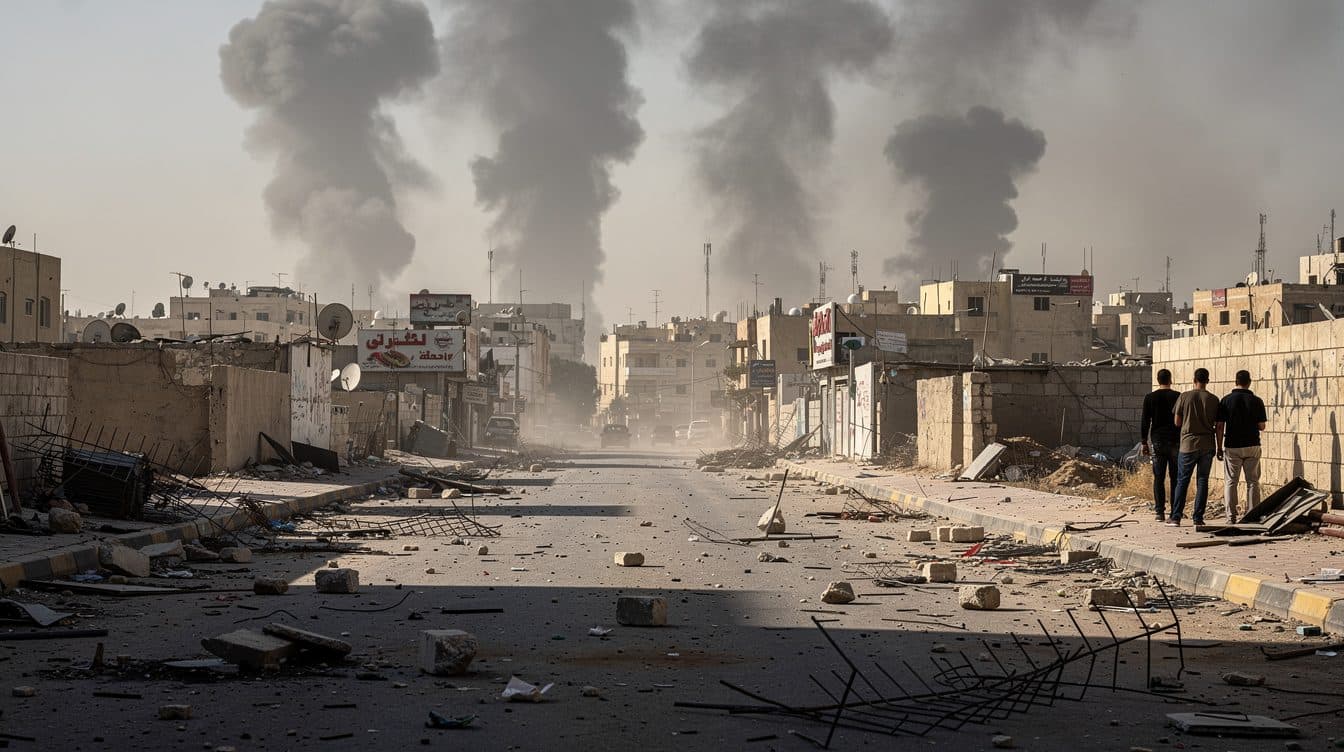
AI-generated image (flux-2/pro-text-to-image via Kie.ai)
Summary
The Israeli army has bombed suburbs of the Lebanese capital Beirut, killing at least two people according to Lebanese sources. Prior to this, the army had effectively undermined ceasefire talks between Israel and the Lebanese government — agreed in Washington — by launching fresh attacks.
Beirut, 07 June 2026
The Israeli air force bombed suburbs of the Lebanese capital Beirut on Sunday, breaking the ceasefire between Israel and the Lebanese government that had been agreed in Washington only a few days earlier.
Attacks on Dahyeh: Clouds of Smoke Over the Suburbs
According to the Lebanese army and local hospitals, at least two people were killed and others wounded in the attacks on the southern suburbs of Beirut. For the first time since the ceasefire was announced, Israeli warplanes struck the predominantly Shia stronghold of Dahyeh — considered a bastion of the pro-Iranian Hezbollah but also densely populated — according to the Lebanese account. Eyewitness videos showed thick plumes of smoke over the neighborhood. Eyewitnesses described severe destruction to one of the buildings across several floors.
Israeli Prime Minister Benjamin Netanyahu and Defense Minister Israel Katz said in a joint statement that the attacks were directed at Hezbollah "terrorist" bases in the predominantly Shia district of Dahiyeh. They also announced that the Israeli army had killed 350 "terrorists" in Lebanon over the course of a week. At the start of a cabinet meeting, Netanyahu said: "We will not allow Hezbollah to fire on our territory and our communities — and we will act accordingly." He also declared: "We are attacking them very hard, and we know that Hezbollah is on the run."
Trigger: Rockets from Lebanon
The trigger for the escalation was, according to the Israeli account, a rocket attack from Lebanon on northern Israel. Israel's air defense intercepted two projectiles that had entered Israeli territory, the army said. In addition, according to the army, there were concrete indications that Hezbollah intended to open fire on Israeli soldiers from this area. The previous Saturday, the Israeli army had already called on residents of five locations in southern Lebanon — through spokesman Avichay Adraee — to flee immediately to the north, beyond the roughly 30-kilometer-long Sahrani River.
Hezbollah rejected the conditions negotiated in Washington between the Lebanese government and Israel and was not included in the negotiations. Hezbollah chief Naim Kassem explicitly rejected the agreement. New attacks by the Iran-allied militia followed shortly afterward. Israel and the Lebanese government had held talks in Washington on Wednesday on the "implementation of a ceasefire," which provided for certain "test areas" under the "exclusive control" of the Lebanese army. Both sides, however, made implementation dependent on an end to Hezbollah's attacks.
Deadly Attack on Lebanese Military Vehicle
A particularly explosive incident occurred in southern Lebanon, where, according to the Lebanese army, two officers and a soldier of the Lebanese armed forces were killed by an Israeli attack on a military vehicle on the road from Kafr Tibnit to Charbital in the Nabatiyeh region. Israel confirmed the attack but disputed the account. The vehicle had moved "suspiciously" toward Israeli soldiers and was traveling in a previously evacuated combat zone, it said. Movements in such zones had to be coordinated with the Israeli army. After the vehicle was identified and given this assessment of the situation, the order to fire was issued. The incident is being investigated.
The leadership of the Lebanese army sharply criticized Israel, accusing the country of continuously attacking Lebanon and its population. It accused Israel of wanting to thwart solutions to restore stability, a comprehensive ceasefire, and a withdrawal from occupied Lebanese territory. According to this, the Lebanese army is not an active party to the conflict between Israel and Hezbollah and is acting neutrally.
Lebanese President Joseph Aoun spoke of a flagrant violation of Lebanese sovereignty and international laws and norms. The escalation is taking place despite Lebanon's efforts to negotiate an end to Israeli attacks without deterrence.
Hezbollah Rejects Washington Agreement
Hezbollah, the pro-Iranian terrorist group, had previously rejected earlier ceasefires with Israel and also does not recognize the new agreement. The militia announced that it had attacked Israeli soldiers in southern Lebanon as well as an artillery position on the Israeli side. Israel had, however, threatened to strike these areas again in the event of Hezbollah attacks on Israel and to once more push the residents of the suburbs to flee.
In the days before the attack on Beirut, the Israeli army said it had struck around 150 targets in southern Lebanon within 48 hours, including weapons depots, command centers, and rocket launchers of the militia. At Hiram Hospital in the city of Tyre, a nurse on her way to work was killed in an attack, according to Lebanese sources.
Iran War Spreads to Lebanon
Israel's army is reporting rocket attacks from Iran. The US military says it has shot down two Iranian drones. Previously, Iran's chief negotiator had threatened retaliation following Israeli attacks on Lebanon. An Iranian negotiator is threatening attacks on US bases. Iran insists on including Lebanon in any possible agreement with the USA to end the war.
Just on the night before Thursday, Israel and Lebanon had, according to US sources, agreed on a new attempt to implement the previously largely ineffective ceasefire. US President Donald Trump also announced a halt to Israeli attacks in the area and an end to Hezbollah's attacks on Israel. Trump also declared that Iran sanctions would not be lifted without a peace agreement. Israel had significantly reduced attacks since an official ceasefire came into force in mid-April, but strikes on Lebanese territory repeatedly tear holes in the fragile arrangement.
Background: A Ceasefire in Growing Disrepair
Lebanon was drawn into the Iran war in early March. In response to the killing of Iranian Supreme Leader Ayatollah Ali Khamenei, Hezbollah has since fired rockets at Israel repeatedly. Israel has since carried out airstrikes on numerous targets in Lebanon and has sent ground troops across the border. In parallel, a hospital reported five dead in an Israeli attack in the Gaza Strip. In addition, one dead and wounded were reported in an alleged attack in Israel.
The report was broadcast on 07.06.2026 on Deutschlandfunk. The fighting between Israel and Hezbollah is ongoing in Lebanon at the time of reporting.
The new attacks in the Lebanese capital are taking place amid a continuing smoldering regional crisis, in which the USA, Iran, and Israel are struggling for a solution that would also have to take in Hezbollah in Lebanon and the rocket threats from Iran.
As diplomatic efforts toward a ceasefire continue, pressure is mounting in southern Lebanon and the suburbs of Beirut on the civilian population, which lives between the front lines of the Israeli army and Hezbollah.
Questions & Answers
Who is Naim Kassem and why does Hezbollah reject the ceasefire?
Naim Kassem is the leader of the pro-Iranian Hezbollah. The militia was not included in the negotiations in Washington, according to Lebanese sources, and rejects the conditions agreed between Israel and the Lebanese government, which is why new attacks followed shortly afterward.
What happened to the Lebanese military vehicle in southern Lebanon?
According to the Lebanese army, two officers and a soldier were killed when an Israeli attack hit a military vehicle on the road from Kafr Tibnit to Charbital in the Nabatiyeh region. Israel confirmed the attack but said the vehicle had moved suspiciously in an evacuated combat zone.
What role does US President Donald Trump play in the conflict?
Trump announced, according to US sources, a halt to Israeli attacks in the area and an end to Hezbollah's attacks on Israel, and is making the lifting of Iran sanctions dependent on the conclusion of a peace agreement.
Israel Bombs Beirut Suburbs – Ceasefire with Lebanon Fragile | allfacts360