
Jerusalem, 26 May 2026
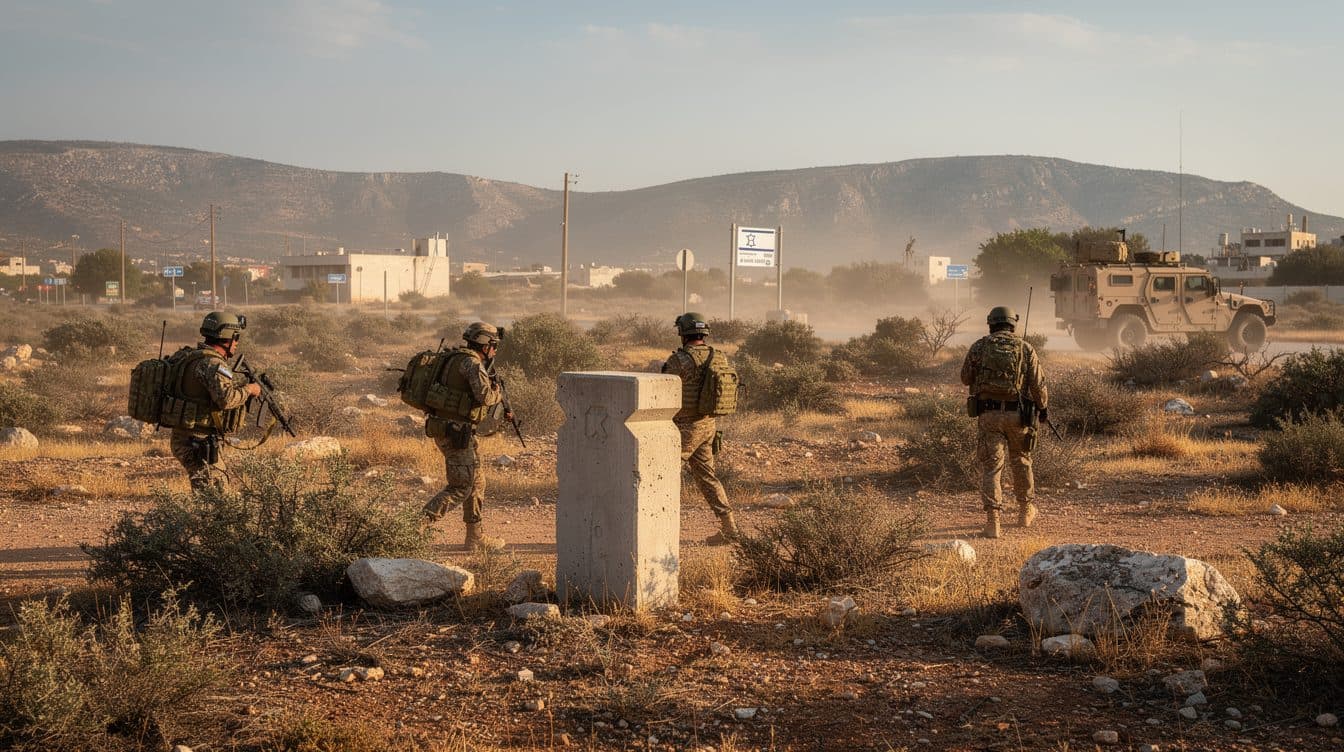
The Israeli military expanded its ground operation in southern Lebanon overnight on Monday, moving beyond the Litani River and launching over 120 airstrikes, resulting in more than 30 deaths and 40 injuries, according to Lebanese authorities.
The offensive, the largest since the 2006 war, targeted positions of the Iran-backed Hezbollah militia. Israeli officials said the goal was to ‘zerschlagen’ — crush — the group’s military infrastructure.
Lebanon’s government reported that the airstrikes hit multiple towns and villages south of the Litani River. Health authorities in Beirut put the death toll at 31, with at least 40 people wounded. Rescue teams were still searching through rubble late into the night.
Civilian Toll and Evacuation Orders
The Israeli army had earlier issued an urgent call for the evacuation of the city of Nabatiyeh, after which at least 20 strikes were recorded in the area, security sources said. Residents fled northwards as explosions shook the city.
Israel first invaded Lebanon in 1982 to destroy PLO military structures then operating from the country. Its forces did not withdraw fully until 2000, after years of guerrilla warfare with Hezbollah. The latest incursion comes against a backdrop of renewed cross-border tensions.
The ‘yellow line’ that Israel has now crossed refers to a roughly 30‑kilometre buffer north of the Israeli border, anchored near the Litani River. It had served as an informal boundary for Israeli ground operations in previous conflicts.
A Fraught Ceasefire Under Strain
A ceasefire between Israel and Hezbollah has been in effect since April 2026 and was extended again in mid‑May. Monday’s assault effectively ends that truce and raises fears of a wider regional conflagration.
Iran’s Revolutionary Guards said they ‘behalten sich das Recht auf Vergeltung für jegliche Verletzungen der Waffenruhe durch die USA vor’ — reserving the right to retaliate for any ceasefire violations by the United States. The statement followed US airstrikes inside Iran.
Regional Flashpoints Multiply
The US military carried out overnight strikes against targets in southern Iran, described by American media as acts of self‑defence. In response, the Iranian Guards said they ‘haben mit Luftverteidigungsmassnahmen reagiert’ — had responded with air defence measures.
The violence was not confined to Lebanon and Iran. An explosion was reported on a tanker off the coast of Oman. In the Gaza Strip, health officials said seven people were killed in an attack. Israeli Prime Minister Benjamin Netanyahu also reported an attack on the new Hamas chief.
In Iran, internet access was partially restored after days of disruption, and authorities said a new execution was carried out after espionage charges. Tehran also renewed its demand for the release of frozen assets abroad.
The rapidly escalating tit‑for‑tat between Israel, Hezbollah, Iran and the United States is putting the wider Middle East on edge. Diplomats have so far failed to bring the parties back to the negotiating table.