Mudflat Hiking SH: Safety, Gear, and Tours | allfacts360
Mudflat Hiking in Schleswig-Holstein: Tips on Safety, Gear, and Tours
Kiel, 17 July 2026
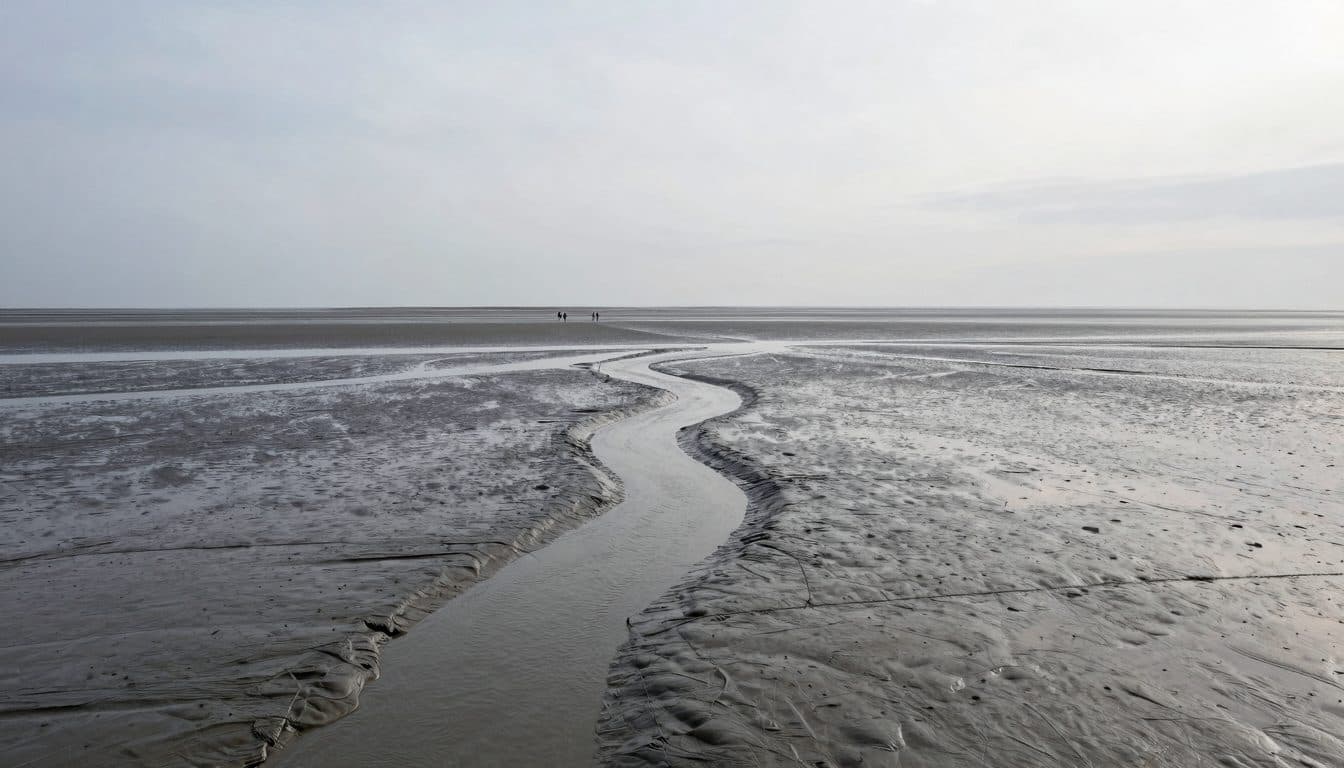
AI-generated image (z-image via Kie.ai)
Summary
Anyone who wants to hike in the Wadden Sea off Schleswig-Holstein should be familiar with the tides, the right gear, and guided tours. The Schutzstation Wattenmeer offers tours from Dagebüll to the hallig Oland and to the hallig Nordstrandischmoor. Safety always takes precedence over adventure.
Kiel, 17 July 2026
The Schutzstation Wattenmeer and other providers invite visitors to guided mudflat hikes off Schleswig-Holstein during the summer holidays, including tours to the hallig Oland, the hallig Nordstrandischmoor, and the sunken settlement of Rungholt.
Why the Wadden Sea is special
The Wadden Sea off the Schleswig-Holstein North Sea coast is one of the last largely untouched mudflat landscapes in Europe. At low tide, an area of around 4,500 square kilometers falls dry that is otherwise under water. Anyone who wants to cross this area on foot must keep an eye on the tides, the weather, and their own fitness. The Schutzstation Wattenmeer, a non-profit organization dedicated to supporting the national park, therefore organizes guided hikes with trained mudflat guides throughout the year.
One of the most well-known routes begins in Dagebüll and leads to the hallig Oland. The tour is explicitly offered as a "Wattwanderung in Stille" and is aimed at people seeking a break from everyday life. The hike lasts several hours and requires sure-footedness as well as a basic level of fitness. Participants should be prepared for changeable weather, even in summer.
Another challenging route is the "Nordfriesische Bergtour" to Nordstrandischmoor. It starts in Lüttmoorsiel and leads through the heart of the national park. The approximately ten-kilometer hike is also referred to as a "Bergtour" because the mudflat between the tidal creeks and channels forms unexpectedly high rises and dips. Here, too, trained mudflat guides accompany the groups.
The "Nordfriesische Bergtour" to Nordstrandischmoor
Those interested in the history of the region can take a tour from Nordstrand to the sunken settlement of Rungholt. Rungholt sank in 1362 during a severe storm surge and is today considered the "Atlantis of the North Sea." At low water, remains of the old dikes and traces of the settlement can still be seen in the mudflats. The hike combines a nature experience with a piece of regional history.
Clear rules apply to safety in the mudflats. The most important: never set off alone and without local knowledge. Mudflat areas may look firm at low tide, but the ground beneath remains soft and muddy. Anyone who gets stuck may be caught off guard by the incoming flood tide. The Schutzstation Wattenmeer recommends checking the current tide times before every tour and only using guided offerings.
Safety in the mudflats: the most important rules
Basic equipment includes sturdy, ankle-high hiking boots with tread that provide grip even in wet mud. Waterproof gaiters protect against mud and saltwater. Sunscreen, a head covering, and sufficient drinking water belong in every backpack, because there is hardly any shade in the mudflats. A pair of light binoculars helps with observing birds and seals without disturbing them.
Clothing should also be adapted to the weather. Functional clothing in layers has proven effective, along with a wind- and water-repellent jacket. At temperatures around 20 degrees Celsius, the wind can make it feel significantly cooler in the mudflats. Those sensitive to the sun should plan for long sleeves and a head covering.
Gear: Shoes, clothing, and backpack
The Schutzstation Wattenmeer operates several stations along the coast, including in Dagebüll, on Nordstrand, and on Pellworm. From there, regular tours depart, aimed at families, beginners, and experienced hikers. The offerings are listed up to date on the organization's website. Registration is required, as the number of participants is limited.
For families with children, the shorter tours from Nordstrand and Pellworm are particularly suitable. The routes are shorter, the explanations are child-friendly, and children experience the mudflat habitat up close. Mudflat worms, mussels, and small crabs can be observed in the wash-up zone. The mudflat guides make sure that nothing is taken from the mudflats.
Those planning a longer tour should not underestimate the time involved. The outward and return legs together often take six to eight hours, plus breaks and explanations. A snack for along the way belongs in the backpack, as does a small first-aid kit. For longer tours, the organization recommends realistically assessing one's own fitness.
Tides, seals, and nature conservation
The tides determine the course of every mudflat hike. As the flood tide comes in, the ground changes quickly, tidal creeks fill with water, and paths that were just dry can suddenly become impassable. The mudflat guides continuously monitor the water level and adjust the route accordingly. Those who follow their instructions are on the safe side.
Seals often lie on the sandbanks at low tide. They should be observed from a distance of at least 200 meters so as not to disturb the animals. Anyone who approaches risks the seals fleeing and abandoning their resting places. The Schutzstation Wattenmeer points out that seals are protected species.
In addition to the guided tours, there are also information centers and exhibitions on the topic of the mudflats along the coast. They offer a good introduction before venturing onto the mudflat floor oneself. School classes also regularly use the offerings to get to know the Wadden Sea habitat.
Booking, prices, and season
Anyone wishing to give a mudflat hike as a gift or book one can do so directly through the Schutzstation Wattenmeer or through the region's tourist information offices. Prices vary depending on the length and destination of the tour. Children below a certain age generally participate free of charge or at a reduced rate, provided the mudflat guides agree.
The season for mudflat hikes generally runs from spring to autumn. In winter, many routes are not accessible due to the short daylight phases and higher flood tides. Those out and about in summer should still expect fog, rain, and wind. The weather on the North Sea can change quickly.
Overall: A mudflat hike is not a casual stroll, but a nature experience with clear rules. Those who embrace the conditions, follow the recommendations of the Schutzstation Wattenmeer, and only use guided tours will experience one of Europe's most fascinating habitats. The Wadden Sea off Schleswig-Holstein thus remains a destination for anyone seeking nature, history, and open space.
Questions & Answers
Which mudflat hikes does the Schutzstation Wattenmeer offer?
The Schutzstation Wattenmeer organizes, among other things, a "Wattwanderung in Stille" to the hallig Oland from Dagebüll, the "Nordfriesische Bergtour" to the hallig Nordstrandischmoor from Lüttmoorsiel, and tours to the sunken settlement of Rungholt from Nordstrand.
What gear is needed for a mudflat hike?
Recommended are sturdy, ankle-high hiking boots with tread, waterproof gaiters, sunscreen, a head covering, sufficient drinking water, and wind- and water-repellent clothing worn in layers.
Why should mudflat hikes only be undertaken with a guide?
The Schutzstation Wattenmeer recommends never setting off alone and without local knowledge, because the mudflat ground can quickly become impassable as the flood tide comes in and those with local knowledge adjust the route to the water level and weather.