National Council rejects entering into seventh extension of the special VAT rate for hotels
Bern, 16 June 2026
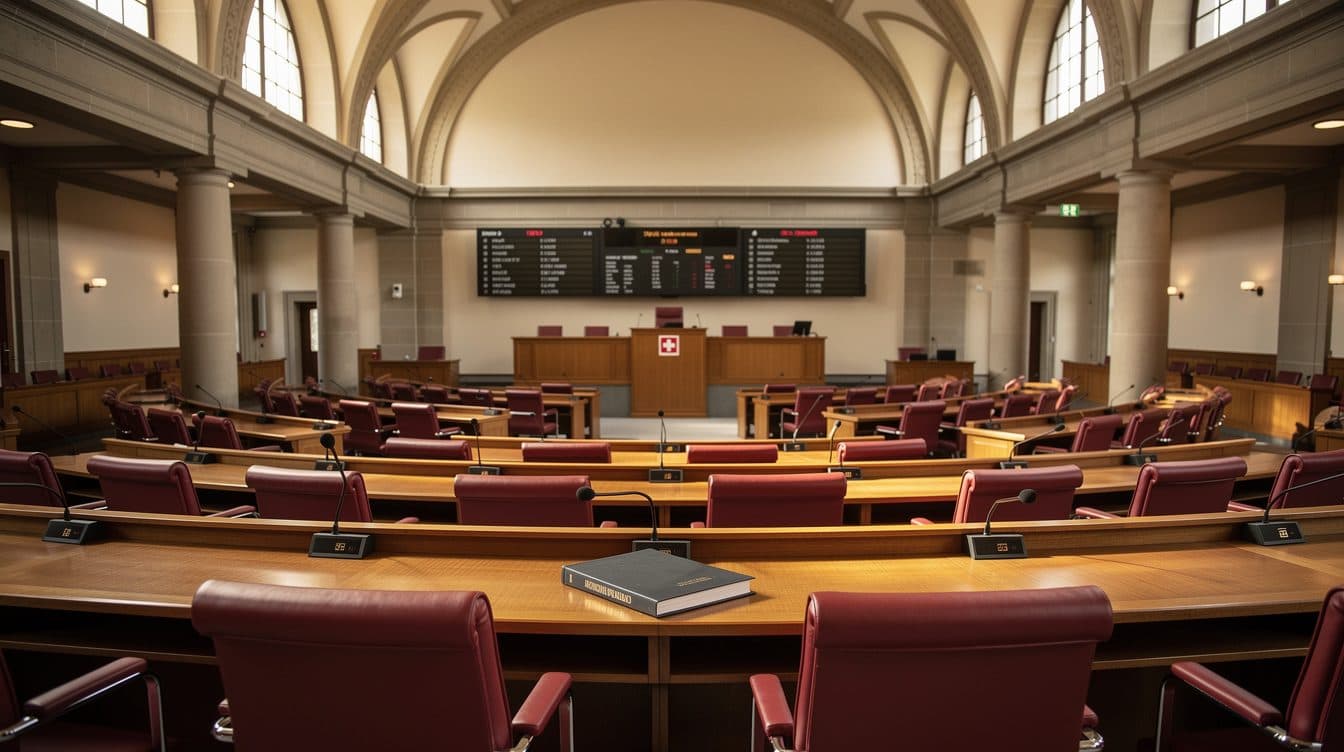
AI-generated image (flux-2/pro-text-to-image via Kie.ai)
Summary
The National Council decided on Tuesday by 105 to 75 votes with 15 abstentions not to enter into the bill to extend the reduced VAT rate for the hotel industry, which has been in force since 1996. The bill thus fails in the large chamber for now; the Council of States is expected to decide in September.
Bern, 16 June 2026
The Swiss National Council decided on Tuesday by 105 to 75 votes with 15 abstentions not to enter into the bill, which would have extended the reduced VAT rate for overnight stays and breakfast in the hotel industry for a seventh time. The special rate, originally introduced in a crisis phase of the Swiss hotel industry, has been in place for 30 years.
Background: Special rate since 1996
The bill, which stems from a motion by SVP Council of States member Esther Friedli, provided for a further extension of the special rate. «sowohl im Nationalrat als auch im Ständerat wurde ein Vorstoss von Esther Friedli angenommen, der eine weitere Verlängerung des Sondersatzes verlangte». The Federal Council had, however, planned to let the special rate expire at the end of 2027. «Der Bundesrat wollte den Sondersatz Ende 2027 endlich auslaufen lassen.»
The special rate has applied for 30 years and currently stands at 3.8 percent on overnight stays and breakfast, compared with the standard VAT rate of 8.1 percent. «Seit nunmehr 30 Jahren profitiert die Branche von einem lukrativen Steuerrabatt», it was said in the debate contributions. Since its introduction in 1996, the special rate has been extended six times.
The SVP and the shift in opinion
In the National Council, 33 SVP faction members voted in favour of the extension on Tuesday, 20 against, and 12 abstained. Half of the SVP faction thus changed course. «Nur noch 33 SVP-Nationalräte stimmten für die Verlängerung, 20 lehnten sie ab, 12 enthielten sich der Stimme.» The justification for the no-votes was taken up by Ticino National Councillor Paolo Pamini, who spoke in all three national languages. «Die Nein-Stimmen begründete er damit, dass die Hotellerie sich ‹vermutlich nicht so überzeugt› für die Bekämpfung der Bürokratie engagiere.» «Offiziell geht es der SVP um die Bürokratie.»
Pamini also declared that the SVP faction was «at best split on this issue». «Unsere Fraktion ist bei diesem Geschäft höchstens gespalten.» It was striking that two prominent figures, party president Marcel Dettling and head of the parliamentary group Thomas Aeschi, reversed their position. «Nicht nur der Parteipräsident Marcel Dettling und der Chef der Bundeshausfraktion Thomas Aeschi sind umgeschwenkt.» Dettling did not want to comment «auf Anfrage nicht äussern». Just one year ago, the SVP had still unanimously supported Friedli's motion. «Vor einem Jahr hatte die SVP Friedlis Vorstoss noch einstimmig unterstützt.»
Positions of the factions
Among the other factions, the mood was similarly mixed. Only the Centre Party stood united behind the extension. «Nur die Mitte-Partei stand geschlossen hinter der Hotellerie.» Its party president Philipp Matthias Bregy, from Valais, pointed to the economic vulnerability of the industry: «Zwar schreibe die Branche Rekordjahre, aber sie leide unter Schwankungen, und auch der Sommer 2026 werde wahrscheinlich wieder einmal herausfordernd». Bregy also cited booking figures showing that international uncertainties would affect Swiss tourism. «Die internationalen Wirren und insbesondere die Frage, ob dann schlussendlich noch genügend Kerosin zur Verfügung steht, werden Auswirkungen auf den Schweizer Tourismus haben.»
FDP National Councillor Daniela Schneeberger announced that the majority of the FDP faction can justify a special regime «heute weniger klar begründen» today than at its introduction in 1996. «Die Mehrheit der Fraktion ist daher der Ansicht: Ein Sonderregime lässt sich heute weniger klar begründen als bei seiner Einführung.» She pointed to the currently record-high number of overnight stays. GLP President Jürg Grossen asked pointedly: «Warum soll ausgerechnet die Beherbergungsbranche dauerhaft weniger Mehrwertsteuer bezahlen als ein Eisenwarenhändler, ein Schreiner, ein Beizer oder der lokale Detailhandel?» Green National Councillor Franziska Ryser rejected the extension because «Viele Betriebe Rekordumsätze verzeichnen, die Nachfrage ist hoch und die Perspektiven sind stabil». The GLP, SP and Greens also clearly voted against the extension.
Federal Councillor Karin Keller-Sutter also spoke out against special treatment: «Angesichts der heutigen wirtschaftlichen Lage der Beherbergungsbetriebe, ist es nicht mehr gerechtfertigt, dass der Beherbergungsbranche eine Sonderbehandlung zukommt.» SP co-president Cédric Wermuth attacked the bourgeois majority head-on: «Ich bitte Sie, sich zu fragen, wie Sie das tun wollen, nachdem Sie mit 300 Millionen eine Branche, die von Rekordwert zu Rekordwert geht, entlastet haben.» Wermuth was alluding to the discussion that, with an end to the special rate, around 300 million francs in additional revenue per year would be available. «Die voraussichtlichen Mehreinnahmen von 300 Millionen Franken könnten beispielsweise für die AHV oder die Armee verwendet werden.»
Council of States decides in September
With the rejection of entry in the large chamber, the matter is not yet finally off the table. «Falls er sich beim zweiten Anlauf noch einmal weigert, auf das Geschäft einzutreten, ist die Vorlage definitiv gescheitert und der Sondersatz Geschichte.» The Council of States had very clearly accepted Friedli's original motion by 37 to 3 votes and is expected to deal with the bill again in September. «Dieser dürfte im September über das Geschäft entscheiden.» The future of the hotel industry's tax advantage, in place for 30 years, thus remains open for now, even though political majorities have visibly shifted in the meantime.
Background: Crisis then, records now
The background to the debate is the structural change in the industry. While the special rate was introduced in 1996 in what was effectively a crisis situation, many hotels are now recording record revenues and overnight stays. The industry also benefits from the fact that «knapp die Hälfte der Gäste aus dem Ausland stammt» and that domestic consumer demand is therefore less sensitive to the economic cycle. Industry associations such as Hotelleriesuisse and Gastrosuisse, of which Friedli is a board member, have spoken out in favour of the new agreements with the EU. «dass sich Hotelleriesuisse und (etwas weniger entschlossen) Gastrosuisse für die neuen Abkommen mit der EU aussprechen.» «Friedli ist nicht nur SVP-Ständerätin, sondern auch Vorstandsmitglied von Gastrosuisse.»
The front lines within the SVP are also explosive because their own 10-million initiative, considered an important tax-policy profile project, was defeated at the ballot box just last Sunday. «die am Sonntag an der Urne gescheitert ist». Thomas Matter, one of the party's vice-presidents and the «father» of the 10-million initiative, also voted against the extension of the special rate. «Thomas Matter, einer der Vizepräsidenten der Partei sowie der ‹Vater› der 10-Millionen-Initiative».
The next stage of the parliamentary debate will take place in the Council of States, which had very clearly approved the motion at its first reading. If it sticks to its line and the National Council again votes against entry on a second attempt, the special rate would be definitively history after 30 years. Otherwise, a process of resolving differences between the two chambers would follow, in the course of which the lines of compromise would have to be redefined.
Questions & Answers
Who is Esther Friedli?
Esther Friedli is an SVP member of the Council of States and also a board member of Gastrosuisse. She is regarded as the initiator of the bill to extend the special VAT rate for the hotel industry.
How did the National Council decide?
On Tuesday, the National Council decided by 105 to 75 votes with 15 abstentions not to enter into the bill to extend the special rate.
What happens next with the special rate?
The Council of States, which had accepted Friedli's original motion by 37 to 3 votes, is expected to decide on the matter again in September.
National Council: No seventh extension of the hotel VAT | allfacts360