Netflix bets big on AI and sees a turnaround on the second-season problem
Los Gatos, July 17, 2026
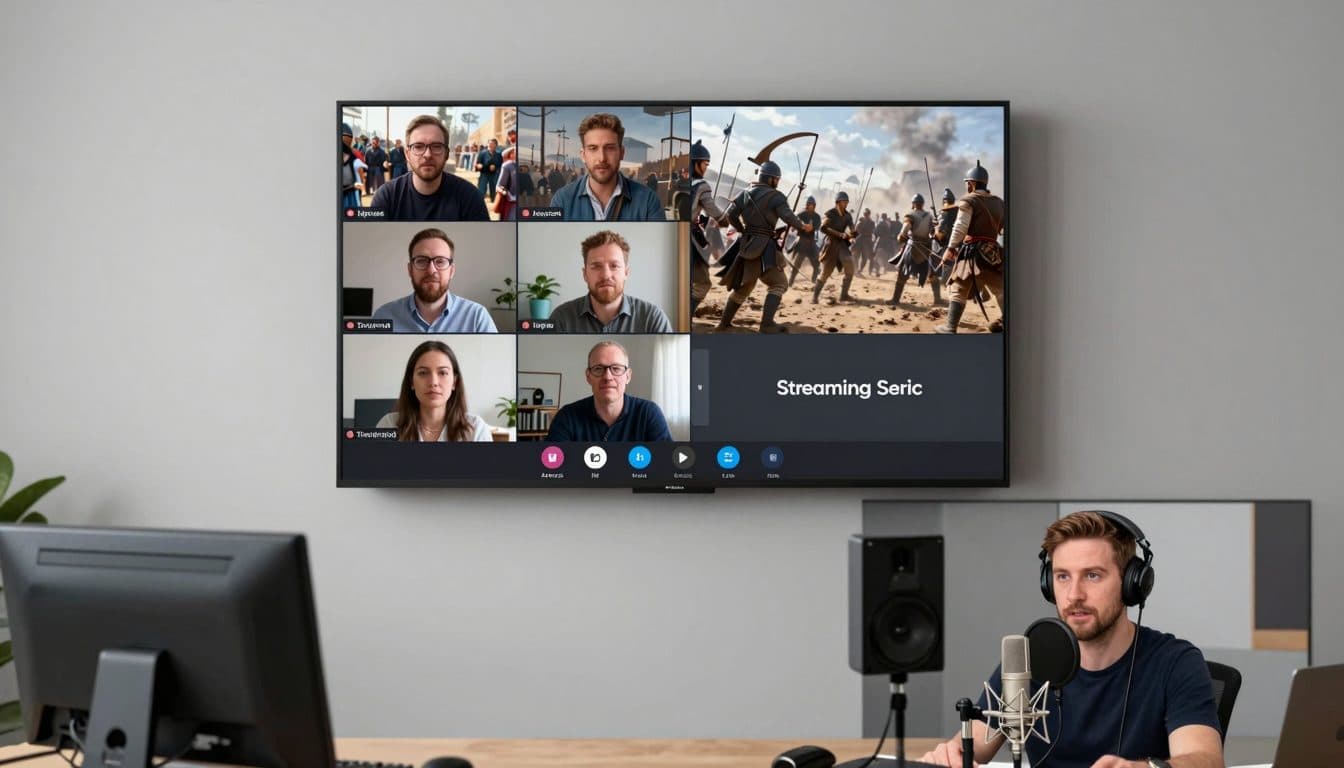
AI-generated image (z-image via Kie.ai)
Summary
Netflix generated $12.56 billion in revenue in the past quarter, 13 percent more than the previous year. At the same time, the stock fell by around nine percent after hours because the outlook for the current quarter slightly missed analyst expectations.
Los Gatos, July 17, 2026
Streaming market leader Netflix generated $12.56 billion (€10.98 billion) in revenue in the past quarter, 13 percent more than the previous year, and according to the company itself sees a turnaround on the so-called second-season problem, while it expands the use of generative AI in around 300 titles of the current year.
Net profit rose by just under 9 percent to $3.4 billion in the most recent quarter, according to the company's shareholder letter. Operating margin, however, fell from 34.1 to 33.4 percent compared with the same quarter a year earlier. For the third quarter, Netflix is forecasting $12.86 billion and thus less than analysts had expected. The stock lost roughly eight to nine percent at times in after-hours US trading; in the months before, the share had already shed more than 40 percent of its value.
The shareholder letter states: "Unsere finanzielle Entwicklung ist weiterhin solide, und wir sind auf dem besten Weg, unsere Jahresziele zu erreichen". The company also announced that it would focus more strongly going forward on metrics such as revenue and operating profit, rather than on subscriber numbers or viewing hours. Netflix has for some time no longer published regular subscriber figures and intends to release popularity data for films and series only annually rather than semi-annually going forward.
Quarterly figures and outlook
The focus of the conference call with analysts was the growing use of generative AI. Co-CEO Ted Sarandos said generative AI is scaling rapidly across the entire creative process, from concept through previs to post-production and delivery. The largest share so far has been in post-production. AI is being used, among other things, to generate crowds or scenes of historical battles.
Use of AI in the creative process
Sarandos stressed that AI is only a tool in the hands of creative people. "Filme werden von Leuten gemacht, die Filme machen", he said. Without the tools, many productions would have cut individual key scenes that would otherwise have fallen victim to time pressure or budget constraints. The cost savings are not meant to shrink budgets but to flow into more programming.
As a concrete example, Netflix cited the documentary series "The American Experiment": 17 minutes of material there were produced with AI support, twice as fast and at half the cost of previous methods. The shareholder letter also names the Indian sports series "Glory" and the Brazilian miniseries "Brasil 70: A Saga do Tri" as further examples of the use of generative AI.
InterPositive and internal tools
For its AI work, Netflix uses, alongside the tools of the acquired studio InterPositive, its in-house VFX unit Eyeline and its own animation lab. InterPositive, founded in 2022 by actor Ben Affleck, was taken over by Netflix in March; the software does not generate videos from text prompts but trains a model on the filmed material of a production. According to a Bloomberg report, the purchase price could reach up to $600 million.
Sarandos also pointed to a reversal of the trend on the so-called second-season problem. Market research data had recently raised doubts about whether Netflix can successfully retain viewers of hit series over the long term. Internal company data accordingly show that second seasons of successful original series often lose massive numbers of viewers. Sarandos contradicted this assessment and said the declines between the first and second seasons had recently been smaller than the year before. Netflix continues to search for the causes.
Second-season problem: Sarandos sees a turnaround
Co-CEO Greg Peters said live broadcasts attract an above-average number of new customers but overall have fewer viewers than other programming formats. There is also not necessarily a direct link between revenue and the number of hours customers spend in front of the screen. Netflix competes with rivals such as Disney and Paramount as well as with platforms such as YouTube and TikTok for users' attention.
The background to the muted stock-market reaction is also the failed takeover bid for Warner Bros. Netflix had lost out to Paramount in the bidding war. In February 2026, however, Netflix received $2.8 billion from Warner Bros. as a contractual penalty payment following the collapse of the already agreed deal. Some investors had interpreted the bid in the context of retention concerns as a bold step forward; the contractual penalty also pushed up the streaming market leader's tax payments in the past quarter.
Failed Warner Bros. takeover
The use of AI is also controversial within the industry. In Germany, Netflix requires voice actors by contract to grant the right to use the recordings for AI training. The Bundesverband Schauspiel had negotiated its own agreement with Netflix last summer on the use of AI voices. The Verband Deutscher Sprecher (VDS), by contrast, has called a strike because its members fear that signing the contracts could make them unemployed in the long term.
Criticism and contracts with voice actors
Netflix does not, however, make transparent in its catalog which films and series contain AI-generated material. Outside the company too there is both criticism and approval: George Lucas defended the use of AI in films in an interview with the film magazine A Rabbit's Foot and compared resistance to the technology with insisting on horse-drawn carriages.
Overall, Netflix as the video-streaming market leader is under pressure: revenues are growing, margins are shrinking slightly, the outlook disappoints analysts, and the stock is reacting with losses. At the same time, the company is increasingly turning to generative AI to produce content more cheaply and faster, and points to a possible turnaround in viewer losses from the second season onward.
The coming quarters will show whether the AI offensive actually helps to ease the second-season problem and to secure growth in an increasingly competitive market. Investors, creatives and voice actors will be watching closely how Netflix manages the balancing act between cost efficiency, creative quality and the trust of its workforce.
Questions & Answers
How many Netflix titles were produced with AI in 2025?
According to Netflix, generative AI was used in around 300 films and series in the current year, for example for crowds or scenes of historical battles.
What is the second-season problem at Netflix?
Market research data and internal Netflix data show that second seasons of successful original series often lose massive numbers of viewers; however, Co-CEO Ted Sarandos said the declines had recently been smaller than the year before.
Why did the Netflix stock fall after the quarterly figures?
The stock lost roughly eight to nine percent after hours because the revenue outlook of $12.86 billion for the third quarter came in slightly below analyst expectations.
Netflix: AI in 300 titles and a turnaround on season 2 | allfacts360