Media Funding Blocked: Dispute Between ÖVP and SPÖ | allfacts360
ÖVP and SPÖ Block Planned Media Funding Package in Dispute Over Free Newspapers
Vienna, 02 July 2026
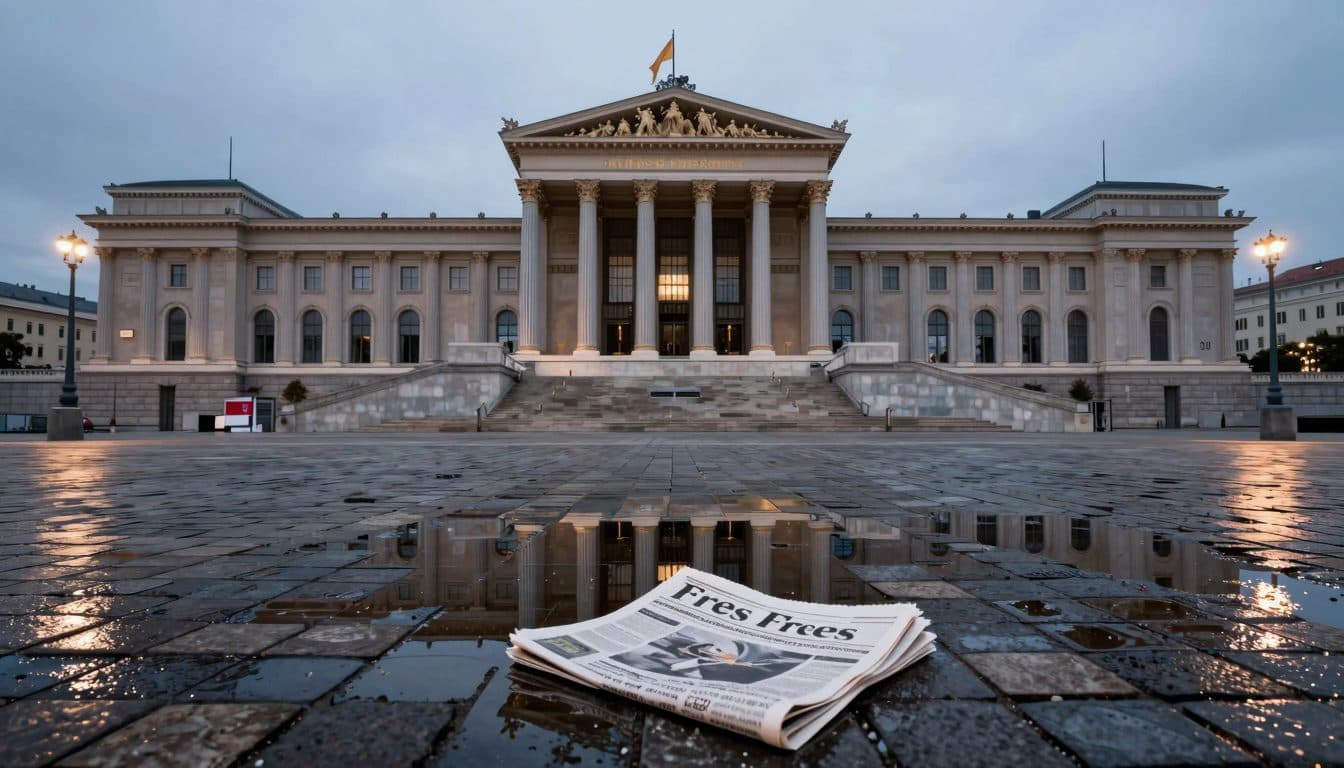
AI-generated image (z-image via Kie.ai)
Summary
The Austrian government cannot move forward with its planned media funding package for the time being. ÖVP and SPÖ are at odds over whether free newspapers should also receive funds from the new funding pots. Without an agreement, an EU notification threatens to further delay the process.
Vienna, 02 July 2026
The package of media funding measures planned by the Austrian government for this Friday is blocked for the time being due to differing positions between ÖVP and SPÖ on funding for free newspapers.
The coalition parties have been negotiating for days over a comprehensive funding package that envisages, among other things, a new delivery subsidy for newspapers, funds for digital transformation, as well as a program to strengthen media literacy. As DER STANDARD learned from multiple sources, the government wanted to push the package through on Friday. That did not happen for now. "Tomorrow, Friday, the government wanted, according to STANDARD information from multiple sources, to push through a package of media funding measures," the paper reported. The cause of the standstill is the question of whether and in what form free papers should also benefit from the funding in the future.
Media Minister Andreas Babler (SPÖ) had most recently outlined the thrust of the package in documents available to the APA. "In times of fake news, disinformation, crises, and algorithms, we must invest in quality and critical media, in independent journalism, and stand up for a diverse and resilient media landscape that is also equipped for the media consumption of the future," Babler is quoted as saying. His ministry plans, among other things, a new delivery subsidy of 25 million for newspaper companies, two installments of 20 million for an extension of the digital transformation funding, as well as funding for media literacy and media offerings for young people in the amount of ten million euros.
Contested Issue: Funding for Free Newspapers
From the ÖVP, it was said that, according to "initial, still unconfirmed information from STANDARD," talks on the design were ongoing. Media spokesperson and Secretary General Nico Marchetti told the APA: According to "STANDARD information from multiple sources," the ÖVP was "still in talks" on the funding; reportedly, one issue is whether free media should also be considered. "But the package is running into trouble, according to STANDARD information, due to differing positions between ÖVP and SPÖ on funding for free newspapers," it was said. The ÖVP has submitted several proposals on this to the SPÖ.
From the Media Ministry, it was said that the ÖVP's demand for funds for free papers would "not be accepted." "The Media Ministry should not accept this demand," DER STANDARD reported. In the past, legal concerns had already been mentioned; "In the past, legal concerns were mentioned, but these related to funding for free newspapers from the new delivery subsidy, an earlier ÖVP demand," the paper said. Reportedly, the ÖVP apparently wants to anchor the funds in the digital transformation funding.
Delivery Subsidy and EU Notification
The new delivery subsidy, which is to amount to 25 million euros per year, is structured degressively: 16 cents per copy for the first nine million printed copies per year, 7 cents up to 26 million copies, and 1.6 cents per copy beyond that. It is intended to ensure the delivery of subscribed daily and weekly newspapers throughout Austria, including in remote regions. A new delivery subsidy for newspapers also requires approval from Brussels, a so-called notification. "The EU is examining whether the subsidies are compatible with EU rules on competition and the internal market," DER STANDARD explained. The process is likely to take several months.
The digital transformation funding was endowed for the last time in 2026; an extension requires approval from the EU Commission. In the future, the minimum assessment base is to be lowered to 100,000 euros to facilitate access for smaller and non-commercial media companies as well. The focus is to be on clearly defined, future-relevant digitalization projects, with the funding criteria tightened. Funds are to flow to the distribution of subscribed daily and weekly newspapers; exclusion criteria are oriented to the Quality Journalism Funding Act.
Expansion of Media Literacy and Young Media
In the area of media literacy, the ministry plans a significant expansion: the funds reserved in the Quality Journalism Act are to rise from the current 700,000 euros to 3 million euros from 2027 onward, with as much as 10 million euros envisaged under the new package. From 2027 onward, 7 million euros per year are also to be awarded in a competitive procedure called "Young Media" to media companies for high-quality journalistic formats aimed at young target groups. These formats are to be made available to young target groups free of charge. In April, Babler presented a commissioned study at the Medienhaus Wien, which is to serve as the basis for the reform.
Planned Reform from 2028
A gradual restructuring of the funding system from 2028 is also envisaged. It is to be designed technology-neutrally in the future and consist of a basic subsidy to secure journalistic jobs, as well as support for innovation, digital business models, start-ups, and media literacy measures. Existing funding structures and responsibilities are to be brought together in a unified overall system to create synergies and clear responsibilities. Administration is to lie with the media authority KommAustria. "Funding decisions are to be made in any case professionally, comprehensibly, transparently, without influence, and collegially," according to the ministry. If available funds are insufficient, a linear reduction of all subsidies by the same percentage is planned.
Prerequisites for funding are editorial independence, compliance with ethical guidelines, and the provision of journalistic services in the public interest. STANDARD requested statements from the Media Ministry and the ÖVP; we will add these when received. From the ÖVP's perspective, as Marchetti hinted, an agreement could have been reached long ago.
The provisional stop means that both the planned delivery subsidy and the extension of the digital transformation funding must be notified in Brussels before they can enter into force. This delays not only the originally planned launch on Friday but also the announced timetable for the comprehensive structural reform planned from 2028. (Harald Fidler, 2.7.2026)
Questions & Answers
Why is the planned media funding package blocked?
The package is blocked, according to STANDARD information, because ÖVP and SPÖ cannot agree on whether free newspapers should also receive funds from the new funding pots.
What sums are envisaged in the media funding package?
Planned are, among other things, 25 million euros for a new delivery subsidy, two installments of 20 million euros for the extension of the digital transformation funding, as well as 10 million euros for media literacy and offerings for young people.
What role does the EU Commission play in the delivery subsidy?
A new delivery subsidy for newspapers must be notified to the EU Commission, which examines whether the subsidies are compatible with EU rules on competition and the internal market; the process is expected to take several months.