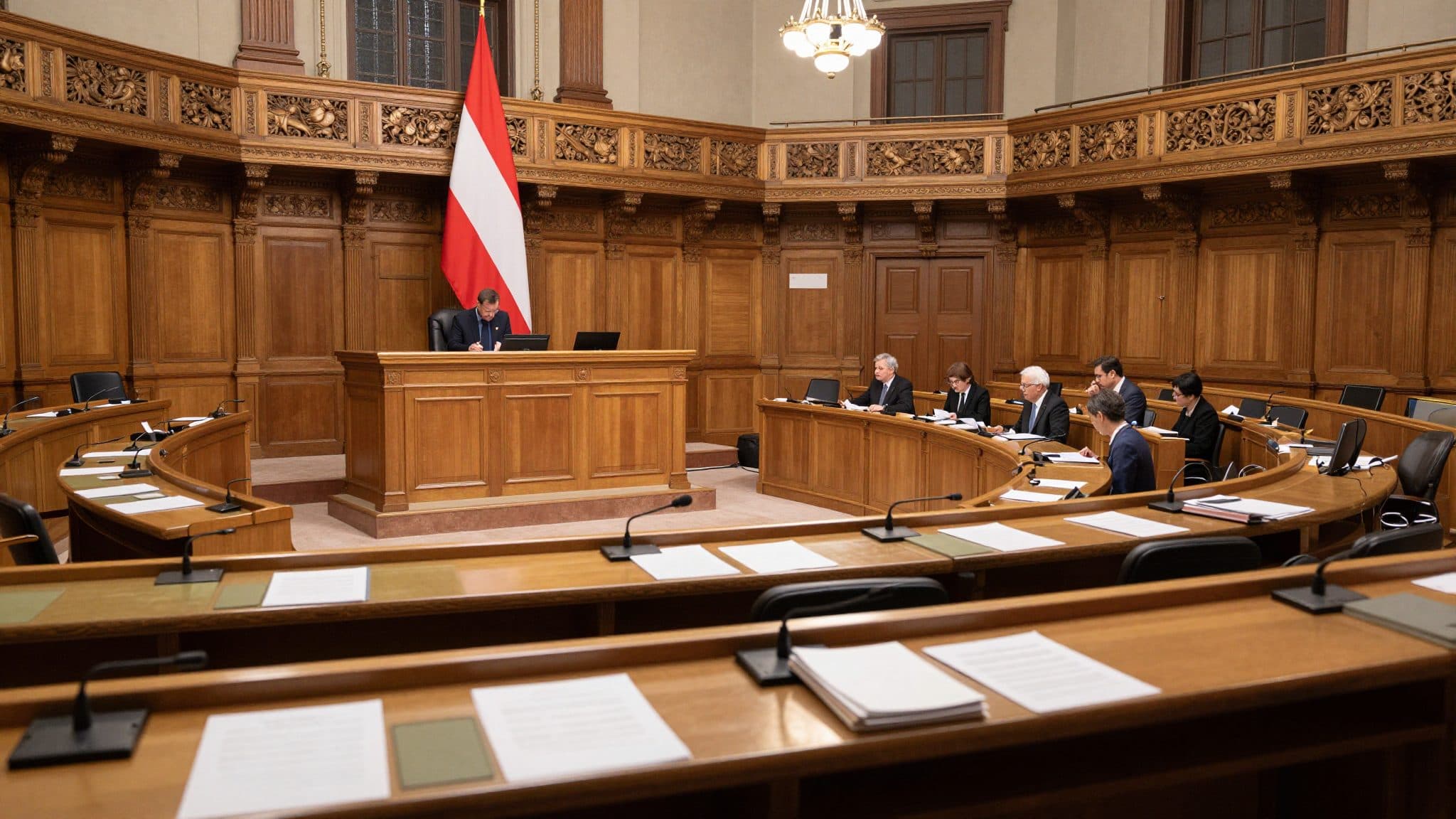
Opposition Criticizes Government's Austerity Measures on Second Day of Budget Debate
Vienna, July 9, 2026
AI-generated image (z-image via Kie.ai)
Summary
On the second day of the budget debate in the National Council, there was again fierce criticism from the opposition. Representatives from the Greens, FPÖ, and ÖVP criticized cuts to universities, social benefits, and women's projects, as well as rising non-wage labor costs for older workers.
Vienna, July 9, 2026
In the National Council, the opposition sharply criticized the federal government's austerity plans on the second day of the budget debate, taking particular issue with cuts to universities and social benefits, as well as increasing burdens for low-income earners and older workers.
The debate over the double budget for the years 2027 and 2028 had already begun on Tuesday. On Wednesday, the chapters on science, social affairs, women's issues, and education were the focus. Opposition representatives accused the coalition of SPÖ and ÖVP of using the planned measures to unilaterally burden those who already earn little.
Criticism of Cuts to Universities
The planned cuts to universities from 2028 onward attracted particular attention in the lead-up to the budget drafting. Green Party deputy caucus chair Sigrid Maurer expressed regret that the government was handing out "large cash gifts" to corporations while cutting funding for universities: "Niemand weiß, wie die Universitäten ab 2028 finanziert werden sollen."
State Secretary for Science Eva Maria Holzleitner countered that the government was continuing to invest billions in science. However, concrete figures for the future university budget remained absent from the debate.
Cuts to probation services also drew criticism across party lines. ÖVP women's leader Juliane Bogner-Strauß expressed regret that Justice Minister Anna Sporrer (SPÖ) was cutting funds for the "Neustart" probation program. Bogner-Strauß belongs to the ÖVP, which is itself part of the governing coalition.
Dispute Over "Neustart" Probation Services
In the agriculture chapter, the abolition of the agricultural diesel subsidy was the central issue. FPÖ MP Albert Royer criticized that this measure would ultimately be paid for through higher social security contributions: "Den Agrardiesel bezahlen wir uns über höhere Beiträge zur Sozialversicherung selbst." Agriculture Minister Norbert Totschnig responded that of the 50 million euros in relief, only 15 million came from increased pension insurance contributions.
Debate Over Agricultural Diesel and Pension Insurance
In the social affairs area, criticism focused primarily on the planned adjustment of unemployment insurance contributions and new burdens for older workers. Labor and Social Affairs Minister Korinna Schumann (SPÖ) acknowledged: "Nein es macht keine Freude, dass wir die Arbeitslosenversicherungsbeiträge anpassen müssen," and pointed to the need for budget consolidation.
Social Benefits and Unemployment Insurance in Focus
FPÖ social affairs spokesperson Dagmar Belakowitsch called the plan "unsozial": "Es ist keine Sozialpolitik, jenen, die ohnehin wenig verdienen, etwas wegzunehmen." She also spoke of a "Sauerei" that in the future, persons entitled to a corridor pension would no longer receive an additional year of unemployment benefits.
Green social affairs spokesperson Markus Koza complained that low-income earners were among the losers of the budget. The now mandatory contributions to the Family Burden Equalization Fund (FLAF) for older workers, rising unemployment insurance contributions for those over 62, and cuts to integration assistance for older employees would make the integration of older people into the labor market significantly more difficult.
The planned reduction of non-wage labor costs for 2028 would be nullified by these additional burdens, according to the opposition. Koza spoke of an additional burden affecting those who were already at their limit.
Women's Budget and Criticism of "Neustart"
In the women's affairs chapter, Green women's spokesperson Meri Disoski spoke up. Although the core budget for women was being increased, the budget would nevertheless be "am Rücken der Frauen saniert" due to cuts to "Neustart" and other measures, Disoski criticized.
The opposition argued that cuts to women's organizations and probation services would further exacerbate the structural disadvantage faced by women in Austria. The elimination of the "Neustart" program was also raised again.
During the subsequent debate on the education budget, there was likewise opposition criticism, even though the education budget is set to increase by 313 million euros in 2027 and by a further 82 million euros in 2028. FPÖ education spokesperson Hermann Brückl spoke of a "teuren Symptombekämpfung" rather than a genuine solution to the problems.
Education Budget: More Funding, but Criticism Continues
Federal Minister of Education Polymnia Zisakis emphasized, according to the parliamentary record, that an additional 130 million euros in 2027 and 210 million euros in 2028 were planned as offensive funds. These were "treffsicher, notwendig und gerecht" to address the large differences between schools. The additional funds were intended to expand early childhood education and the all-day school model.
Overall, the opposition expressed dissatisfaction with the government's budget policy. The coalition pointed to the necessity of budget consolidation and emphasized that the planned measures were balanced and future-oriented. The budget debate will continue on Thursday with further chapters.
On the sidelines of the debate, Rosa Ecker (Greens) stressed that the government's budget policy was losing sight of the lived reality of many people. The planned measures were not suited to solving the actual problems of the population and would in some cases even exacerbate them. The opposition announced that it would bring up further critical points in the upcoming rounds of negotiations.
Questions & Answers
Which budget chapters were under discussion on the second day of the debate in the National Council?
The focus was on the budget chapters for science, social affairs, women's issues, and education. The opposition primarily criticized planned cuts to universities, the elimination of funds for the "Neustart" probation program, and rising non-wage labor costs for older workers.
Why is the opposition criticizing the government's budget policy so sharply?
The opposition accuses the government of using the planned measures to primarily burden low-income earners, older workers, and women. At the same time, the Greens, FPÖ, and parts of the ÖVP see unresolved questions regarding the financing of universities from 2028 onward and criticized the elimination of programs such as "Neustart."
How is the government responding to the opposition's accusations?
The responsible ministers point to the necessity of budget consolidation. Labor and Social Affairs Minister Korinna Schumann acknowledged that adjusting unemployment insurance contributions "keine Freude" mache, and Education Minister Polymnia Zisakis described the additional funds as "treffsicher, notwendig und gerecht."
Budget Debate: Opposition Criticizes Austerity Plans on | allfacts360