
Vienna, 27 May 2026
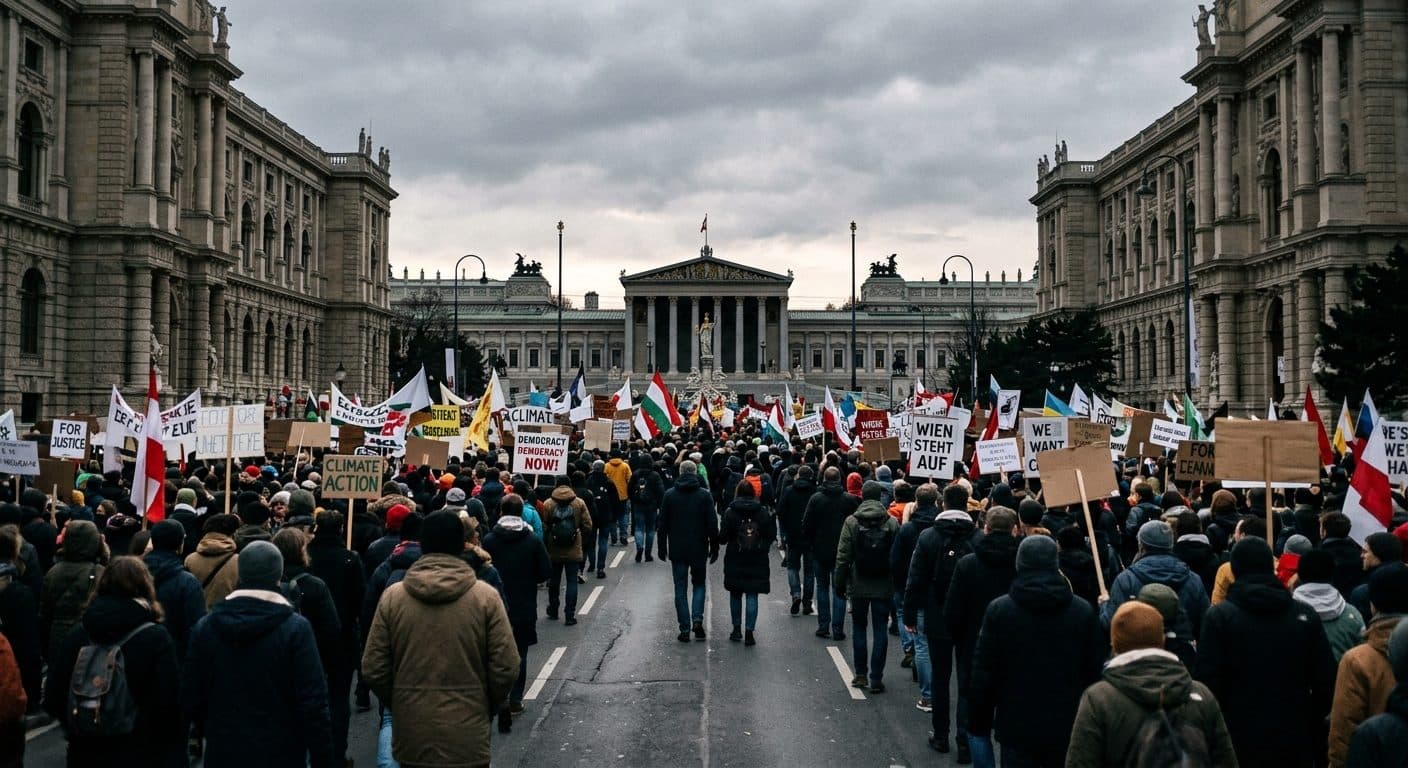
Thousands of university students and staff are expected to march through Vienna on Wednesday to oppose a proposed freeze and cut to higher education funding for the period 2028 to 2030.
Growing Anger Over a 15.5 Billion Figure
The demonstration, jointly organized by the umbrella body of university rectors (uniko) and the Austrian Students' Union (ÖH), is the largest university protest since 2022, when energy price hikes due to Russia's war on Ukraine drew similar crowds.
Anger erupted last week after it became known that the government planned to allocate 15.5 billion euros to the 22 public universities for the three-year performance agreement period. Rectorates calculate that this is one billion euros less than the current funding cycle and far below the 18 billion euros they say is needed to cover inflation.
Ministers’ Late-Night Reassurance Attempts
On Tuesday evening, Science Minister Eva-Maria Holzleitner (SPÖ) tried to calm the debate in a ZiB2 interview. She distanced herself from the 15.5 billion figure, calling it an earlier communication that is now outdated. "Das war der Stand damals, der heute aber wieder anders ist," she said, without specifying what had changed. She insisted the final numbers for the 2028–2030 period are not fixed and will be negotiated until autumn.
uniko President Brigitte Hütter maintained that universities require 18 billion euros just to offset inflation, a sum that is 1.5 billion above the current budget. "Alles, was darunter liege, bedeute 'Einschnitte'," she said, meaning anything less would be cuts.
The protest starts at 1 p.m. with a rally outside the University of Vienna before moving through the city center to the Science Ministry and the Federal Chancellery. The ÖH expects 6,000 to 7,000 participants, but strong mobilization across all eleven Viennese universities could swell those numbers.
Several universities adjusted their schedules to enable participation. The University of Vienna allowed postponements of oral exams and exemptions from attendance requirements. The Johannes Kepler University Linz declared Wednesday lecture-free from 10 a.m. onward.
Wider Impact and Calls for Efficiency
The government's plans also affect medical universities, which are to lose an expected 90 million euros per year for doctors' salaries—a move that critics say will worsen staff shortages in a field already under strain.
The Council for Research, Science, Innovation and Technology Development (Forwit) criticized the narrow focus on funding, with chair Thomas Henzinger saying the debate is "ausschließlich um einen Verteilungskampf." He stressed that money is only part of the problem: "Finanzierung ist nur ein Teil der Rechnung: Es kommt auch darauf an, wie treffsicher die öffentlichen Mittel eingesetzt werden." Forwit has previously found the Austrian higher education system to be less efficient than comparable countries.
Echoes of 2022 and What Comes Next
Pressed during the ZiB2 interview by moderator Armin Wolf on why pensions are being increased while the university budget is frozen, Holzleitner did not directly answer, instead pointing to legal frameworks and the upcoming negotiations. She repeated that she is aiming for "nicht nur die nominelle Fortschreibung, sondern ein Plus," meaning a real-terms increase.
The last comparable protest took place in 2022, when then-uniko head Sabine Seidler demanded 1.2 billion euros to meet soaring energy costs and ultimately secured the funds. This time, the outcome hangs on talks due to conclude by 31 October.
uniko has already pulled out of ministry working groups on higher education strategy, calling the government's plan "inakzeptabel." In a statement, it described state spending on universities not as consumption but as investment: "keine Konsumausgaben, sie kommen wieder zurück, und zwar in veredelter Form."