Parental Allowance Reform 2026: Prien's Plans for Twelve | allfacts360
Parental Allowance Reform: Prien Wants to Shorten Benefit Period to Twelve Months
Berlin, July 7, 2026
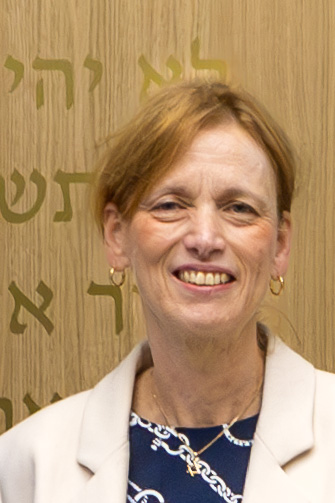
Matthias Süßen / Wikimedia Commons / CC BY-SA 4.0
Summary
Federal Family Minister Karin Prien (CDU) has presented a draft law that shortens parental allowance from 14 to 12 months while simultaneously increasing fathers' months from two to three. At the same time, her ministry must cut 500 million euros from its budget, which has drawn criticism from the German Women's Council.
Berlin, July 7, 2026
Federal Family Minister Karin Prien (CDU) has presented a working draft for reforming parental allowance that shortens the benefit period from 14 to 12 months, provides for three fathers' months instead of two, and raises the minimum and maximum amounts for the first time in nearly 20 years.
According to information from Politico, which the Federal Ministry of Family Affairs confirmed in response to a request from the German Press Agency, the draft provides for a fundamental restructuring of the benefit that has existed since 2007. In the future, three months are to be reserved for each parent, with a further six months to be divided flexibly between mother and father. The requirement for receiving the benefit remains that both parents each take at least three months of caregiving time. A spokesperson for the CDU-led ministry explained that the draft is still in the interministerial coordination process.
What Does the Draft Specifically Provide?
At the same time, the replacement rate of 65 percent of net income is to remain fundamentally in place. The minimum amount rises from 300 to 330 euros, and the maximum amount from 1,800 to 1,900 euros – the first adjustment of these figures in nearly two decades. The income threshold above which couples and single parents no longer receive parental allowance has remained at 175,000 euros gross annual taxable income since April 1, 2025. The option of stretching the benefit period with smaller monthly sums through Elterngeld Plus also remains unchanged.
The background to the reform is an urgent need to save money: Prien must cut 500 million euros from her individual budget next year because the federal budget draft for 2027 provides only 15.5 billion euros instead of 16.7 billion euros for the Family Ministry. As the Bremen Institute for Labor Market Research and Youth Vocational Assistance has calculated, state spending on parental allowance has already been declining anyway – from around 7.6 billion euros in 2022 to just under 7.1 billion euros in 2025.
Budgetary Pressure in the Federal Budget
The chairwoman of the German Women's Council, Beate von Miquel, warned of a gradual withdrawal of the state from family support. Her ministry's budget will shrink by eight percent next year and by up to one-fifth by 2029, chairwoman Beate von Miquel warned. Von Miquel criticized that the federal government had promised young people in the coalition agreement to support their family planning with an improved benefit. Now half a billion is to be saved here alone next year. Mothers will compensate for these cuts at the expense of their own employment. The Zukunftsforum Familie (Family Future Forum) also opposed the cuts and instead called for raising the minimum amount to 506 euros and then indexing it.
The coalition agreement between the Union and SPD forms the programmatic basis for the reform. It states: Wir entwickeln das Elterngeld weiter, indem wir mehr Anreize für mehr Partnerschaftlichkeit, insbesondere mehr Väterbeteiligung in alleiniger Verantwortung setzen. From the perspective of the Bertelsmann Foundation, which surveyed around 2,500 people in 2025, there is public support for this: 45 percent of women and 42 percent of men spoke out in favor of an egalitarian model in which each parent takes seven months of parental leave – based on the previous total duration of 14 months. 39 percent of those surveyed preferred the classic split of twelve months for the mother and two for the father.
Hope for More Partnership
For single parents, the draft provides for a noticeable improvement: they are to be able to receive full parental allowance for up to twelve months in the future. In addition, the draft provides for an amendment to the Maternity Protection Act: with the new regulation, employment bans related to working hours will be limited to twelve months after childbirth. This is intended to prevent pregnant women and young mothers from being completely released from the workplace for extended periods.
The take-up of parental allowance has declined significantly in recent years. According to the Federal Statistical Office, around 1.61 million people received parental allowance in 2025 – including 1.19 million women and 417,000 men. Compared to 2021, this represents a decrease of 13.9 percent, which is essentially attributed to the demographic decline in birth rates. The share of fathers among all recipients was most recently 25.9 percent.
Fewer Recipients, More Fathers
From the perspective of the Bertelsmann study, greater involvement by fathers would not only advance equality within families but also make macroeconomic sense, as women could return to work more quickly and thus alleviate the shortage of skilled workers. The authors also pointed to another finding: 44 percent of the parents surveyed said that less bureaucracy and simpler application procedures would help them most during the family phase.
With the planned savings of around 500 million euros per year and the shortening of the benefit period by two months, the reform is moving within a difficult budgetary situation. Critics like von Miquel fear that the cuts will effectively be borne by mothers, as they would have to compensate for the lost months through employment. Supporters point to the higher minimum and maximum thresholds as well as the additional fathers' months, which are intended to enable a fairer division of care work.
Before the law can come into force, several steps are still necessary: after the completion of the interministerial coordination, the cabinet must adopt the draft, followed by deliberations in the Bundestag and the Bundesrat. It remains open whether the coalition factions of the Union and SPD will support the draft in the form presented or whether changes will still be made.
Next Steps in the Legislative Process
Parental allowance is the largest expenditure item in the Federal Ministry of Family Affairs' budget. The reform is therefore being watched closely from both family policy and budgetary policy perspectives. Family associations, trade unions, and equality experts have already taken positions in recent weeks, setting different accents: while some welcome the plans to strengthen fathers' involvement, others warn of a creeping erosion of the benefit.
The German reform is also likely to attract attention internationally. German parental allowance has been regarded as a model for a modern, partnership-oriented family policy since its introduction in 2007. The now-planned shortening, combined with an increase in the base amounts, could adjust the model in a new direction – away from the longest possible benefit duration toward a more concentrated and more balanced phase between parents.
In the coalition agreement, the Union and SPD agreed to further develop parental allowance so that fathers participate more strongly. With the working draft, Prien is now implementing this line concretely. The coming weeks will show whether the planned changes hold up in the parliamentary process.
What Stays, What Changes for Families?
Parents and parental allowance recipients should prepare for a transitional phase: until the law is passed, the previous regulations with 14 months of benefit duration and two reserved fathers' months will continue to apply. Only with the entry into force of the new regulation would the benefit periods and base amounts change.
Beate von Miquel of the German Women's Council summed up the concern of many family associations when she said: Gespart werde ausgerechnet bei der beliebtesten familienpolitischen Leistung, dem Elterngeld. The debate over the reform is thus likely only just beginning.
Questions & Answers
Who is Karin Prien and what is she planning with parental allowance?
Karin Prien is Federal Family Minister and belongs to the CDU. She has presented a draft law that shortens parental allowance from 14 to 12 months, provides for three fathers' months instead of two, and raises the minimum and maximum amounts.
Why does Prien have to save on parental allowance?
Prien must save 500 million euros per year in her ministry's individual budget because the federal budget draft for 2027 provides only 15.5 billion euros instead of 16.7 billion euros.
What specifically changes for single parents?
Single parents are to be able to receive full parental allowance for up to twelve months in the future. Previously, the benefit period was shorter for them.