Protests in Ukraine: Zelensky Responds to Demonstrations Against Fedorov's Dismissal
Kyiv, July 18, 2026
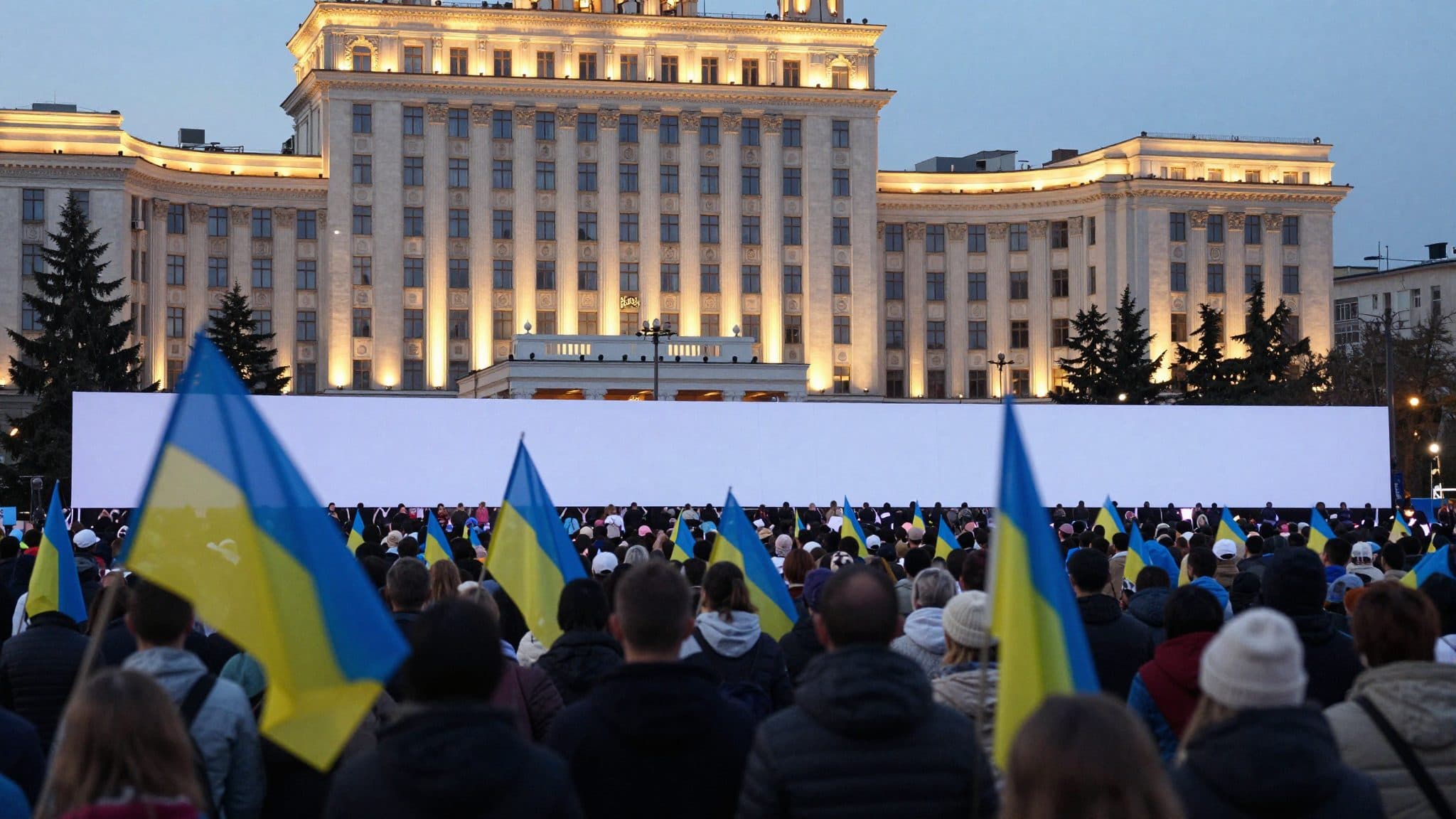
AI-generated image (z-image via Kie.ai)
Summary
In Kyiv and other Ukrainian cities, thousands of people have been protesting for days against the dismissal of Defense Minister Mykhailo Fedorov. President Volodymyr Zelensky announced talks with the military and indicated the nomination of Yevheniy Khmara as a successor.
Kyiv, July 18, 2026
In the Ukrainian capital Kyiv, thousands of people again took to the streets on Friday evening to protest against the removal of popular Defense Minister Mykhailo Fedorov, while President Volodymyr Zelensky responded to the pressure from the street by indicating that he hears what the population is saying.
Scale of the Protests
The demonstrations, which according to reporters took place in Kyiv and other Ukrainian cities, were directed against the dismissal of Mykhailo Fedorov, who had only been heading the Ministry of Defense since January of this year. The demonstrators waved Ukrainian flags and held up placards reading "Bring Fedorov back!" and "Respect the people!" Estimates suggested several thousand predominantly young people voiced their displeasure over the government reshuffle.
Fedorov had stepped down on Wednesday as part of a government reshuffle by President Volodymyr Zelensky. Zelensky had previously carried out a larger government reshuffle, in the course of which he also removed Fedorov from the cabinet. As part of the restructuring, Prime Minister Julia Svyrydenko was also dismissed, among others. The President justified the personnel changes with "new challenges and new tasks".
Fedorov's Reform Record
The 35-year-old Fedorov is regarded as a reformer who changed procurement for the army and who places strong emphasis on the technological and digital transformation of Ukraine's defense. Fedorov had advanced the digitalization of the armed forces and the use of drones. Under his leadership, soldiers' pay was also significantly increased and plans for gradual demobilization were developed. For many Ukrainians, the minister, who had only been in office for six months, embodied the modernization of an army burdened by bureaucracy and corruption allegations.
Already on Thursday, large numbers of people had taken to the streets in Kyiv to call for Fedorov to remain in office. On Friday evening the protests expanded, with demonstrations also taking place in other cities. The demonstrators once again demanded that Fedorov be reinstated as the head of the ministry. Many also called for the dismissal of army chief Syrskyi. As a result, the focus of the demonstrations increasingly shifted to the demand for a change at the top of the armed forces.
Conflict with the Army Leadership
According to consistent reports, the background to the dismissal was a conflict between Fedorov and army chief Oleksandr Syrskyi. However, there had been tensions between him and the army leadership and in particular with army chief Syrskyi. Syrskyi, who has been commander-in-chief of the Ukrainian armed forces since February 2024, had previously distinguished himself through the defense of Kyiv and the successful counteroffensive in the Kharkiv region in 2022. The 60-year-old career officer originally comes from Russia.
As the new defense minister, the President wants to nominate the former acting head of the SBU intelligence service, Yevheniy Khmara. On Thursday, Zelensky had appointed the intelligence official Yevheniy Khmara as acting defense minister. According to a communication from Friday evening, the new head of government Serhii Korezkyi initially appointed Khmara as acting head of the defense ministry. Parliament must still approve the personnel decision.
Zelensky's Response
In front of parliament and the public, Zelensky reacted to the ongoing protests. In a video address, he said: "Of course I hear what people are saying." At the same time, he announced that "decisions regarding the army" would be worked out, without giving details. Zelensky also stated that he had spoken at length with Fedorov and also with army chief Oleksandr Syrskyi.
The government reshuffle and the ongoing demonstrations are putting Zelensky under domestic political pressure. Observers regarded the protests in the capital as a sign that parts of Ukrainian society are dissatisfied with the personnel restructuring. At the same time, the government faces the task of keeping the armed forces operational in the ongoing conflict and continuing the modernization of the army.
International Observers
International observers followed the developments with attention. Anti-corruption expert Oksana Huss of the NATO Defense College, who discussed the situation live with reporter Anne Brühl from Kyiv and moderator Ralph Szepanski on the ZDF program ZDFheute, pointed to the importance of Fedorov's reforms for the credibility of Ukraine's defense efforts. Brühl reported from Kyiv on the mood on the streets and the demands of the demonstrators.
The appointment of Khmara now has to be confirmed by the Ukrainian parliament. Zelensky still has to put Khmara's candidacy before parliament and have it confirmed by the deputies. Until then, Khmara will lead the ministry on an acting basis. Observers interpreted the decision as an attempt to bridge a period of uncertainty while at the same time creating room for talks with the army leadership.
Outlook for the Coming Days
Meanwhile, the protests in Kyiv continued. The demonstrators demanded Fedorov's reinstatement and increasingly also the departure of Syrskyi. The Ukrainian leadership thus faces the challenge of reconciling both the expectations of the population and the requirements of the ongoing military confrontation. The coming days are likely to show whether the announced "decisions regarding the army" can contribute to a calming of the situation.
Coverage of the protests was broadcast, among others, by Deutschlandfunk on 18.07.2026 as part of its programming. International media such as ZDF and other news agencies also reported on the developments in Kyiv. The reports painted a picture of a leadership under domestic political pressure while at the same time trying to maintain continuity in defense policy.
Prior to his time as defense minister, Fedorov had headed the Ministry of Digital Transformation, which had been created in 2019. His profile as a reformer and digitalization expert had earned him high levels of public sympathy in Ukraine. This sympathy is now reflected in the ongoing demonstrations, which demand his continuation in office or his return to a government function.
The wave of protests makes clear that Ukrainian society is closely following personnel policy at the top of the armed forces and the government. Looking ahead to the coming weeks, Zelensky is expected to initiate further steps to consolidate leadership in the military and the Ministry of Defense. The president's response to the demonstrations – his commitment to listening to the population – is being interpreted as a signal to the demonstrators, even though no concrete personnel concessions have yet been made.
Questions & Answers
Who is Mykhailo Fedorov?
Mykhailo Fedorov is a 35-year-old Ukrainian politician who has been heading the Ministry of Defense since January of this year and previously led the Ministry of Digital Transformation. He is regarded as a reformer who advanced the digitalization of the armed forces and the use of drones.
Why was Fedorov dismissed?
Fedorov was removed from the cabinet by President Volodymyr Zelensky as part of a larger government reshuffle. The background is believed to be tensions between Fedorov and army chief Oleksandr Syrskyi.
Who is to succeed Fedorov in office?
President Zelensky wants to nominate the former acting head of the SBU intelligence service, Yevheniy Khmara, as the new defense minister. The appointment still has to be confirmed by the Ukrainian parliament.
Ukraine: Protests Against Fedorov's Dismissal – Zelensky | allfacts360