Raúl Jiménez: Psychologist Explains Comeback After Head | allfacts360
Raúl Jiménez: From Skull Fracture to Home World Cup – How a Psychologist Explains the Comeback
Mexico City, June 12, 2026
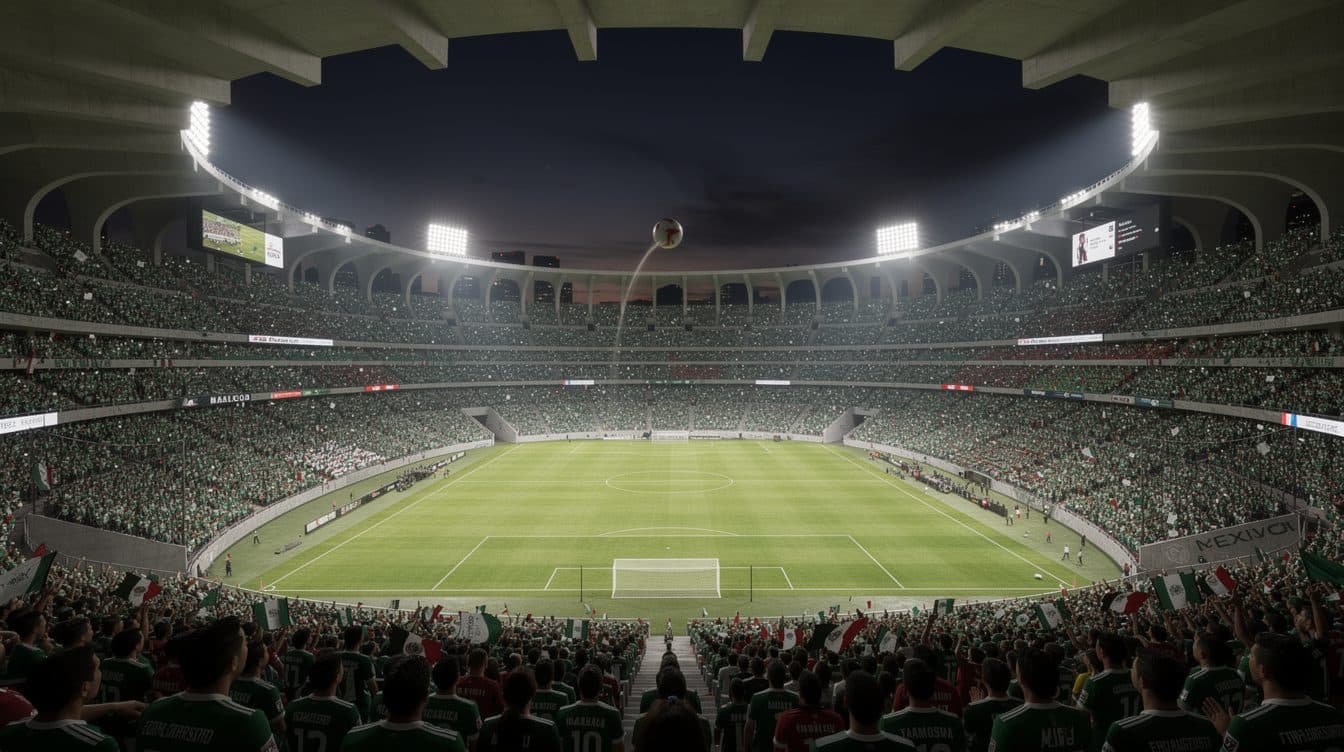
AI-generated image (flux-2/pro-text-to-image via Kie.ai)
Summary
In the opening match of the home World Cup at the Azteca Stadium, Raúl Jiménez headed in the 2-0 goal against South Africa on June 11, 2026 – his first-ever World Cup goal. Five and a half years after his skull fracture, sports psychologist Chris Willis describes the mental work that was necessary for the Mexican striker to experience this moment.
Mexico City, June 12, 2026
Five and a half years after a skull fracture in November 2020, Raúl Jiménez scored his first World Cup goal on June 11, 2026, in the opening match of the home World Cup against South Africa (2-0), reaching a personal milestone as the Mexican striker.
The Moment at Azteca Stadium
It was the moment Raúl Jiménez had been working toward for five years. On June 11, 2026, the now 35-year-old headed in the 2-0 against South Africa in the 67th minute, scoring his first-ever goal at a World Cup. "During the celebration afterward, the tears in his eyes were unmistakable," the Mexican press wrote. In front of more than 80,000 spectators at Mexico City's Azteca Stadium, which had been set as the venue for the World Cup opening match, Jiménez was visibly moved.
According to Mexican media, he dedicated his goal to his father, who had passed away in March at the age of just 62. "I'm very happy and glad to be living this dream and to be standing here," Jiménez said after the game. "It was a perfect day for him," commented Mexico's coach Javier Aguirre, who had read Jiménez's words beforehand in an interview. For Aguirre, one thing was clear: "I read an interview in which he said this should be his World Cup. It was a perfect day for him."
Three World Cups Without a Goal – The Background
He had already appeared at three World Cups for Mexico (2014, 2018, 2022) without managing to score. "It looked as if his career was going to end after three World Cup appearances without finding the net, but that fire drove him to keep fighting," the Spanish newspaper El País wrote. "Raúl Jiménez's career was on the brink in 2020 – as was his life."
The Collision with David Luiz
The fatal collision occurred on November 29, 2020, in the Premier League match Arsenal – Wolverhampton. In that game, Jiménez, who was playing for Wolverhampton Wanderers at the time, jumped up for a header at a corner and crashed heads with Arsenal defender David Luiz. "The then 29-year-old Mexican went down unconscious, was treated on the pitch for several minutes, then rushed to hospital and underwent emergency surgery," the press reported.
"The diagnosis: skull fracture and brain injuries; Jiménez was in life-threatening condition," it was reported in the aftermath. The fracture was accompanied by internal bleeding in the skull, and the pressure on the brain made surgery necessary. In interviews, Jiménez later explained that doctors had told him his survival had been a matter of great luck. He himself had no clear memory of the collision and had watched the incident from different angles on video to understand what had happened.
Months of Rehabilitation
After the surgery, a months-long break began. Jiménez missed several games and was initially not allowed to train normally with the team. It was not until August 2021 that he "returned to the pitch nine months later" – as the reporting put it. Since then, the striker has played with a padded headband that protects the scar on the right side of his head.
What Psychology Recommends
Jiménez himself described how difficult the comeback was: before his first header after the injury, he had been nervous but not panicking. Sports and clinical psychologist Chris Willis, who leads the training of sports psychologists in the German-speaking world, places the case in a broader context. "That absolutely requires sports-psychological injury management as a rule," Willis emphasizes. "Mentally, that's an enormous effort."
Willis distinguishes several critical phases of the comeback: rehabilitation, the entry into sport-specific training, and reintegration into competition. "You have to gradually work your way back," the expert advises – especially in heading situations in football. "So it's also about what you do when there are setbacks." Those who throw themselves back into the game too early risk further injuries. "Up to 50 percent of re-injuries occur because athletes train too early again, play too intensely again, and don't take the time to slowly rebuild confidence through competitive appearances," Willis warns.
Especially in football, Willis sees a structural problem: "In football, you're already glad if it gets diagnosed properly in the first place," he says with regard to mild traumatic brain injuries. Added to this is the high competitive pressure – players who pause risk losing their place in the team. "That takes courage, being honest with yourself, and adapting your own game to the corresponding risks." The most common mistake, he says, is letting yourself or others talk you into believing you have to "be brave again and go into match situations at 100 percent. That would be wrong."
Willis is convinced that athletes who use sports-psychological injury management cope better with rehabilitation crises. They are more stable in dealing with setbacks, often have better rehabilitation courses, and a more favorable prognosis for their return. In Jiménez's case, this process is exemplary: after the skull fracture, he reportedly matured into a quiet leader within the Mexican team.
Jiménez's sporting path took him through several leagues. He played football in his home country, in Portugal, in Spain, and especially in England. With Mexico, he won the Olympic gold medal in 2012. Today he is 35 years old and on his way to becoming his country's all-time top scorer. His first World Cup goal – at a home World Cup in a country that is a co-host of the 2026 World Cup, no less – completed the story.
The Symbolic Power of a Header
For Aguirre and the Mexican team, the evening at Azteca Stadium was more than just an opening victory. The home World Cup gave Jiménez the stage he had longed for after three goalless tournaments. The fact that a header of all things – that very match situation that had nearly taken everything from him five years earlier – would become his World Cup goal debut carried a special symbolic power. The ball that once threatened his life now brought him the greatest sporting moment of his career.
With the goal against South Africa, a personal period of suffering that began with the collision at the Emirates Stadium comes to a close. Jiménez himself had described the moment beforehand as nerve-wracking, but he stepped up – and delivered. "It was a perfect day for him," Aguirre summarized, and El País wrote: "It looked as if his career was going to end after three World Cup appearances without finding the net, but that fire drove him to keep fighting."
Questions & Answers
What exactly happened in the collision between Raúl Jiménez and David Luiz in November 2020?
On November 29, 2020, Jiménez and David Luiz jumped up for a header at a corner in the Premier League match Arsenal against Wolverhampton and crashed heads. Jiménez, then 29, went down unconscious, suffered a skull fracture with internal bleeding, and underwent emergency surgery.
How did sports psychologist Chris Willis explain Jiménez's comeback?
Willis emphasizes that sports-psychological injury management is necessary for such an injury. The comeback must proceed step by step through rehabilitation, sport-specific training, and competitive appearances; setbacks must be planned for – and up to 50 percent of re-injuries result from returning to action too early or with too much intensity.
Why had Jiménez not scored a World Cup goal until the 2026 home World Cup?
Jiménez had appeared at the 2014, 2018, and 2022 World Cups for Mexico but had not scored in those tournaments. His first World Cup goal came on June 11, 2026, via a header for the 2-0 against South Africa in the opening match of the home World Cup at Azteca Stadium.