Rescuers Discover New Cave Entrance in Search for Two Missing Gold Miners in Laos
Xaisomboun Province, 01 June 2026
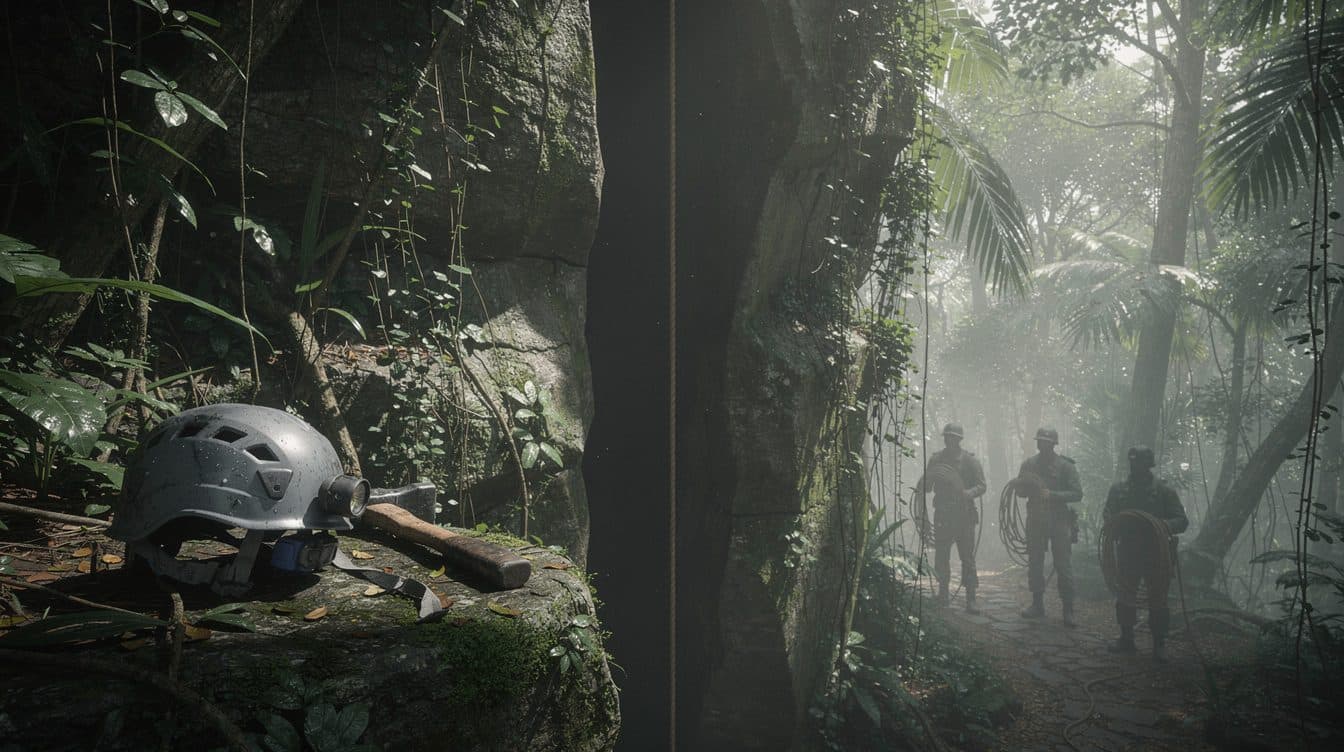
AI-generated image (flux-2/pro-text-to-image via Kie.ai)
Summary
Rescue teams in Laos have discovered a previously unknown entrance to a flooded cave system where two gold miners remain missing. Five of the seven men trapped nearly two weeks ago have been rescued, but new monsoon rains are complicating the ongoing search.
Xaisomboun Province, 01 June 2026
Australian cave diver Josh Richards and a team of soldiers and experts have located a new opening into a flooded cave system in Laos's remote Xaisomboun province, raising hopes of reaching two gold miners still missing nearly two weeks after monsoon rains trapped them underground.
The discovery came after a strenuous march through densely forested terrain on Sunday. Richards, working alongside French cave expert Robin Cuesta and Lao soldiers, abseiled almost vertically down through a narrow opening to explore the surroundings. During his exploration, he encountered another hole that could potentially lead about 100 meters deep to the vicinity of the chamber where the two missing men are suspected to be.
Laos Cave Rescue: New Entrance Found for Missing Gold Miners | allfacts360
Richards repeatedly struck the rock with a hammer and heard sounds coming back from the depths. "Es ist nicht klar, ob das ein Tier war oder etwas anderes, aber auf jeden Fall kommen von da unten ungewöhnliche Geräusche," he said, describing the unusual noises echoing from below.
The Discovery of a New Entrance
The rescue operation has been underway since May 20, when seven villagers descended into a cave in a remote area of Xaysomboun, central Laos, while searching for gold. A flash flood cut off their return path, trapping them inside the largely flooded cave system.
Five of the seven men have since been rescued. Specialists brought the first gold miner out of the cave on Friday evening. The remaining four managed to get out on their own the following day after divers supplied them with food and the water level had dropped sufficiently. All five survivors were taken to hospital and have spoken to a radio station about their ordeal.
Five Survivors Recount Their Ordeal
One survivor described the desperation they felt while trapped. "Ich habe gesagt, wenn keine Taucher zur Hilfe kommen, ist unsere Überlebenschance gleich null. Wir haben nur darauf gewartet zu sterben," he said. Another rescued man told rescuers that the two still-missing men had gone further into the cave system than all the others.
The search for the last two gold-seekers is focused on an area cut off from the other five by a narrow, flooded passage. Japanese diver Yoshitaka Isaji described the extreme conditions facing rescuers. "Dieser überschwemmte Durchgang ist extrem eng und praktisch unpassierbar," he said. "Stellen Sie sich den Raum so eng wie eine Schublade vor."
Visibility in the muddy water is zero, and rescuers have been continuously pumping water out of the cave to enable access. The originally planned route involved diving through claustrophobically narrow tunnels and was considered extremely dangerous. Richards described that route as "furchteinflößend" and said it caused great fear among many involved.
A Dangerous Alternative to a Terrifying Dive
The newly discovered entrance offers a potential alternative to the terrifying dive mission, which is considered a last resort given the enormous dangers. "Es ist großartig, dass wir einen anderen Zugang gefunden haben," Richards said. "Das wird ein großer Tag für uns alle."
However, it is not yet clear whether there is actually a connection between the newly found hole and the chamber where the missing men are believed to be. Rescuers have a suspicion about where the two men could be located, but there is still no trace of them.
New heavy monsoon rains are complicating the rescue work in the remote mountain region. The downpours threaten to raise water levels again, potentially undoing the progress made by continuous pumping operations.
Monsoon Rains Threaten Progress
The rescue effort has drawn international expertise, with divers from Australia, Japan, and France joining Lao soldiers and local authorities. The operation echoes other high-profile cave rescues in Southeast Asia, where monsoon flooding has repeatedly trapped people in extensive underground systems.
For now, rescuers are continuing to pump water out while assessing the viability of the new entrance. A dive mission through the original narrow passages remains an option of last resort, but the discovery of an alternative route has injected fresh hope into the increasingly desperate search.
The two missing men have now been underground for nearly two weeks. With monsoon rains intensifying and conditions inside the cave remaining treacherous, the window for a successful rescue is narrowing.
Race Against Time
Local authorities have not released the names of the missing miners, but officials say their families are being kept informed of developments. The remote location of the cave, deep in the mountains of Xaisomboun province, has posed significant logistical challenges for the multinational rescue team.
The operation continues around the clock, with teams rotating shifts to maintain the pumping and exploration efforts. Richards and his colleagues are expected to return to the new entrance site as soon as weather conditions permit further investigation of the deep hole and the sounds emanating from it.
Questions & Answers
How many gold miners are still missing in the Laos cave?
Two gold miners remain missing in the flooded cave system in Xaisomboun province, Laos. Five of the original seven trapped men have been rescued.
Who discovered the new cave entrance and how?
Australian cave diver Josh Richards, together with French cave expert Robin Cuesta and Lao soldiers, found the new opening after a strenuous march through densely forested terrain. Richards abseiled almost vertically down through the narrow entrance to explore it.
Why is the original diving route considered so dangerous?
The originally planned route involves diving through claustrophobically narrow tunnels with zero visibility in muddy water. Japanese diver Yoshitaka Isaji described the flooded passage as extremely narrow and practically impassable, comparing the space to a drawer.