RKI: 5,100 heat-related deaths from June 2026 heatwave
Berlin, 09 July 2026
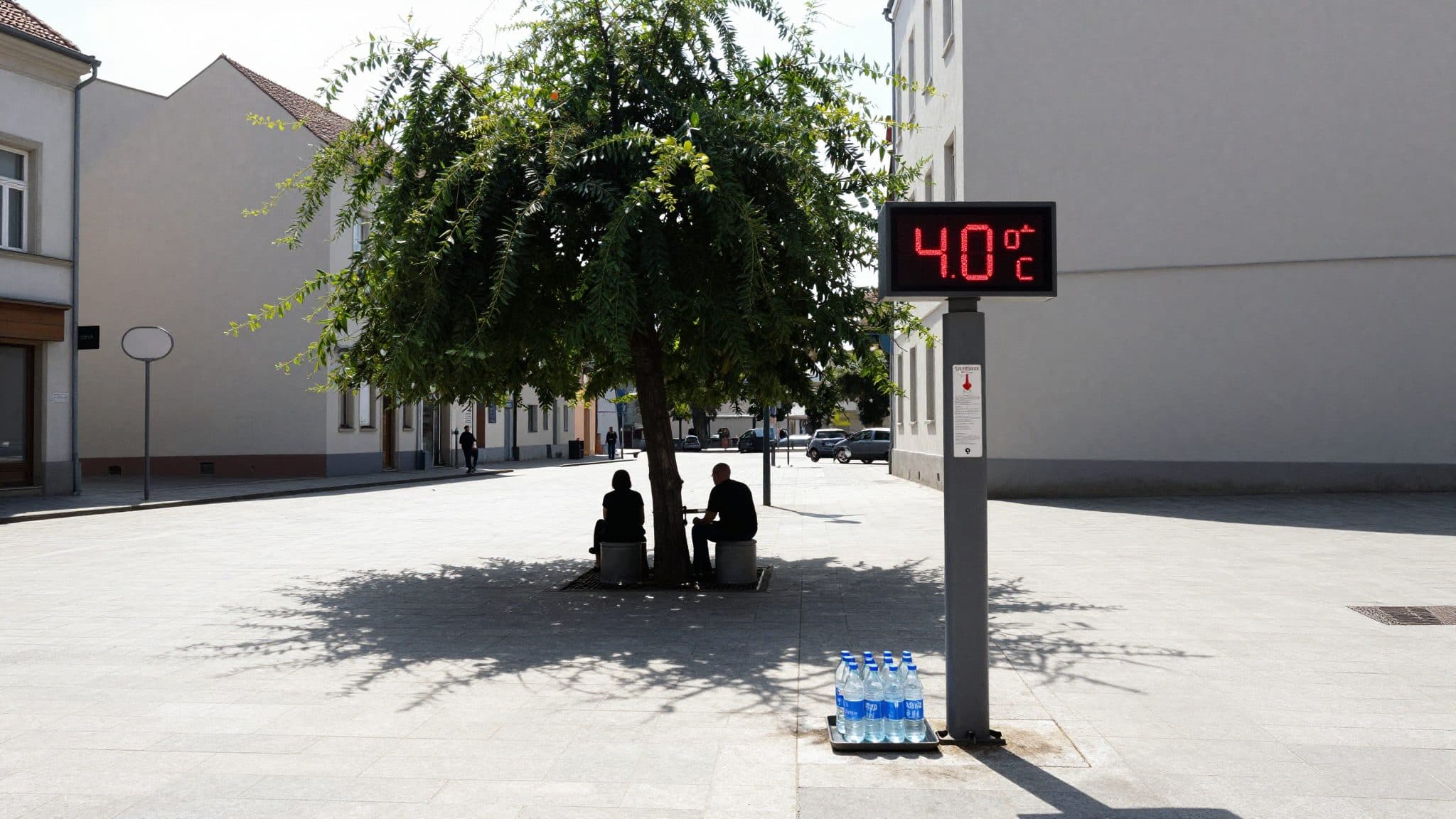
AI-generated image (z-image via Kie.ai)
Summary
The extreme heatwave at the end of June 2026 cost an estimated 5,100 lives in Germany, according to the Robert Koch Institute. Older people were particularly affected: more than 80 percent of heat-related deaths were among those over 75 years of age, according to the RKI.
Berlin, 09 July 2026
The extreme heatwave at the end of June 2026 led to approximately 5,100 heat-related deaths in Germany, according to calculations by the Robert Koch Institute (RKI), as the RKI announced on Thursday in Berlin.
This means the number of heat-related deaths in the first half of 2026 has already exceeded the totals for each of the preceding years 2023, 2024, and 2025. The RKI estimates that more people have already died from the effects of heat in Germany in the first half of the year than in the entire year 2025 – the same applies to 2024 and 2023. On average over the years 2023 to 2025, around 2,900 heat-related deaths per year were registered, according to the RKI; for the entire past year 2025, the figure was approximately 2,600.
In the week of 22 to 28 June 2026 alone, during which temperatures of more than 40 degrees were recorded in many places, the RKI assumes around 4,310 heat-related deaths. During that week, temperature readings exceeded 40 degrees Celsius in several locations in Germany. The Federal Statistical Office even estimates 6,800 heat-related deaths for the heat week at the end of June alone. The reason for the discrepancy is a different calculation method used by the Federal Statistical Office.
Figures significantly exceed previous years
In the preceding week starting 15 June, virtually all of the approximately 810 heat-related deaths that week were attributable to the onset of the heat phase, according to an RKI spokesperson. Including 28 June, the RKI estimates thus sum to roughly 5,120 heat-related deaths since the beginning of summer. The range of variation in the estimates is high: it spans 4,410 to 5,850 heat-related deaths from April through 28 June.
According to the RKI report, people over the age of 75 account for more than 80 percent of heat-related deaths. Among 75- to 84-year-olds, there were 1,320 people; among 65- to 74-year-olds, an estimated 550 people; and among those under 65, approximately 300. In the age group of those over 85 alone, an estimated 2,950 people died from heat-related causes in June. Older people were particularly affected.
Older people particularly affected
According to the current RKI report on heat-related mortality, there were nearly 800 deaths in Baden-Württemberg, and 560 in Rhineland-Palatinate – most of these deaths occurred in June. In North Rhine-Westphalia (NRW), 1,230 people have already died as a result of heat this year; depending on the calculation, the RKI estimates for NRW range from 900 to 1,560 heat-related deaths. In Hesse, an estimated 600 people died from heat-related causes by the end of June; the RKI range here is 350 to 860 cases. This puts the figure at 9.5 heat-related deaths per 100,000 inhabitants in the current year.
In Saxony-Anhalt, the RKI estimates 110 heat-related deaths in the first half of 2026, compared with 40 for the entire previous year of 2025. For comparison: in the hot year 2018, Saxony-Anhalt recorded 300 heat-related deaths, Saxony 510, and Thuringia 180. In Saxony-Anhalt, the Möckern-Drewitz weather station registered 41.8 degrees on the last weekend in June, according to preliminary DWD data – a figure underscoring the extremes of the heatwave.
In all federal states, a mean temperature above 20 degrees was recorded in the week of 22 to 28 June. June 2026 was, according to the German Weather Service (DWD), with an average of 19.5 degrees, the second-warmest June since records began; only 2019 was warmer on average. In June, the 40-degree mark was exceeded at 46 stations across Germany, according to DWD. The weekly mean temperature was 26.4 degrees on average, according to the RKI – well above the threshold at which a marked heat-related increase in mortality is to be expected.
Federal states compared
In 2018 and 2019, the highest heat-related death tolls of the past decade were recorded, at 8,400 and 6,900 deaths respectively, according to the RKI. Over the past ten years, the figure was highest in 2018: an estimated 14.9 cases per 100,000 inhabitants. The federal states with the highest excess mortality due to the heat were Saarland and Rhineland-Palatinate.
According to the Federal Statistical Office, around 23,600 people died in calendar week 26 – nearly 30 percent more than the multi-year average of approximately 18,200 deaths. Excess mortality in that week was thus estimated at 4,300 to 5,400 cases. Such excess mortality had also been observed in earlier heatwaves in Germany, Julia Hellmann emphasized. "Das sei nicht überraschend, eine Übersterblichkeit sei schon in früheren Hitzewellen vorgekommen", she said in conversation with Gerhard Leitner.
Weather extremes and statistical classification
Hellmann warned that the end of June is incredibly early in the year for such heat. "Ende Juni – das ist wahnsinnig früh im Jahr", she said. The physician called for a heat-stop investment program funded by the federal government totaling 30 billion euros for hospitals and care facilities. Heat protection plans ended where patient protection cost money, she said, and implementation took time. She also criticized: "Es werden ja Programme aufgelegt, die mehr Hitzeschutz in Pflegeeinrichtungen oder in Krankenhäusern beinhalten, aber wir sind nicht schnell genug und die Finanzierung fehlt oftmals."
The RKI analysis is based on data from the Federal Statistical Office on deaths and on air temperature data from 52 DWD weather stations. The RKI uses statistical models that estimate how many people would have died at a reference temperature of 20 degrees, and derives the heat-related excess mortality from this. The number of heat-related deaths is an estimate. The Robert Koch Institute derives it from mortality figures in weeks with particularly high temperature readings, in which excess mortality regularly appears for which there are no other logical reasons.
Methodology of the RKI estimate
"In einigen Fällen, zum Beispiel beim Hitzeschlag, führt die Hitzeeinwirkung unmittelbar zum Tod", the RKI stated. More frequently, however, the cause of death is a combination of pre-existing conditions and heat. Veronika Huber from the Institute of the Spanish National Research Council (CSIC) in Seville, Spain, explained: "Hitze ist ein relevanter Gesundheitsrisikofaktor, insbesondere für ältere Menschen, Menschen mit Vorerkrankungen, Schwangere, aber auch für Beschäftigte im Freien." She described heat-related mortality as "die Spitze des Eisbergs" and called for estimates of heat-related hospital admissions, emergency room visits, and rescue operations.
Veronika Huber pointed out that the effect of heat on mortality could occur with delays of up to several days or even weeks. It was to be expected that the extremely hot weekend of 27 and 28 June would also have pushed up death figures in the following week. "Die vom RKI jetzt vorgelegte Schätzung beruht auf robusten statistischen Methoden, ist aber insgesamt als eher konservativ einzustufen", she said. The RKI itself emphasized in a statement that the impacts of the extreme heat could be even greater than its model indicated.
Calls for more heat protection
At the heat weekend, 120 people died in Cologne alone – four times the usual number – said Katharina Dröge in the Bundestag debate on the Chancellor's government declaration. The Greens' climate policy spokesperson, Lisa Badum, called for a day of remembrance for the victims of the climate crisis, according to the Reuters news agency: "Aus meiner Sicht sollte es einen Gedenktag für die Opfer der Klimakrise geben." Often, she said, it was older women who suffered a silent heat death in overheated apartments.
Carsten Schneider (SPD) had pointed out at the beginning of July that the federal states and municipalities had received 100 billion euros for infrastructure investments that could also be used for heat protection. France, meanwhile, reported just over 2,000 additional deaths during its most recent heatwave compared with the previous week. Temperatures above 30 degrees are expected in Germany again by the coming weekend, keeping the debate over better heat protection in care facilities, hospitals, and cities alive.
Questions & Answers
How many people died from the heatwave at the end of June 2026, according to the RKI?
The RKI estimates the number of heat-related deaths from the beginning of summer through 28 June 2026 at approximately 5,120, of which 4,310 occurred in the week of 22 to 28 June alone.
Who is particularly affected by heat-related deaths?
According to the RKI, more than
RKI: 5,100 heat-related deaths from June 2026 heatwave | allfacts360