RKI Estimate: Already more than 800 heat-related deaths this year
Berlin, July 2, 2026
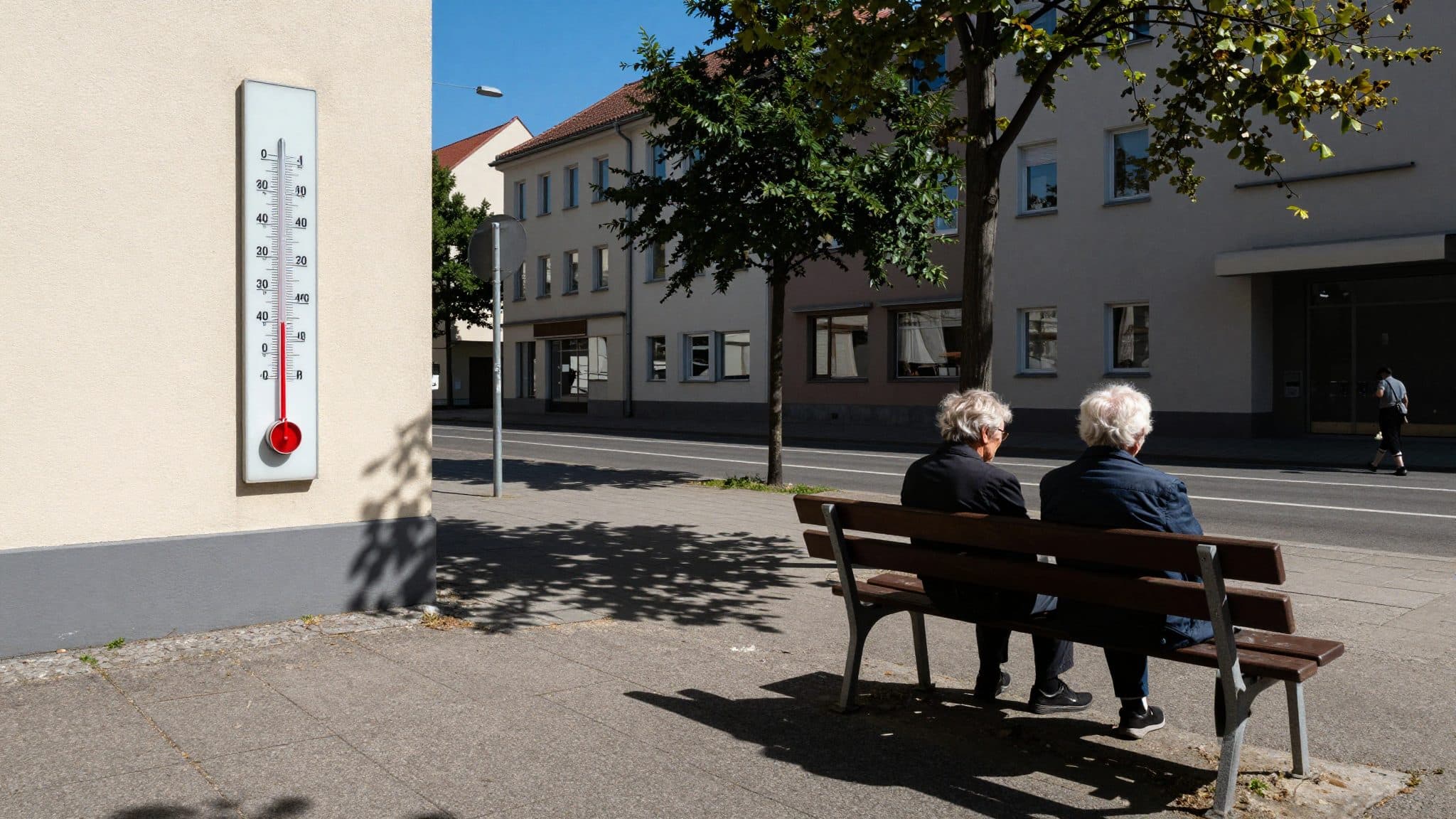
AI-generated image (z-image via Kie.ai)
Summary
According to estimates by the Robert Koch Institute, more than 800 people have already died in Germany this year as a result of the heat. People aged 75 and older are particularly affected; the data relate to the period up to June 21, 2026.
Berlin, July 2, 2026
According to estimates by the Robert Koch Institute (RKI), more than 800 heat-related deaths have already occurred in Germany this year, with the data relating to the period up to June 21, 2026.
Current Status of the Survey
The heat is already having serious consequences in Germany. According to the Robert Koch Institute's (RKI) estimate, there had already been more than 800 heat-related deaths in this year up to June 21, 2026. This is according to the RKI's weekly report on heat-related mortality. The number is expected to rise further, as an exceptionally intense and prolonged heat wave with regional temperatures exceeding 40 degrees followed at the end of June. Temperature records had been broken multiple times.
Affected Age Groups
Data for the period from June 21 onward were not yet available at the time of publication. The RKI stated that initial data on heat-related deaths during this period will be presented next week. The high number of deaths recorded so far is all the more remarkable given that the analysis is based only on weeks up to and including June 21. The extreme heat phase in Germany did not begin widely until the days that followed, the RKI said.
A differentiated breakdown of the figures shows which age groups are particularly affected. In June alone, almost 700 people aged 75 or older died due to the heat. Around 500 people were 85 years or older. Among those aged 75 to 84, the figure was about 190 people; among those aged 65 to 74, an estimated 80; and among those under 65, about 40. The breakdown makes clear that the greatest risk lies in the oldest age groups.
Differences Between Women and Men
A comparison of the sexes shows that more women than men die from heat. The RKI explained that this could be attributed to the high proportion of women in the older age groups. A general gender-specific vulnerability cannot be inferred from this. Rather, the statistic reflects the demographic composition, as women are more frequently represented in the affected age cohorts.
Data Basis and Methodology
As a methodological basis for the estimate, RKI experts use mortality data from the Federal Statistical Office. These are linked with air temperature data from 52 weather stations of the German Weather Service (DWD), which were averaged at the federal state level. The statistical modeling makes it possible to identify heat-related excess mortality even when the heat itself is not recorded as the direct cause of death on the death certificate.
The RKI pointed out that the direct recording of heat-related deaths is not methodologically possible. Therefore, heat is normally not indicated as the underlying cause of death on the death certificate. Instead, the extent of heat-related deaths is estimated using statistical methods. Specifically, this means that observed deviations of actual mortality from expected mortality during heat periods are interpreted as heat-related excess mortality.
The RKI explained in its report how heat can lead to death. In some cases, for example heat stroke, the effect of heat leads directly to death, while in most cases the combination of heat exposure and pre-existing conditions leads to death. This distinction is important because it shows that heat can become a fatal danger especially for people with pre-existing conditions.
Temperature Threshold and Weather Conditions
The temperature threshold above which the RKI expects a noticeable increase in mortality is an average temperature of 20 degrees. In the week from June 15 to 21, the average of day and night temperatures was 21.1 degrees, according to the RKI, and thus above the threshold above which a noticeable heat-related increase in mortality is to be expected. June 2026 thus fits into a phase of above-average warm summer weeks.
Historical Comparison
Historical comparisons show considerable fluctuations in some cases. In 2018, more than 8,000 heat-related deaths were recorded; the following year, about 7,000, according to the RKI. In 2023, 2024, and 2025, the figure was around 3,000 cases each; in 2021, under 2,000. These differences can be attributed to heat periods of varying intensity. The current estimate for 2026, with already over 800 cases by mid-June, raises concerns that the year could reach the scale of previous heat summers.
How the heat period after June 21 will affect the statistics is currently still open. RKI experts emphasized that the figures for the last nine weeks considered so far may still be affected by late notifications. This means that slight upward corrections are still possible even for the period already analyzed.
The significance of this data for public health is considerable. Heat waves are considered one of the underestimated natural hazards in Central Europe. Since temperatures tend to continue rising in the course of climate change and heat waves are becoming more frequent and more intense, statistical early warning systems are gaining importance. With its weekly reports, the RKI provides a regular basis for adapting health policy measures.
Heat Protection Measures
Possible protective measures for at-risk groups are well known and include adequate fluid intake, seeking out cool rooms, and mutual attentiveness in the neighborhood. However, individual behavior alone is not responsible for the high number of deaths in the summer months. Structural factors also play a role, such as the heat exposure in care facilities, the housing situation of older people, and medical care.
The RKI's reports feed into the heat action plans of the federal and state governments, which provide for coordinated measures during extreme temperatures. These include warnings, information for vulnerable groups, and recommendations for employers. The German Weather Service (DWD) also plays a central role in this system with its heat warnings.
International comparisons show that similar phenomena are documented in many European countries. Heat waves also cause measurable excess mortality there, which is recorded using statistical methods. Looking beyond national borders helps to put the dimension of the problem into perspective and to identify proven countermeasures.
The expected new data from June 21 will show how strongly the heat wave with temperatures above 40 degrees will be reflected in the statistics. Until then, the estimate of more than 800 heat-related deaths remains an initial but striking indicator of the health consequences of summer weather in Germany.
Questions & Answers
How many heat deaths has the RKI estimated for Germany in 2026 so far?
The Robert Koch Institute estimates that there had already been more than 800 heat-related deaths in Germany in this year up to June 21, 2026.
Which age group is most affected by heat deaths according to the RKI?
People aged 75 and older are particularly affected; in June alone, almost 700 people in this age group died due to the heat, of whom around 500 were aged 85 or older.
Why can the RKI not directly record heat-related deaths?
Because heat is normally not indicated as the underlying cause of death on the death certificate, the RKI estimates the extent using statistical methods based on mortality data and temperature data.
Heat deaths 2026: RKI counts over 800 dead in Germany | allfacts360