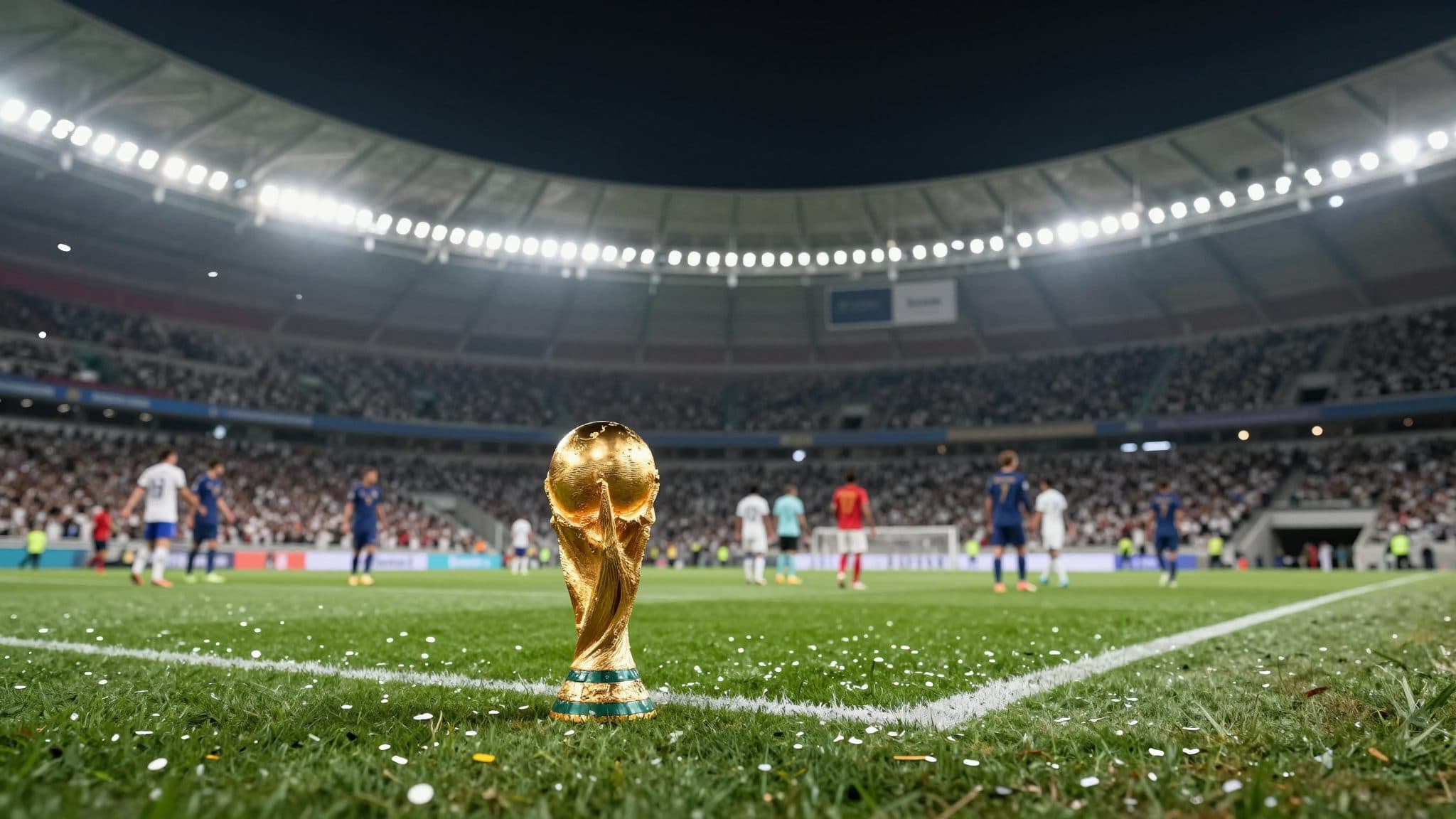
Spain beats Argentina 1-0 in extra time to win World Cup final and claim second world title
East Rutherford, July 20, 2026
AI-generated image (z-image via Kie.ai)
Summary
Spain has won the World Cup final against defending champions Argentina 1-0 in extra time in East Rutherford near New York, becoming world champions for the second time after 2010. The decisive goal was scored by Ferran Torres in the 106th minute, while superstar Lionel Messi delivered his most anonymous performance of the tournament.
East Rutherford, July 20, 2026
Spain won the World Cup final in East Rutherford against Argentina 1-0 in extra time on July 20, 2026, with a goal from Ferran Torres in the 106th minute, thereby becoming football world champions again 16 years after their first title.
A one-sided final on the US East Coast
In front of 80,663 spectators at MetLife Stadium near New York – among them US President Donald Trump and FIFA President Gianni Infantino – the European champions prevailed fully deservedly against the defending champions. The Iberians dominated the match over the full 120 minutes, firing 20 shots on goal, while the Argentines managed just two.
The decisive goal was scored by Ferran Torres, the striker from Manchester City, in stoppage time of the first half of extra time. "Ich denke, dass wir durch dieses Tor endlich erlöst wurden," said Torres after the match. The 30-year-old also received the Golden Ball as the tournament's top scorer, having netted ten goals in total – including two strikes in the third-place match against England, which Argentina lost 4-6.
Messi's weakest performance of the tournament
The Argentine team around their 39-year-old captain Lionel Messi delivered their weakest performance of the tournament. Messi had just a single touch of the ball in the opening 15 minutes, and it came at kickoff. For long stretches, the superstar stood listlessly on the pitch before eventually sitting down dejectedly. "Es war ein zähes Spiel für die Albiceleste," commented the Buenos Aires Herald, "die vom Anpfiff an Mühe hatten, das Spiel in den Griff zu bekommen."
Coach Lionel Scaloni, visibly shaken, offered a glimpse into his emotional inner life after the match: "Ich habe mir schon in der Kabine die Augen ausgeweint, deswegen weine ich jetzt nicht." For Messi, who had been outstanding at this World Cup with eight goals and four assists, there will likely be no second World Cup trophy after 2022 – his final dance turned, as the Italian La Stampa wrote, "zu einer langsamen Aufführung ohne Rhythmus."
De la Fuente as the oldest World Cup-winning coach
Spain's coach Luis de la Fuente, who at 65 is the oldest World Cup-winning coach in football history, was deeply moved after the triumph: "Ich bin stolz, stolz auf diese Mannschaft und auf diese Generation, die sich mit dieser Spielidee durchgesetzt hat." The bald-headed coach had taken over from Vicente del Bosque, who had led Spain to the title in 2010 at the age of 59. The next generation around Nico Williams (24) and Lamine Yamal, who had just turned 19, lay in the center of the pitch after the final whistle, surrounded by more than 80,000 celebrating fans.
The final whistle was commented on in stark terms by the international press. The Argentine daily La Nación spoke of the "Ende eines Traums," while Olé noted: "Argentinien gab alles und ging mit erhobenem Kopf unter: Spanien ist verdienter Weltmeister 2026." Spain's Marca ran the headline "Wieder Könige der Welt," and Mundo Deportivo wrote: "Ja, es war das entscheidende Spiel ihres Lebens." The British Guardian judged that Spain had won "in einem Triumph des Fußballs über Argentiniens Verbrechen," while the Daily Mail reported "einem gebrochenen Herz für Lionel Messi."
International press reactions to the final
Alongside Torres, other Spanish players were honored: captain Rodri received the award as the tournament's most valuable player, 19-year-old defender Pau Cubarsí of FC Barcelona was named best young player, and goalkeeper Unai Simón received the award as best keeper. The Iberians, who had previously triumphed in 2010 in South Africa, thus capped a convincing tournament campaign.
Spain's path to the title was not without stumbles: in their opener, de la Fuente's team had drawn only 0-0 against Cape Verde, fueling doubts about their status as favorites. "Gegen Messi bist du immer nervös, aber wir haben immer an uns geglaubt," said Torres after the final. "Das war das Tor von 47 Millionen Leuten. Er gehört 47 Millionen Menschen," added the striker, alluding to Spain's population. The decisive win was, for him and the team, far more than just a sporting success: "Dieser Treffer war nicht nur meiner oder der des Teams, aber Gott gibt jedem das, was er verdient."
Spain's path to the title
The Spaniards had already won the semifinal 2-0 against the World Cup favorites France – a performance that coach Scaloni rated as unsurpassable. "Verwunderlich war das nicht," the Spanish sports press commented, "schließlich hatte die Mannschaft ihre beste Turnierleistung schon hinter sich; eine Steigerung nach dem 2:0 gegen die Franzosen war kaum möglich." In the final, Spain eased off the throttle but continued to control proceedings, rendering the Argentine attack harmless over 120 minutes.
Even before the final, de la Fuente had announced great things: "Ich habe die besten Spieler der Welt," he said with a view to the European Championship dress rehearsal, "schliesslich habe ich die besten Spieler der Welt." Indeed, the team showed a "mustergültige Wettkampfmentalität," as international observers noted, without throwing themselves "in martialische Posen." The Argentine tactic of saving the match for a penalty shootout failed because of Torres's late strike.
International press reactions were pointed: "Großartiges Spanien, hässliches Argentinien," ran the headline in the Spanish sports paper As. Italy's Corriere della Sera spoke of "Spanien auf dem Dach der Welt vor den Augen von Trump," while France's L'Équipe ran the headline "Die neuen Könige." Argentina's Clarín explicitly thanked its captain: "Danke, Leo!," it read, "der argentinische Kapitän sitzt auf dem Rasen, resigniert, aber sicherlich stolz darauf, bei seiner letzten Weltmeisterschaft erneut ein Endspiel bestritten zu haben."
Outlook on the 2030 World Cup
The 23rd FIFA World Cup had been held in the United States, Canada and Mexico and is considered one of the greatest sporting events of all time. With eight tournament matches, of which the Spaniards won seven, the team presented itself as a worthy champion. The next World Cup will take place in June and July 2030 in six countries across three continents.
The 27-minute halftime break with its show program was criticized by observers as an "abgehackter Spielverlauf." This did not change Spain's triumph, however: at 6:43 p.m. local time, Trump and Infantino jointly presented the golden World Cup trophy to captain Rodri, while the party classic Eviva España blared from the stadium speakers.
For the Argentine team, an impressive World Cup ended with the narrowest of all possible margins. Despite the defeat, the sports paper Olé found conciliatory words: "Den Jungs von Lionel Scaloni ist nichts vorzuwerfen – sie haben eine phänomenale Weltmeisterschaft gespielt, mit epischen Siegen, mit der Liebe des gesamten argentinischen Volkes, und sie haben das Turnier mit hocherhobenem Kopf beendet."
The comparison with previous finals was hard to resist: just as in 1990, when Germany took the title with a goal from Brehme, this time too the more defensively compact team prevailed. Then as now, it ended 1-0 after extra time – and an Argentine captain grieving on the pitch for his great dream. "Der Koffer voller Wunder leert sich früher oder später," a Spanish observer commented, "vor allem, wenn man der einzige ist, der sie vollbringt."
Spain can no longer view the year 2010 as a one-off memory. With the country's second World Cup title, the team under de la Fuente has written "eigenes Kapitel in die Geschichte" – and shown the next generations around Williams and Yamal the way to continue this success story. Messi, on the other hand, faces the end of his career without the hoped-for third World Cup title. What remains are sentimental images of an evening on which a great football era came to an end.
Questions & Answers
Who is Luis de la Fuente and why is his title historic?
Luis de la Fuente is the coach of the Spanish national team. At 65, he is the oldest World Cup-winning coach in football history and succeeded Vicente del Bosque, who had led Spain to the title in 2010 at the age of 59.
When and where did the 2026 World Cup final take place?
The final of the 23rd FIFA World Cup was held on July 20, 2026 at MetLife Stadium in East Rutherford near New York in front of 80,663 spectators, including US President Donald Trump and FIFA President Gianni Infantino.
What happened to Lionel Messi after the defeat?
The 39-year-old Messi delivered his weakest match of the tournament, with only a single
Spain World Champion 2026: 1-0 against Argentina | allfacts360