Tanker Attack Hormuz: Iran Fires Missiles at Freighter
Dubai, July 7, 2026
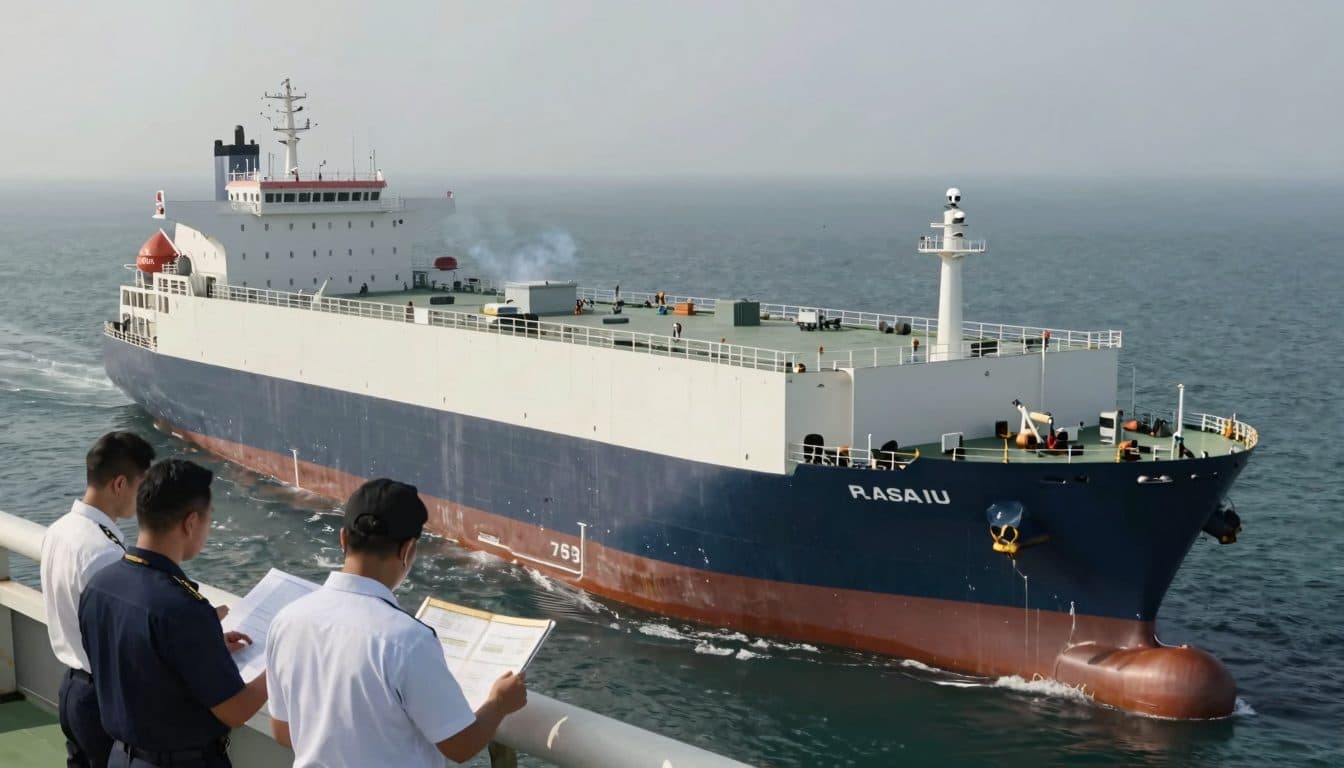
AI-generated image (z-image via Kie.ai)
Summary
A tanker in the Strait of Hormuz, roughly eight nautical miles off the Omani coastal town of Lima, was struck by an unknown projectile, and a fire broke out on board. No one was injured, but the incident is straining the fragile ceasefire between Washington and Tehran shortly after a framework agreement on reopening the strait.
Dubai, July 7, 2026
A tanker in the Strait of Hormuz was struck by an unknown projectile, and a fire broke out on board; according to the British authority UKMTO, no one was injured.
What is known so far about the attack
The crew of the tanker reported the attack on Monday in the strait, which is considered the world's most important oil transit route. According to the United Kingdom Maritime Trade Operations (UKMTO), the British office responsible for commercial shipping security, citing information from the ship's crew, the projectile hit the hull of the vessel about eight nautical miles off the Omani coastal town of Limah. A fire subsequently broke out on board.
According to current findings, the affected vessel is a tanker sailing under one of the flags that routinely transport oil and liquefied gases in the region. There was no confirmed information initially available on the origin and owners of the projectile or the identity of the attackers. Who was behind the attack initially remained unclear.
Reports of Revolutionary Guards as perpetrators
The portal Axios reported, citing two U.S. officials, that the Iranian Revolutionary Guards had fired at least two missiles at freighters. One of the officials said that two ships had been severely damaged by the shelling. An official response from the U.S. government initially did not materialize.
The background to the tensions is the prelude: after the start of the Israeli and American attacks on Iran in February, the Iranian side had effectively brought shipping in the strait to a halt with threats and attacks. Just over a week ago, a similar incident had led to U.S. military strikes against Iran.
Background of tensions in the strait
In the U.S. strikes at the time, air defense positions, drone storage facilities, and surveillance infrastructure had been targeted, among other things, the responsible regional command Centcom said. The strikes thus focused primarily on military targets along the Iranian coast.
In this heated situation, the Iranian military had reiterated only on Thursday its claim that sole control over the Strait of Hormuz is Iran's alone. All oil tankers and commercial vessels are obligated to use only the route designated by the Islamic Republic, according to a statement circulated by Iranian media.
Iran's claim to sole control
The Iranian military leadership also threatened consequences: "Any disregard of this directive (...) will be answered with an immediate and decisive response by the armed forces." In doing so, it formulated a kind of passage regime that overrides international shipping conventions.
The reopening of the Strait of Hormuz, important for the global trade in oil, gas, and fertilizer, is a central element of the framework agreement that representatives from Washington and Tehran had agreed on just under three weeks ago. The United States demands free passage for all ships without fees.
Breach of the framework agreement between Washington and Tehran
This puts two positions irreconcilably at odds: Washington wants free shipping without Iranian control; Tehran claims a unilateral right to set the routes. The new incident underscores how fragile the order painstakingly established after the framework agreement actually is at this sensitive point.
If the Axios report about Revolutionary Guards missiles is confirmed, the attack would be Tehran's first major military strike since the U.S. attacks of the past week and would put the United States under immediate pressure to act. If it turns out to be an incident that cannot be attributed, it would benefit Tehran by keeping responsibility open.
Observers see the strait in any case as a political leverage tool for Tehran: even the standstill in February had temporarily shaken the global commodity markets significantly. Roughly one-fifth of the global demand for oil and liquefied gas is shipped through this corridor.
Consequences for energy trade and shipping
For shipping, the renewed incident means that carriers could once again reroute around South Africa or the Suez Canal, which would drive up delivery times and freight rates. Insurers had usually significantly increased war risk premiums for voyages through the strait during such phases.
The international community is watching the development with concern, because the Strait of Hormuz is not only a trade route but also a litmus test for the credibility of the framework agreement just concluded. Should the accord fall apart within a few weeks, it would have far-reaching consequences for energy prices worldwide.
As of the editorial deadline for this report on July 7, 2026, neither the U.S. government nor the Iranian side had issued an official statement on the specific incident. No confirmation or denial from Oman, which acts as a mediator in the strait, was initially available either.
Outlook: What to expect next
The news of the attack was broadcast on July 7, 2026 on the Deutschlandfunk program; the APA agency distributed the report the same day. How the strike on the tanker could have occurred and what consequences the diplomatic channels draw from it remained open for the time being.
Questions & Answers
What exactly happened on the tanker?
According to the British authority UKMTO, the tanker was struck by an unknown projectile roughly eight nautical miles off the Omani coastal town of Limah, a fire broke out on board, and no one was injured.
Who is said to have carried out the attack?
The portal Axios reports, citing two U.S. officials, that the Iranian Revolutionary Guards fired at least two missiles at freighters; no official confirmation had been issued at the time of the report.
Why is the Strait of Hormuz contested?
The strait is central to global trade in oil, gas, and fertilizer; the United States demands free passage without fees, while Iran claims sole control over the route and seeks to enforce its own right of way against commercial vessels through military means.
Tanker Attack Hormuz: Iran Fires Missiles at Freighter | allfacts360